


After touring a plant in Austin, Texas, that assembles Apple Inc computers, US President Donald Trump on Wednesday said that he was considering whether to exempt the US company from tariffs on imports from China.
“We’re looking at that,” Trump said in answer to a reporter’s question about the tariffs, after touring the plant, which assembles Mac pro desktop computers, with Apple chief executive Tim Cook.
Cook, who has a strong relationship with Trump, has sought relief for Apple from the US tariffs, which are part of a months-long tit-for-tat trade dispute between the world’s largest economies.
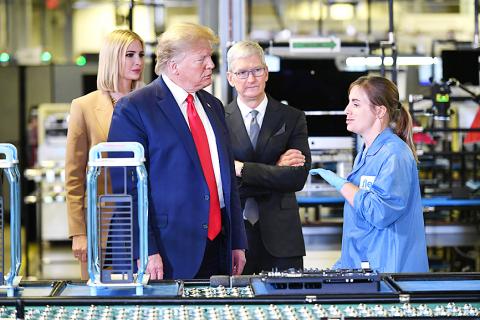
Photo: AFP
“The problem we have is you have Samsung. It’s a great company, but it’s a competitor of Apple, and it’s not fair if, because we have a trade deal with [South] Korea — we made a great trade deal with South Korea — but we have to treat Apple on a somewhat similar basis as we treat Samsung,” Trump said.
Apple in September announced it would make its new Mac Pro computers in Austin. The announcement came days after US trade regulators approved 10 out of 15 requests for tariff exemptions filed by Apple amid a broader reprieve on levies on computer parts.
Earlier this month, Apple also asked the Trump administration to waive tariffs on Chinese-made Apple Watches, iPhone components and other consumer products.
Trump has made boosting the US manufacturing sector one of the goals of his presidency, taking to Twitter to pressure US companies into keeping jobs at home.
Earlier on Wednesday, Apple said it had started construction of a new campus in Austin that would employ 5,000 workers, with the capacity to grow to 15,000. It is expected to open in 2022.
Separately, US officials on Wednesday said they have agreed to grant licenses to “several” firms to provide components to Chinese tech giant Huawei Technologies Co (華為), which faces sanctions imposed over national security concerns.
A US Department of Commerce spokesman said that the agency had granted “narrow licenses to authorize limited and specific activities which do not pose a significant risk to the national security or foreign policy interests of the United States.”
The administration earlier this week said it had extended for another 90 days the full implementation of the sanctions as part of an effort to make a transition easier for Huawei’s US partners.
US Secretary of Commerce Wilbur Ross told Fox Business Network the agency had received some 290 license requests for dealing with Huawei.
He said any exemptions from the ban would be allowed only for older wireless systems and not for 5G networks, which have raised a range of security concerns in Washington.
Additional reporting by AFP
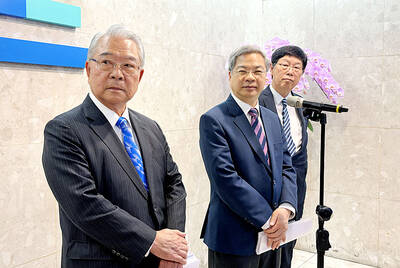
PATENT PROBE: US lawmakers called for a ban on imports of chips made by TSMC if they are found to infringe on US patents, with a preliminary ruling expected soon Minister of Economic Affairs Kung Ming-hsin (龔明鑫) yesterday expressed confidence in Taiwan Semiconductor Manufacturing Co’s (TSMC, 台積電) compliance with patent regulations after reports linked the company to a patent infringement lawsuit in the US. US Representative Ryan Zinke, and US senators Tim Sheehy, Roger Marshall and Bernie Moreno urged the US International Trade Commission in a May 22 letter to ban imports of chips made by TSMC if they are found to infringe on US patents, Axios reported on Wednesday. An administrative law judge is expected to issue a preliminary ruling this month, with the commission potentially making a final decision in
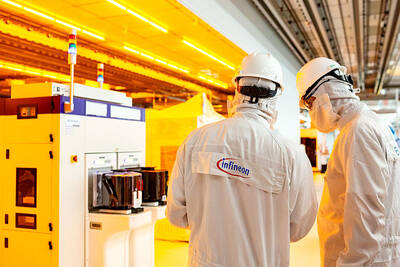
Infineon Technologies AG is preparing to open its largest single investment, a 5 billion euro (US$5.8 billion) semiconductor factory built with the help of EU subsidies, as the bloc seeks to boost chip production. The power chip fab, which is an extension of the German company’s Dresden campus, is scheduled to open on July 2, Infineon chief operating officer Alexander Gorski said this week at the site. The project is a major recipient of EU Chips Act funds, receiving about 1 billion euros in subsidies. The new plant represents a rare success for the bloc’s flagship semiconductor law, which was drawn up during
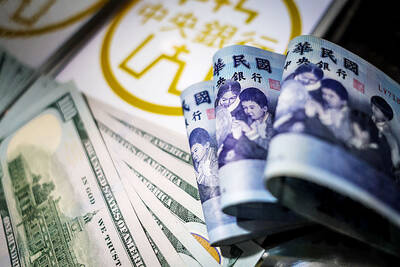
Taiwan remained the sixth-largest net creditor nation in the world last year, despite a fall of more than 10 percent in its net international investment position (NIIP) over the year, the central bank said yesterday. The NIIP is the difference between a country’s external financial assets and its external financial liabilities. Taiwan’s external financial assets hit US$3.27 trillion at the end of last year, up US$275.75 billion or 9.2 percent from a year earlier, the central bank said in its annual NIIP report. The growth largely reflected an increase in holdings of overseas marketable securities by residents in Taiwan, as well as a
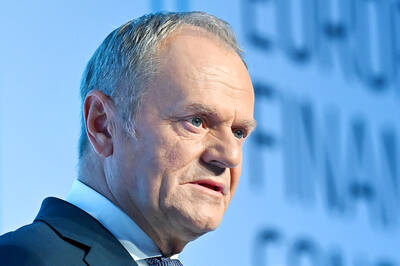
Poland is betting on a flood of investments and technology transfers from Taiwanese companies to reengineer its US$1 trillion economy. Polish Prime Minister Donald Tusk said yesterday that Poland will no longer be “just an assembly hub” as it pursues further investments from the likes of Foxconn Technology Group (富士康). The firm, whose full name is Hon Hai Precision Industry Co (鴻海精密), last month agreed to build electric vehicles (EVs) in the European Union nation and now could be a partner in a semiconductor venture, he said. The government’s aim is to boost manufacturing and the country’s high-tech chops in an era


 RSS
RSS