


Industrial automation system supplier DFI Inc (友通資訊) plans to purchase a 20.49 percent stake in mechatronics components maker Ace Pillar Co (羅昇) via a private placement, DFI said in a regulatory filing on Monday.
DFI is to buy 23 million Ace Pillar shares at NT$20 each starting next month, after both companies’ boards of directors approved the transaction on Monday, it said.
The NT$460 million (US$14.8 million) deal is expected to make DFI the largest shareholder of Ace Pillar and help expand the company’s footprint in industrial automation.
“The investment in Ace Pillar is to achieve downstream vertical integration and to expand our market share in the automation industry, while aiding our digital transformation into the information and operational technology fields,” DFI chairman Peter Chen (陳其宏) said in a statement.
The company would also obtain Ace Pillar’s dealerships with 30 key components brands in Taiwan, Japan and Europe through the private placement, DFI president Steven Tsai (蔡其南) said in the statement.
Ace Pillar, which focuses on making machinery for automation production lines, expects the deal with DFI to help it provide total solutions for clients and to boost sales and profits, chairman Lin Chih-chen (林志誠) said.
Ace Pillar is the agent for ball screws, linear guideways and transmission system components for Precision Motion Industries Inc (銀泰科技).
It also distributes linear, servo motors and automatic controlling components for other machinery companies.
DFI's move came after its parent company, Qisda Corp (佳世達), last month acquired a 35 percent stake of software developer Sysage Technology Co Ltd (聚碩) to improve its information technology services. Chen chairs both DFI and Qisda.
DFI shares yesterday rose 0.49 percent to NT$82.30 in Taipei trading, while Ace Pillar shares climbed 9.93 percent to NT$22.15.

Taiwanese firms have increased investment in the Philippines in recent years as Manila’s ties with Washington deepen and global supply chains continue to shift away from China, an expert at the Chung-Hua Institution for Economic Research (CIER, 中華經濟研究院) said yesterday. The Philippines had not been among Taiwanese investors’ top choices in Southeast Asia, CIER Taiwan ASEAN Studies Center director Kristy Hsu (徐遵慈) said at a seminar in Taipei. However, Taiwan’s investment in the country has grown significantly since the COVID-19 pandemic, reaching US $257 million last year, a high in recent years, she said. Although Taiwan’s total investment in the Philippines still lags
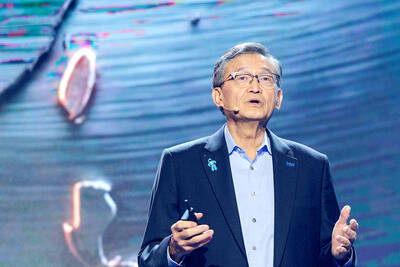
Intel Corp regards Taiwan Semiconductor Manufacturing Co (TSMC, 台積電) as a longstanding partner, as the US chipmaker would continue outsourcing production of advanced chips to TSMC, Intel chief executive officer Lip-Bu Tan (陳立武) said yesterday. “I don’t look at people as competitors. I look at the collaboration... Nvidia is also, you know, a good friend,” Tan told a news conference following his keynote speech at the Computex trade show in Taipei. “It’s a very trusted partnership for us... We are a big, top customer for them, and we’re going to continue doing that,” he said, referring to TSMC, the world’s largest foundry
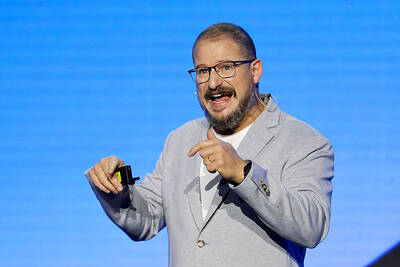
Artificial intelligence (AI) agents would supplant smartphones as the center of people’s digital lives, fundamentally reshaping personal devices and driving a major computing upgrade cycle, Qualcomm Inc CEO Cristiano Amon said yesterday. In his keynote speech for this year’s Computex trade show in Taipei, Amon said that the rise of "agentic AI" — AI systems capable of reasoning, planning and carrying out tasks autonomously — would transform how people interact with technology across phones, PCs, vehicles and wearable devices. Describing the technology as the next major evolution in computing, Amon said that "2026 is the year of agents.” For decades, smartphones have sat
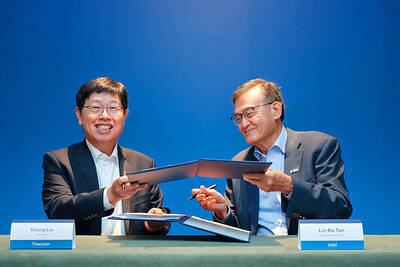
Hon Hai Precision Industry Co (鴻海精密) yesterday said it would work with US chipmaker Intel Corp to jointly develop and deploy next-generation artificial intelligence (AI) infrastructure and intelligent computing platforms in a move to capture booming demand for AI computing systems. Hon Hai, also known as Foxconn Technology Group (富士康), said in a statement that the partnership would combine its global manufacturing scale, system integration expertise and AI data center deployment capabilities with Intel’s strengths in processor architecture, silicon technologies and software ecosystem. The companies said they plan to work on equipment used in AI data centers, including server racks powered by


 RSS
RSS