


French pharmaceutical firm Sanofi yesterday said it is partnering with Google to use artificial intelligence and deep analytics tools to sift through its data to find better treatments.
The titan in online search “will apply technology and analytics on Sanofi’s large real world database to better understand what treatments work for patients,” the pharmaceutical firm said in a statement.
The use of Google’s tools for deep analytics — organizing large amounts of data to gain insights — will help it better understand key diseases and patient outcomes to make further improvements.
Sanofi would also be moving some of its business applications to Google’s cloud computing platform and use artificial intelligence to improve operations.
“Combining Sanofi’s biologic innovations and scientific data with Google’s industry-leading capabilities, from cloud computing to state-of-the-art artificial intelligence, we aspire to give people more control over their health and accelerate the discovery of new therapies,” said Ameet Nathwani, who is Sanofi’s chief digital officer in addition to being its chief medical officer and executive vice president.
Sanofi, which made 34.5 billion euros (US$38.8 billion) of sales last year, is a major manufacturer of vaccines, insulin, cancer treatments and cardiovascular drugs.
Sanofi did not mention any financial figures related to the deal with Google, but trade unions are concerned that the firm may announce cuts in research and development at a meeting scheduled for yesterday.
It is not Sanofi’s first collaboration with Alphabet Inc, which is the parent company of Google. Last month, Alphabet’s health division Verily announced partnerships with four major pharmaceutical firms, including Sanofi, to accelerate clinical testing using digital technologies.
Sanofi and Verily also created in 2016 a joint venture, Onduo, to develop connected devices to improve diabetes care.
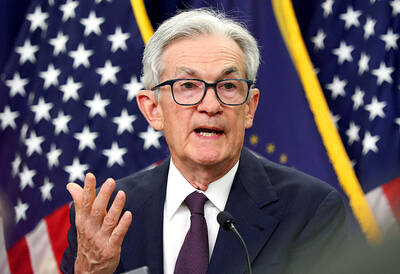
DIVIDED VIEWS: Although the Fed agreed on holding rates steady, some officials see no rate cuts for this year, while 10 policymakers foresee two or more cuts There are a lot of unknowns about the outlook for the economy and interest rates, but US Federal Reserve Chair Jerome Powell signaled at least one thing seems certain: Higher prices are coming. Fed policymakers voted unanimously to hold interest rates steady at a range of 4.25 percent to 4.50 percent for a fourth straight meeting on Wednesday, as they await clarity on whether tariffs would leave a one-time or more lasting mark on inflation. Powell said it is still unclear how much of the bill would fall on the shoulders of consumers, but he expects to learn more about tariffs
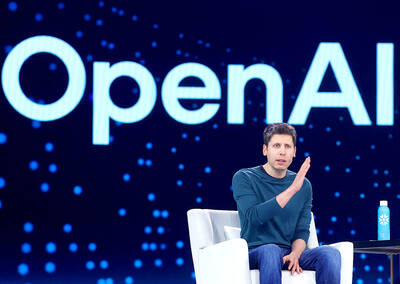
Meta Platforms Inc offered US$100 million bonuses to OpenAI employees in an unsuccessful bid to poach the ChatGPT maker’s talent and strengthen its own generative artificial intelligence (AI) teams, OpenAI CEO Sam Altman has said. Facebook’s parent company — a competitor of OpenAI — also offered “giant” annual salaries exceeding US$100 million to OpenAI staffers, Altman said in an interview on the Uncapped with Jack Altman podcast released on Tuesday. “It is crazy,” Sam Altman told his brother Jack in the interview. “I’m really happy that at least so far none of our best people have decided to take them
PLANS: MSI is also planning to upgrade its service center in the Netherlands Micro-Star International Co (MSI, 微星) yesterday said it plans to set up a server assembly line at its Poland service center this year at the earliest. The computer and peripherals manufacturer expects that the new server assembly line would shorten transportation times in shipments to European countries, a company spokesperson told the Taipei Times by telephone. MSI manufactures motherboards, graphics cards, notebook computers, servers, optical storage devices and communication devices. The company operates plants in Taiwan and China, and runs a global network of service centers. The company is also considering upgrading its service center in the Netherlands into a

NOT JUSTIFIED: The bank’s governor said there would only be a rate cut if inflation falls below 1.5% and economic conditions deteriorate, which have not been detected The central bank yesterday kept its key interest rates unchanged for a fifth consecutive quarter, aligning with market expectations, while slightly lowering its inflation outlook amid signs of cooling price pressures. The move came after the US Federal Reserve held rates steady overnight, despite pressure from US President Donald Trump to cut borrowing costs. Central bank board members unanimously voted to maintain the discount rate at 2 percent, the secured loan rate at 2.375 percent and the overnight lending rate at 4.25 percent. “We consider the policy decision appropriate, although it suggests tightening leaning after factoring in slackening inflation and stable GDP growth,”


 RSS
RSS