


Hong Kong’s second-richest man Lee Shau-kee (李兆基) yesterday stepped down as chairman of Henderson Land Development Co (恆基地產), the latest of the territory’s golden generation of billionaires to retire as their progenies take over.
The nonagenarian tycoon is among the hugely influential coterie of Hong Kong’s 20th-century oligarchs, with Lee carving his empire from a real estate market now notorious for its sky-high prices.
Ranked second on Forbes’ rich list with a fortune of US$30 billion, Lee is officially retire “due to his advanced age” after his last annual general meeting yesterday, a statement from Henderson Land Development said.
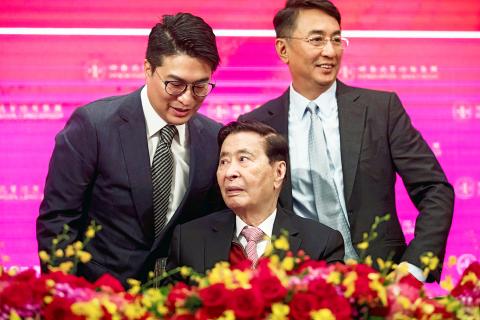
Photo: Bloomberg
The 91-year-old is handing over the reins to his sons, Peter Lee (李家傑) and Martin Lee (李家誠), as joint chairmen and managing directors, the statement said, adding that the elder Lee would remain as an executive director.
“He can spend more time with the family now and play with his grandchildren more,” Martin Lee told reporters yesterday, speaking for his father who was not feeling well enough to talk.
The elder Lee posed for photographs and waved at reporters before his sons slowly led him out.
Lee Shau-kee started his career in currency and gold trading before moving into real estate in 1958 along with seven partners. In 1973 he struck out on his own by founding Henderson Land.
He has left his mark on Hong Kong. Henderson Land was one of the developers of the International Finance Centre, the territory’s second-tallest skyscraper.
Among more than 100 residential projects, the firm built the luxury 39 Conduit Road apartments, where in 2009 a unit sold for HK$439 million (US$56 million at the current exchange rate), a then-record price, according to the New York Times.
In 2017, the company paid a record US$3 billion for a car park in Central, which is being developed into an office building.
Hong Kong’s original billionaires are lionized in the financial hub, held up as living symbols of the territory’s economic rise and international clout, but critics also see them as the embodiment of Hong Kong’s rampant inequality, sitting at the top of enormously wealthy family dynasties who captured key sectors of the economy in a territory where many increasingly struggle to make ends meet.
Many of Hong Kong’s most famous billionaires have worked well into their 80s and 90s.
Its wealthiest tycoon, Li Ka-shing (李嘉誠), 90, only retired last year, handing the baton to his oldest son, Victor Li (李澤鉅).
Gambling tycoon Stanley Ho (何鴻燊) also stepped down last year aged 96 as his daughter Daisy Ho (何超鳳) took over his flagship SJM Holdings Ltd (澳門博彩控股).
Additional reporting by Bloomberg
Shares of contract chipmaker Taiwan Semiconductor Manufacturing Co (TSMC, 台積電) came under pressure yesterday after a report that Apple Inc is looking to shift some orders from the Taiwanese company to Intel Corp. TSMC shares fell NT$55, or 2.4 percent, to close at NT$2,235 on the local main board, Taiwan Stock Exchange data showed. Despite the losses, TSMC is expected to continue to benefit from sound fundamentals, as it maintains a lead over its peers in high-end process development, analysts said. “The selling was a knee-jerk reaction to an Intel-Apple report over the weekend,” Mega International Investment Services Corp (兆豐國際投顧) analyst Alex Huang
Taiwan Semiconductor Manufacturing Co (TSMC, 台積電) is expected to remain Apple Inc’s primary chip manufacturing partner despite reports that Apple could shift some orders to Intel Corp, industry experts said yesterday. The comments came after The Wall Street Journal reported on Friday that Apple and Intel had reached a preliminary agreement following more than a year of negotiations for Intel to manufacture some chips for Apple devices. Taiwan Institute of Economic Research (台灣經濟研究院) economist Arisa Liu (劉佩真) said TSMC’s advanced packaging technologies, including integrated fan-out and chip-on-wafer-on-substrate, remain critical to the performance of Apple’s A-series and M-series chips. She said Intel and Samsung
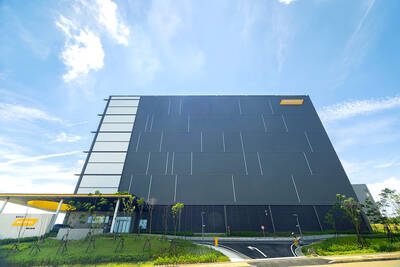
POWER BUILDUP: Powered by Nvidia’s B200 Blackwell chips, the data center would support MediaTek’s computing power demand and business growth, the company said Smartphone chip designer MediaTek Inc (聯發科) yesterday launched a new artificial intelligence (AI) data center with a maximum capacity of 45 megawatts to meet its rising demand for computing power required to develop new advanced chips for AI applications. The company has completed the first-phase computing power buildup at the data center in Miaoli County’s Tongluo Township (銅鑼), providing 15 megawatts of capacity to support its research and development (R&D) capabilities, despite an industrywide shortage of key components, MediaTek said. Supply constraints have plagued a wide range of key components, including memory chips, solid-state drives, power supply units and central
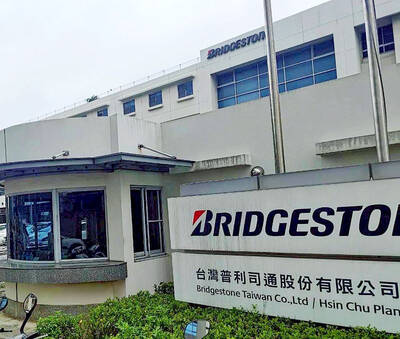
TRANSITION: With the closure, the company would reorganize its Taiwanese unit to a sales and service-focused model, Bridgestone said Bridgestone Corp yesterday announced it would cease manufacturing operations at its tire plant in Hsinchu County’s Hukou Township (湖口), affecting more than 500 workers. Bridgestone Taiwan Co (台灣普利司通) said in a statement that the decision was based on the Tokyo-based tire maker’s adjustments to its global operational strategy and long-term market development considerations. The Taiwanese unit would be reorganized as part of the closure, effective yesterday, and all related production activities would be concluded, the statement said. Under the plan, Bridgestone would continue to deepen its presence in the Taiwanese market, while transitioning to a sales and service-focused business model, it added. The Hsinchu


 RSS
RSS