


Chinese state-backed funds were yesterday active in selected stocks, people familiar with the matter said, seeking to cushion the blow from a sudden escalation in trade tensions with the US.
Among the funds’ targets were two large oil companies, the people said, asking not to be named discussing private information.
PetroChina Co (中石油), which fell as much as 3.5 percent in Shanghai, pared losses in afternoon trading to close with a 0.9 percent decline.
China Petroleum & Chemical Corp (中石化) also spiked briefly, though it ended the day down 4.2 percent. Industrial and Commercial Bank of China Ltd (中國工商銀行), the nation’s largest lender, displayed a similar pattern.
State funds stepped in after US President Donald Trump threatened China with steeper tariffs, ramping up tensions in a trade conflict that many investors had hoped was nearing an end.
While the large-cap stock moves helped major equity gauges close off their lows, the Shanghai Composite Index still finished down 5.6 percent, its steepest drop in three years.
Not all investors welcomed such moves.
“The government needs to come up with a basket of solutions to alleviate the market’s key concerns, rather than resorting to a short-term boost to stock prices, which would only prove to be futile and nothing more than a window-dressing act,” said Raymond Chen, a portfolio manager at Keywise Capital Management Beijing Ltd (凱思博投資管理).
Signs of government support also emerged outside the stock market.
At least one big Chinese bank offered to sell the US currency as the onshore yuan fell toward 6.80 per US dollar, according to traders, limiting depreciation in the Chinese currency after it dropped the most in nearly three months.
The China Securities Regulatory Commission did not immediately respond to a faxed request for comment.
While state funds helped ensure a steady bull market in Chinese stocks for much of 2016 and 2017, the government was widely criticized for its botched attempts to end a $5 trillion selloff in mid-2015.
This year, the Shanghai Composite is one of the world’s best-performing benchmark stock indexes. It is up 17 percent even after yesterday’s slide, buoyed by looser credit conditions in China and signs that Asia’s largest economy is stabilizing after a tough last year.
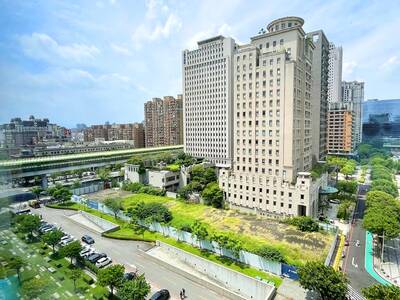
Taichung reported the steepest fall in completed home prices among the six special municipalities in the first quarter of this year, data compiled by Taiwan Realty Co (台灣房屋) showed yesterday. From January through last month, the average transaction price for completed homes in Taichung fell 8 percent from a year earlier to NT$299,000 (US$9,483) per ping (3.3m²), said Taiwan Realty, which compiled the data based on the government’s price registration platform. The decline could be attributed to many home buyers choosing relatively affordable used homes to live in themselves, instead of newly built homes in the city’s prime property market, Taiwan Realty
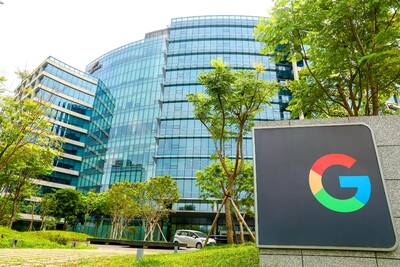
The government yesterday approved applications by Alphabet Inc’s Google to invest NT$27.08 billion (US$859.98 million) in Taiwan, the Ministry of Economic Affairs said in a statement. The Department of Investment Review approved two investments proposed by Google, with much of the funds to be used for data processing and electronic information supply services, as well as inventory procurement businesses in the semiconductor field, the ministry said. It marks the second consecutive year that Google has applied to increase its investment in Taiwan. Google plans to infuse NT$25.34 billion into Charter Investments Ltd (特許投資顧問) through its Singapore-based subsidiary Fructan Holdings Singapore Pte Ltd, and

Micron Technology Inc is a driving force pushing the US Congress to pass legislation that would put new export restrictions on equipment its Chinese competitors use to make their chips, according to people familiar with the matter. A US House of Representatives panel yesterday was to vote on the “MATCH Act,” a bill designed to close gaps in restrictions on chipmaking equipment. It would also pressure foreign companies that sell equipment to Chinese chipmaking facilities to align with export curbs on US companies like Lam Research Corp and Applied Materials Inc. The bill targets facilities operated by China’s ChangXin Memory Technologies Inc

Singapore-based ride-hailing and delivery giant Grab Holdings’ planned acquisition of Foodpanda’s Taiwan operations has yet to enter the formal review stage, as regulators await supplementary documents, the Fair Trade Commission (FTC) said yesterday. Acting FTC Chairman Chen Chih-min (陳志民) told the legislature’s Economics Committee that although Grab submitted its application on March 27, the case has not been officially accepted because required materials remain incomplete. Once the filing is finalized, the FTC would launch a formal probe into the deal, focusing on issues such as cross-shareholding and potential restrictions on market competition, Chen told lawmakers. Grab last month announced that it would acquire


 RSS
RSS