


The companies founded by blacksmith John Deere and candle-and-soap-making duo William Procter and James Gamble might not be the hip purveyors of new technology they were in 1837, but they are first-time exhibitors at this year’s Consumer Electronics Show (CES) gadget show, along with other unlikely newcomers, such as missile-maker Raytheon Co, outdoorsy retailer The North Face Inc and the 115-year-old motorcycling icon Harley-Davidson Inc.
It is the place start-ups and established tech giants alike go to unveil everything from utilitarian apps to splashy devices.
“Every company today is a technology company,” said Gary Shapiro, chief executive officer of the Consumer Technology Association, which organizes CES.

Photo: EPA-EFE
It is also part of a more fundamental economic shift as consumers increasingly expect to buy not just goods and services, but a personal experience, which often skews digital, Forrester Research Inc brand analyst Dipanjan Chatterjee said.
“Brands have no choice but to play a role in this new technology space,” Chatterjee said.
That is one reason Harley-Davidson is using the show to announce the commercial launch of its first electric motorcycle LiveWire. The motorcycle is to have a cellular connection, as many cars do these days, so people can keep track of their motorcycle’s charge or check where they parked it through an app.
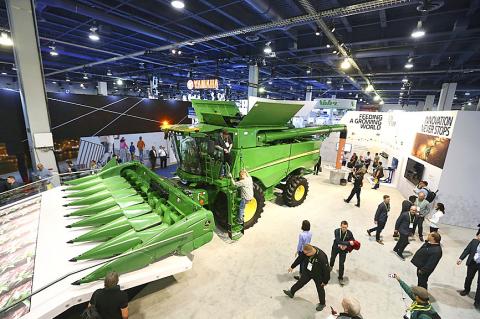
Photo: AP
Consumer goods giant Procter & Gamble Co, best known for Pampers diapers and Tide detergent, is showcasing heated razors, a toothbrush with artificial intelligence, and a wand-like device that scans the skin and releases serum to cover up age spots and other discoloration.
Procter & Gamble is also showing off an Internet-connected scalp adviser: The Head & Shoulders-branded device uses ultraviolet light and other techniques to uncover scalp issues and recommend products.
The device is available only in Europe and Asia for now.
Expect these gizmos to cost more than the plain-old “dumb” versions. Procter & Gamble’s Oral-B toothbrush, for example, is expected to cost US$279, while a regular Oral-B electric toothbrush can be had for less than US$30.
Every new connected device also means more data collection about people’s personal habits — a gold mine for advertisers and hackers alike.
The North Face is using virtual reality to provide a fine-grained look at its waterproof fabrics and Raytheon is demonstrating the everyday applications of GPS anti-jam technology, which was originally designed to protect military forces.
John Deere has hauled in self-driving tractors and a 20 tonne combine harvester aided by artificial intelligence. The combine has cameras with computer-vision technology to track the quality of grain coming into the machine so that its kernel-separating settings can be adjusted automatically. Farmers can monitor it remotely using a smartphone app.
It is hard to imagine what 19th century Illinois blacksmith John Deere might think if he were plopped into his company’s booth at the flashy Vegas convention center, but Deanna Kovar, the company’s director of production and precision agriculture marketing, believes he would be “amazed and astonished.”
“His innovation was making a self-powering steel plow that could cut through the heavy, rich soils of the Midwest,” Kovar said. “We’ve been a technology company since the start.”
Kovar said US farmers have been using self-driving tractors for decades — and CES is a chance to let everyone else know.
Chatterjee said such messages are directed not just at a company’s customers, but to investors, potential corporate partners, start-up acquisition targets and the technically skilled employees these more traditional firms are hoping to attract.

The domestic unit of the Chinese-owned, Dutch-headquartered chipmaker Nexperia BV will soon be able to produce semiconductors locally within China, according to two company sources. Nexperia is at the center of a global tug-of-war over critical semiconductor technology, with a Dutch court in February ordering a probe into alleged mismanagement at the company. The geopolitical tussle has disrupted supply chains, with some carmakers reportedly forced to cut production due to chip shortages. Local production would allow Nexperia’s domestic arm, Nexperia Semiconductors (China) Ltd (安世半導體中國), to bypass restrictions in place since October on the supply of silicon wafers — etched with tiny components to

Singapore-based ride-hailing and delivery giant Grab Holdings Ltd has applied for regulatory approval to acquire the Taiwan operations of Germany-based Delivery Hero SE's Foodpanda in a deal valued at about US$600 million. Grab submitted the filing to the Fair Trade Commission on Friday last week, with the transaction subject to regulatory review and approval, the company said in a statement yesterday. Its independent governance structure would help foster a healthy and competitive market in Taiwan if the deal is approved, Grab said. Grab, which is listed on the NASDAQ, said in the filing that US-based Uber Technologies Inc holds about 13 percent of

Taiwan Semiconductor Manufacturing Co (TSMC, 台積電) yesterday received government approval to deploy its advanced 3-nanometer (3nm) process at its second fab currently under construction in Japan, the Ministry of Economic Affairs said in a news release. The ministry green-lit the plan for the facility in Kumamoto, which is scheduled to start installing equipment and come online in 2028 with a monthly production capacity of 15,000 12-inch wafers, the ministry said. The Department of Investment Review in June 2024 authorized a US$5.26 billion investment for the facility, slated to manufacture 6- to 12nm chips, significantly less advanced than 3nm process. At a meeting with

Taiwan is open to joining a global liquefied natural gas (LNG) program if one is created, but on the condition that countries provide delivery even in a scenario where there is a conflict with China, an energy department official said yesterday. While Taiwan’s priority is to have enough LNG at home, the nation is open to exploring potential strategic reserves in other countries such as Japan or South Korea, Energy Administration Deputy Director-General Chen Chung-hsien (陳崇憲) said. While the LNG market does not have a global reserve for emergencies like that of oil, the concept has been raised a few times —


 RSS
RSS