


Shares of AU Optronics Corp (AUO, 友達光電), one of the nation’s largest flat panel makers, yesterday got a boost from an increase in sales in the third quarter of the year.
The shares outperformed the TAIEX after AUO American depositary receipts rose on the US market overnight, even though many US technology stocks ended in negative territory, dealers said.
AUO shares yesterday rose 0.81 percent to close at NT$12.50, with 23.10 million shares changing hands on the Taiwan Stock Exchange. The TAIEX closed up 0.10 percent at 10,466.83 points.
“The third quarter is a traditional peak season for the flat panel industry and that’s why suppliers like AUO enjoyed sales growth in the three-month period,” Mega International Investment Services Corp (兆豐國際投信) analyst Alex Huang (黃國偉) said.
In a statement released on Monday, AUO said its consolidated sales for the third quarter rose 8 percent quarter-on-quarter, but fell 7.3 percent from a year earlier to NT$81.04 billion (US$2.62 billion).
AUO posted NT$27.44 billion in consolidated sales last month, down 1.3 percent from a month earlier and 5.6 percent from a year earlier.
AUO said shipments of its large screens used in TVs, monitors and notebooks rose 6.5 percent from a quarter earlier to 29.79 million units in the third quarter.
The third-quarter figure was up 2.4 percent from a year earlier.
However, the firm reported a sequential decline of 6.1 percent in small and medium-sized screen shipments of 42.56 million units in the third quarter, 9.1 percent lower than a year earlier.
“AUO and other Taiwanese firms such as Innolux Corp (群創) largely benefited from relatively high yield rates in large panel production compared with their Chinese counterparts, so their shipments of TV panels with a size of more than 55 inches increased in the wake of rising demand in the third quarter,” Huang said.
AUO chairman Paul Peng (彭双浪) last month said that the company’s TV panel clients are expected to continue to build up their inventories in the fourth quarter, but he remains cautious about the possible impacts from escalating trade friction between the US and China.
In the second quarter, AUO posted earnings per share of NT$0.13, down from NT$0.45 in the first quarter due to falling sales.
In the wake of the increase in sales in the third quarter, market analysts said AUO is expected to see its bottom line improve this quarter.
AUO has scheduled an investor conference for Oct. 31.
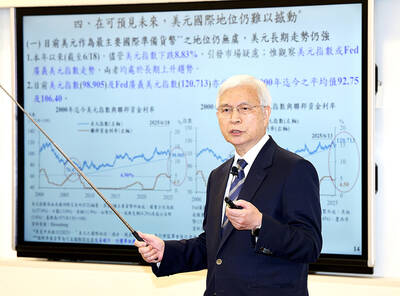
NOT JUSTIFIED: The bank’s governor said there would only be a rate cut if inflation falls below 1.5% and economic conditions deteriorate, which have not been detected The central bank yesterday kept its key interest rates unchanged for a fifth consecutive quarter, aligning with market expectations, while slightly lowering its inflation outlook amid signs of cooling price pressures. The move came after the US Federal Reserve held rates steady overnight, despite pressure from US President Donald Trump to cut borrowing costs. Central bank board members unanimously voted to maintain the discount rate at 2 percent, the secured loan rate at 2.375 percent and the overnight lending rate at 4.25 percent. “We consider the policy decision appropriate, although it suggests tightening leaning after factoring in slackening inflation and stable GDP growth,”
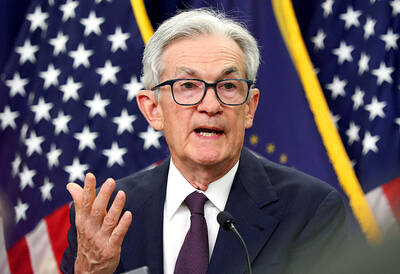
DIVIDED VIEWS: Although the Fed agreed on holding rates steady, some officials see no rate cuts for this year, while 10 policymakers foresee two or more cuts There are a lot of unknowns about the outlook for the economy and interest rates, but US Federal Reserve Chair Jerome Powell signaled at least one thing seems certain: Higher prices are coming. Fed policymakers voted unanimously to hold interest rates steady at a range of 4.25 percent to 4.50 percent for a fourth straight meeting on Wednesday, as they await clarity on whether tariffs would leave a one-time or more lasting mark on inflation. Powell said it is still unclear how much of the bill would fall on the shoulders of consumers, but he expects to learn more about tariffs
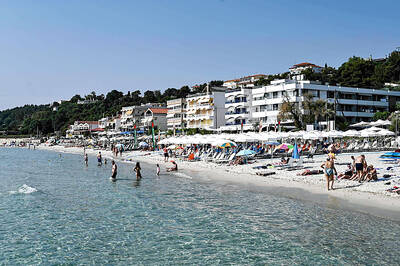
Greek tourism student Katerina quit within a month of starting work at a five-star hotel in Halkidiki, one of the country’s top destinations, because she said conditions were so dire. Beyond the bad pay, the 22-year-old said that her working and living conditions were “miserable and unacceptable.” Millions holiday in Greece every year, but its vital tourism industry is finding it harder and harder to recruit Greeks to look after them. “I was asked to work in any department of the hotel where there was a need, from service to cleaning,” said Katerina, a tourism and marketing student, who would
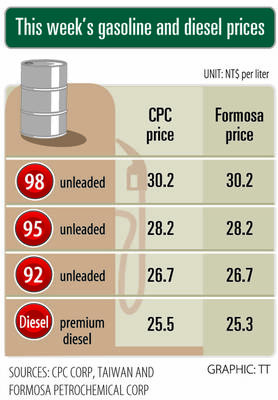
i Gasoline and diesel prices at fuel stations are this week to rise NT$0.1 per liter, as tensions in the Middle East pushed crude oil prices higher last week, CPC Corp, Taiwan (台灣中油) and Formosa Petrochemical Corp (台塑石化) said yesterday. International crude oil prices last week rose for the third consecutive week due to an escalating conflict between Israel and Iran, as the market is concerned that the situation in the Middle East might affect crude oil supply, CPC and Formosa said in separate statements. Front-month Brent crude oil futures — the international oil benchmark — rose 3.75 percent to settle at US$77.01


 RSS
RSS