


Maison de Chine Jiaosi (兆品酒店礁溪), a hot spring resort in Yilan County’s Jiaosi Township (礁溪), has fared better than its business target since its soft opening in June, thanks to its orientation toward families and room rates, senior officials said yesterday.
The hotel has 173 guestrooms priced at NT$3,899 per night, about half the charge of luxury peers Mu Jiaosi Hotel (礁溪寒沐), Evergreen Resort Hotel in Jiaosi (長榮鳳凰酒店), Wellspring By Silks (晶泉丰旅) and Hotel Royal Jiaosi (礁溪老爺大酒店).
Jiaosi has grown into a first-tier battleground among hospitality operators attracted by hot springs, scenic views and a 45-minute drive from Taipei.
“Occupancy rates rose above 90 percent on weekends during the summer, much higher than expected,” Maison de Chine Jiaosi general manager Jimmy Huang (黃明政) told reporters.
Huang attributed the strong showing to the use of the Maison de Chine brand and its successful positioning as a family-friendly resort.
Maison de Chine Jiaosi is the 11th property belonging to L’Hotel de Chine Group (LDC, 雲朗觀光), which also owns Fleur de Chine (雲品酒店), Chateau de Chine (翰品酒店), Chinatrust Hotels (中信旅館), Palais de Chine (君品酒店) and other outlets in Italy.
Got More Co Ltd (佳茂化學), a private manufacturer of plastic bricks and toys with operations in Taiwan and China, signed a franchise contract for the newest property.
Got More has in recent years decided to foray into hospitality and is building a second hotel nearby under a different brand targeting young backpackers, Huang said.
Maison de Chine Jiaosi collaborated with the Brick Ark Museum (積木博物館) in Yilan City to decorate its guestrooms so that they entertain children and accentuate its family appeal, Huang said.
The hotel also has a cafe, a restaurant and banquet space that offer Chinese and Japanese cuisines prepared with fresh local produce and culinary skills unique to Yilan, as well as an outdoor swimming pool, playrooms and other modern amenities, he said.
Maison de Chine Jiaosi is to raise daily room rates to NT$5,500 and NT$6,500 in November, as it is the high-sales season for hot spring facilities, communications assistant manager Phoebe Liao (廖瑋婷) said.
The hotel is right next to Tangwei Brook Park (湯圍溝), which attracts 400,000 tourists a year, she said, adding that it is also within walking distance from Jiaosi Railway Station.
Domestic tourists are expected to account for 70 percent of the hotel’s clientele, while foreign travelers from Asia might contribute the remaining 30 percent, she said.

The domestic unit of the Chinese-owned, Dutch-headquartered chipmaker Nexperia BV will soon be able to produce semiconductors locally within China, according to two company sources. Nexperia is at the center of a global tug-of-war over critical semiconductor technology, with a Dutch court in February ordering a probe into alleged mismanagement at the company. The geopolitical tussle has disrupted supply chains, with some carmakers reportedly forced to cut production due to chip shortages. Local production would allow Nexperia’s domestic arm, Nexperia Semiconductors (China) Ltd (安世半導體中國), to bypass restrictions in place since October on the supply of silicon wafers — etched with tiny components to

Singapore-based ride-hailing and delivery giant Grab Holdings Ltd has applied for regulatory approval to acquire the Taiwan operations of Germany-based Delivery Hero SE's Foodpanda in a deal valued at about US$600 million. Grab submitted the filing to the Fair Trade Commission on Friday last week, with the transaction subject to regulatory review and approval, the company said in a statement yesterday. Its independent governance structure would help foster a healthy and competitive market in Taiwan if the deal is approved, Grab said. Grab, which is listed on the NASDAQ, said in the filing that US-based Uber Technologies Inc holds about 13 percent of

Taiwan Semiconductor Manufacturing Co (TSMC, 台積電) yesterday received government approval to deploy its advanced 3-nanometer (3nm) process at its second fab currently under construction in Japan, the Ministry of Economic Affairs said in a news release. The ministry green-lit the plan for the facility in Kumamoto, which is scheduled to start installing equipment and come online in 2028 with a monthly production capacity of 15,000 12-inch wafers, the ministry said. The Department of Investment Review in June 2024 authorized a US$5.26 billion investment for the facility, slated to manufacture 6- to 12nm chips, significantly less advanced than 3nm process. At a meeting with
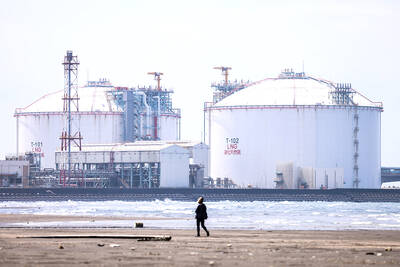
Taiwan is open to joining a global liquefied natural gas (LNG) program if one is created, but on the condition that countries provide delivery even in a scenario where there is a conflict with China, an energy department official said yesterday. While Taiwan’s priority is to have enough LNG at home, the nation is open to exploring potential strategic reserves in other countries such as Japan or South Korea, Energy Administration Deputy Director-General Chen Chung-hsien (陳崇憲) said. While the LNG market does not have a global reserve for emergencies like that of oil, the concept has been raised a few times —


 RSS
RSS