


Nissan Motor Co’s first electric sedan designed for China yesterday began production at the start of a wave of dozens of planned lower-cost electric vehicles (EVs) being produced by global automakers for their biggest market.
Manufacturers, including General Motors Co (GM) and Volkswagen AG, are this year to launch a flood of electric sedans, minivans and sports utility vehicles in China designed for local tastes and smaller budgets.
Nissan, Tesla Motors Inc, GM and others sell imported electric cars or electrified versions of models made by Chinese partners, but the market is dominated by low-cost local rivals including BYD Co (比亞迪).
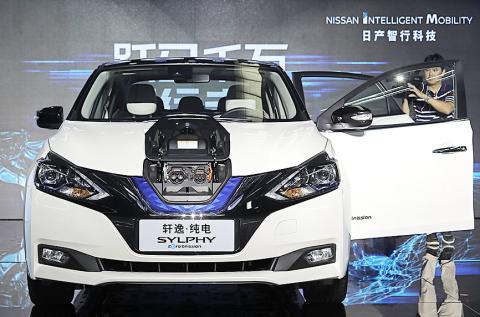
Photo: AP
The Chinese government sees electric cars as a promising industry and a way to clean up its smog-choked cities.
It has spent heavily on subsidies to Chinese producers, and is shifting the burden to automakers with sales quotas and tougher fuel efficiency standards.
The Sylphy Zero Emission, based on Nissan’s Leaf, is being produced by Nissan and a Chinese partner, Dongfeng Group (東風集團).
The Sylphy costs 166,000 yuan (US$25,850) after government subsidies, or just more than half the sticker price of the Chinese version of the Leaf sold by Nissan and Dongfeng’s joint venture Venucia brand.
The Sylphy can go 338km on a charge, Nissan has said.
“We’re confident that the Sylphy Zero Emission rolling off the production line today will become a main player in the EV market,” Nissan chief executive officer Hiroto Saikawa said yesterday.
“We’re going to roll out a range of EVs that will appeal to customers within all market segments,” he said.
Sales quotas that are to take effect next year require every brand to sell electric vehicles or buy credits from competitors that do.
That puts pressure on automakers to design models that Chinese want and can afford.
China last year accounted for half of global electric car sales, but almost all of those came from Chinese brands including BYD Auto and BAIC Group (北汽集團).
Their prices start as low as 140,000 yuan.
“Basically, all these international giants are testing the water. They have not really launched their heavyweight models in China yet,” said industry analyst Yale Zhang (張豫) of Automotive Foresight.
“By the end of this year, things will be different,” Zhang said. “We really will see the market become more competitive and consumers will have more to choose.”
Chinese government plans call for total annual sales of 2 million electric and gasoline-electric hybrid vehicles by 2020, up from last year’s 770,000.
GM has said it will roll out 10 electric and hybrid models in China from 2016 to 2020.
By 2025, all its Buick, Cadillac and Chevrolet models in China would offer hybrid or fully electric versions, it said.
Tesla has said that China is its second-largest market.
However, a high sticker price has limited sales by other foreign brands to a few hundred vehicles.
Shares of contract chipmaker Taiwan Semiconductor Manufacturing Co (TSMC, 台積電) came under pressure yesterday after a report that Apple Inc is looking to shift some orders from the Taiwanese company to Intel Corp. TSMC shares fell NT$55, or 2.4 percent, to close at NT$2,235 on the local main board, Taiwan Stock Exchange data showed. Despite the losses, TSMC is expected to continue to benefit from sound fundamentals, as it maintains a lead over its peers in high-end process development, analysts said. “The selling was a knee-jerk reaction to an Intel-Apple report over the weekend,” Mega International Investment Services Corp (兆豐國際投顧) analyst Alex Huang
Taiwan Semiconductor Manufacturing Co (TSMC, 台積電) is expected to remain Apple Inc’s primary chip manufacturing partner despite reports that Apple could shift some orders to Intel Corp, industry experts said yesterday. The comments came after The Wall Street Journal reported on Friday that Apple and Intel had reached a preliminary agreement following more than a year of negotiations for Intel to manufacture some chips for Apple devices. Taiwan Institute of Economic Research (台灣經濟研究院) economist Arisa Liu (劉佩真) said TSMC’s advanced packaging technologies, including integrated fan-out and chip-on-wafer-on-substrate, remain critical to the performance of Apple’s A-series and M-series chips. She said Intel and Samsung
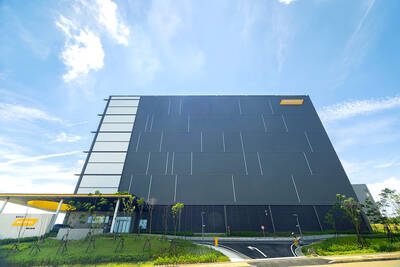
POWER BUILDUP: Powered by Nvidia’s B200 Blackwell chips, the data center would support MediaTek’s computing power demand and business growth, the company said Smartphone chip designer MediaTek Inc (聯發科) yesterday launched a new artificial intelligence (AI) data center with a maximum capacity of 45 megawatts to meet its rising demand for computing power required to develop new advanced chips for AI applications. The company has completed the first-phase computing power buildup at the data center in Miaoli County’s Tongluo Township (銅鑼), providing 15 megawatts of capacity to support its research and development (R&D) capabilities, despite an industrywide shortage of key components, MediaTek said. Supply constraints have plagued a wide range of key components, including memory chips, solid-state drives, power supply units and central
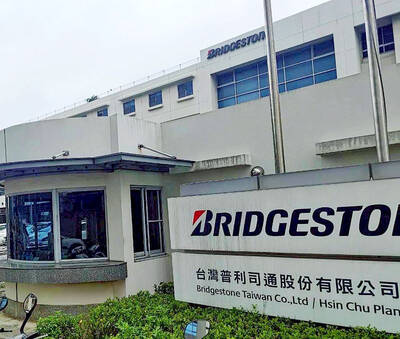
TRANSITION: With the closure, the company would reorganize its Taiwanese unit to a sales and service-focused model, Bridgestone said Bridgestone Corp yesterday announced it would cease manufacturing operations at its tire plant in Hsinchu County’s Hukou Township (湖口), affecting more than 500 workers. Bridgestone Taiwan Co (台灣普利司通) said in a statement that the decision was based on the Tokyo-based tire maker’s adjustments to its global operational strategy and long-term market development considerations. The Taiwanese unit would be reorganized as part of the closure, effective yesterday, and all related production activities would be concluded, the statement said. Under the plan, Bridgestone would continue to deepen its presence in the Taiwanese market, while transitioning to a sales and service-focused business model, it added. The Hsinchu


 RSS
RSS