


Handset chip designer MediaTek Inc (聯發科) yesterday said it won back market share in China as its two-year “recovery plan,” which includes an improved product portfolio, yielded early results.
The plan was initiated in summer last year, after the Hsinchu-based firm hired chief executive Rick Tsai (蔡力行) to guide the company out of the woods.
A flawed product portfolio in 2016 dealt a blow to MediaTek’s market position and financial performance last year.
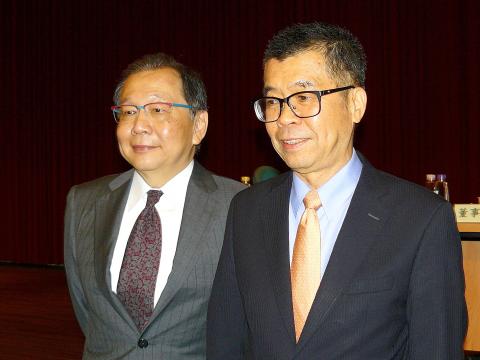
Photo: CNA
“Since the middle of last year, we have seen some recovery in terms of [demand for] customer ‘design-in’ and profits,” MediaTek chairman Tsai Ming-kai (蔡明介) told a news conference following an annual shareholders’ meeting, meaning that more phone vendors are using MediaTek’s chips.
“We think the first phase of our recovery plan will be achieved by the end of next year,” he said.
MediaTek has changed its product strategy to refocus on mid and low-range processors and ventured into Internet of Things chips, power management chips and application-specific ICs used in cryptocurrency mining machines.
The company said it has seen its market share bounce back to between 40 percent and 50 percent in China, compared with more than 30 percent in the prior year.
“We have turned the corner. We have seen an upturn in momentum over the past year,” Rick Tsai told reporters. “You might also notice that we regained [orders] from an [old] customer, which recently unveiled a new product powered by our Helio P22 [processor].”
Chinese smartphone vendor Xiaomi Corp (小米) could be the company Tsai implied.
Xiaomi on Wednesday unveiled a new entry-level model dubbed Red Rice 6 that is equipped with MediaTek’s Helio P22 processors, and it uses the company’s Helio A22 processors for the low-cost version of the phone.
In April, MediaTek beat rival Qualcomm to supply Helio P60 chips to Oppo Mobile Telecommunications Corp (歐珀移動) for its mid-range R15 smartphone.
Vivo Communication Technology Co (維沃) has also picked Helio 60 and Helio 22 processors to adapt its phones for artificial intelligence (AI) applications, such as facial recognition and voice assistance.
MediaTek plans to unveil two to three new processors in the second half of this year to coincide with the handset industry’s peak season, taking on Qualcomm’s new processors, such as the Snapdragon 710.
The company is also accelerating investment in key technologies including AI and 5G.
“Our previously planned NT$200 billion [US$6.67 billion] five-year research and development budget is definitely not enough. We will increase the budget,” Tsai Ming-kai said, without giving a specific figure.
The company, which employs about 10,000 people, has research and development teams in Taiwan, the US, India and China, it said.
Shareholders yesterday approved the distribution of a cash dividend of NT$7.5 per common share, representing a payout ratio of 48.2 percent based on last year’s earnings per share of NT$15.56.
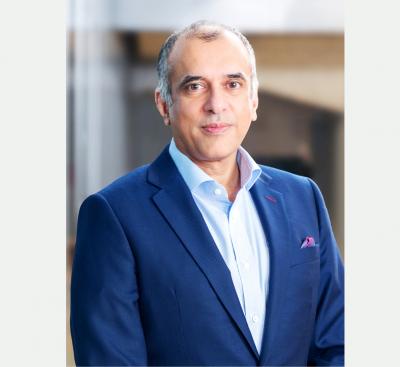
HSBC Holdings PLC is deepening its commitment to Taiwan as the economy emerges as one of the bank’s fastest-growing markets globally, driven by an artificial intelligence (AI) investment boom, expanding cross-border trade, and rising wealth creation. “The advantage that Taiwan has is a growth story linked to the semiconductor and broader AI industries, strong underlying corporate performance, and wealth creation,” said Surendra Rosha, HSBC’s co-chief executive for Asia and the Middle East, in an exclusive interview with the Taipei Times on June 2, during this year’s HSBC Taiwan Conference. That combination has helped HSBC cement its position as the most profitable international

Taiwanese firms have increased investment in the Philippines in recent years as Manila’s ties with Washington deepen and global supply chains continue to shift away from China, an expert at the Chung-Hua Institution for Economic Research (CIER, 中華經濟研究院) said yesterday. The Philippines had not been among Taiwanese investors’ top choices in Southeast Asia, CIER Taiwan ASEAN Studies Center director Kristy Hsu (徐遵慈) said at a seminar in Taipei. However, Taiwan’s investment in the country has grown significantly since the COVID-19 pandemic, reaching US $257 million last year, a high in recent years, she said. Although Taiwan’s total investment in the Philippines still lags

Intel Corp regards Taiwan Semiconductor Manufacturing Co (TSMC, 台積電) as a longstanding partner, as the US chipmaker would continue outsourcing production of advanced chips to TSMC, Intel chief executive officer Lip-Bu Tan (陳立武) said yesterday. “I don’t look at people as competitors. I look at the collaboration... Nvidia is also, you know, a good friend,” Tan told a news conference following his keynote speech at the Computex trade show in Taipei. “It’s a very trusted partnership for us... We are a big, top customer for them, and we’re going to continue doing that,” he said, referring to TSMC, the world’s largest foundry

Hon Hai Precision Industry Co (鴻海精密) yesterday said it would work with US chipmaker Intel Corp to jointly develop and deploy next-generation artificial intelligence (AI) infrastructure and intelligent computing platforms in a move to capture booming demand for AI computing systems. Hon Hai, also known as Foxconn Technology Group (富士康), said in a statement that the partnership would combine its global manufacturing scale, system integration expertise and AI data center deployment capabilities with Intel’s strengths in processor architecture, silicon technologies and software ecosystem. The companies said they plan to work on equipment used in AI data centers, including server racks powered by


 RSS
RSS