


The nation’s two major garment suppliers, Quang Viet Enterprise Co (廣越企業) and Makalot Industrial Co (聚陽), are pouring resources into the development of their latest smartwear technologies, company executives said yesterday at Computex Taipei.
“Since 2016, we have been working on research and development for a smart jacket that integrates temperature control and GPS tracking functions,” Quang Viet president Charles Wu (吳朝筆) said on the sidelines of the global trade show.
Quang Viet said it has teamed up with local partners, including the government-backed Taiwan Textile Research Institute (TTRI, 紡研所), broadband system integrator HwaCom Systems Inc (華電聯網) and IP surveillance solution provider Brickcom Corp (金磚通訊科技), to develop the cutting-edge product.
Formosa Taffeta Co (福懋興業), a textile manufacturing arm of Formosa Plastics Group (台塑集團), is to provide functional fabrics used in the new product, Wu said.
The four companies are to receive NT$120 million (US$4.02 million) in funding from the Ministry of Economic Affairs, said Shen Chien-lung (沈乾龍), chief officer of TTRI’s smart textiles division.
Taipei-headquartered Quang Viet, whose customers include North Face Inc and Under Armour Inc, said it is in talks with several brand clients for the launch of its smart jacket.
“The smart clothing would be sold for the fall/winter 2020 season at the earliest, as our brand customers have already placed orders for next year’s shipments,” Wu said, adding that Quang Viet is ready to begin mass production.
The apparel supplier has set the jacket’s selling price at US$399, and aims to attract more brand customers, he added.
Quang Viet plans to spend up to NT$20 million in capital expenditures to accelerate the commercialization of its smartwear product over the next two years, it said.
Meanwhile, Makalot is seeking certifications for its latest functional wear featuring graphene, a material that helps devices detect and monitor electrical activity in the wearer’s heart more accurately.
Makalot, which makes products for Gap Inc, Kohl’s Corp and Target Corp, has been working on the product with Hsinchu-based healthcare solution provider Singular Wings Medical Co (奇翼醫電) for more than two years.
The company aims to differentiate itself from its local peers by providing high-end products that can be used for medical purposes, as technical thresholds and gross margins for this type of product are usually higher, said Tsai Wayi (蔡維溢), executive assistant to Makalot’s chief executive.
In addition to its existing customers, the company is in talks with hospitals in Taiwan and China regarding applications of its smart clothing, Tsai said.
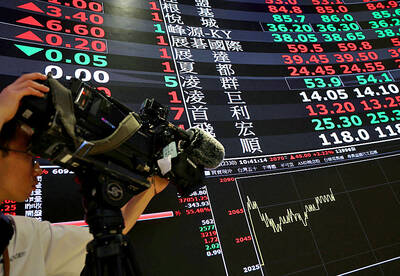
After several years flying high as Asia’s best Nvidia Corp proxy, Taiwan Semiconductor Manufacturing Co (TSMC, 台積電) is increasingly vying with other artificial intelligence (AI) stocks for investor attention. Stock traders are chasing a wider array of beneficiaries as mainstream usage of AI creates demand for hardware beyond the most-advanced chips TSMC makes for Nvidia. Subthemes from the deepening memory crunch to advances in robotics are also luring bids. At the same time, investment caps on single stocks are pushing funds to diversify, while retail investors long familiar with TSMC through its US depositary receipts are being offered a broader set of
UNDER MICROSCOPE: Taiwan detained three people who allegedly conspired to buy servers in Taiwan and export them using fraudulent documentation, prosecutors said Nvidia Corp chief executive officer Jensen Huang (黃仁勳) on Saturday urged Super Micro Computer Inc to tighten up on compliance after Taiwan detained three people this week for allegedly making fraudulent declarations about artificial intelligence (AI) servers made by its US partner. The development marked the nation’s first crackdown on semiconductor smuggling, which grew after the US slapped restrictions on exports of high-end chips such as Nvidia AI accelerators to China. Nvidia is “rigorous” in explaining regulations to all of its partners, Huang told reporters after arriving in Taipei. “Ultimately Super Micro has to run their own company,” he said in response to
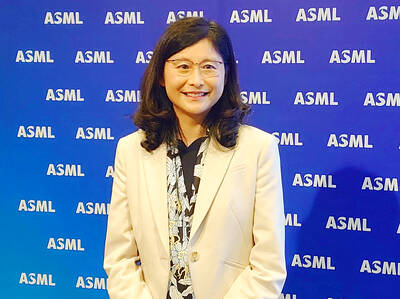
Netherlands-based semiconductor equipment supplier ASML Holding NV yesterday said that it is planning to hire an additional 1,000 people in Taiwan this year in response to growing demand from clients. ASML had previously planned to recruit 600 people this year, but that the plan has been adjusted upward, ASML vice president and ASML Taiwan general manager Grace Wang (汪佳慧) told reporters. ASML has a workforce of more than 4,500 in Taiwan, accounting for about 10 percent of its global total, Wang said. This year’s recruitment campaign would focus on adding people in the customer support, manufacturing and supply chain domains to assist ASML
TECH RELIANCE: Growth is increasingly reflecting an unequal K-shaped distribution, where technology sectors outperform and other industries struggle, an expert said Standard Chartered Bank has significantly raised its forecast for Taiwan’s economic growth to 9.5 percent this year, up from 7.6 percent previously, citing surging artificial intelligence (AI) demand driving exports, semiconductor production and investment. The upgrade reflects a sustained AI supercycle that continues to fuel demand for advanced chips and technology infrastructure, which form the backbone of Taiwan’s exports, the bank said in a report this week. “We raise our 2026 growth forecast to reflect a much stronger-than-expected first-quarter GDP figure,” Standard Chartered senior economist for greater China and Asia Tommy Wu (胡東安) said in the report. Driven largely by a 35.3 percent


 RSS
RSS