


Greek student Stavros Tsompanidis was walking on a beach when he saw a business idea in the piles of dried-up seagrass.
He decided to recycle it to make iPhone cases, sunglasses and gift boxes.
Four years on, his start-up, PHEE IKE, sells its products across Greece and abroad. He represents a change in mindset among young Greeks who are turning to entrepreneurship as a result of the financial crisis.
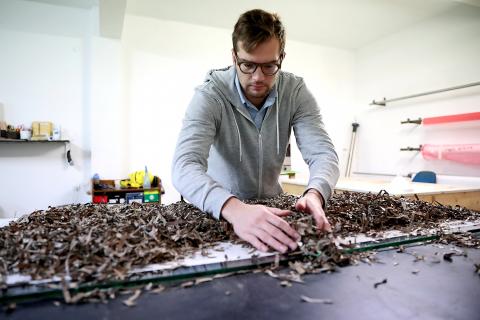
Photo: Reuters
“If we don’t act, in the next five years we’ll be saying the same things: that Greece isn’t going well, that there are no jobs ... that we have a new program by the International Monetary Fund and European Union to support us,” the 25-year-old said.
Greek start-ups are mushrooming in a financial crisis that started in 2008. The economy is only just recovering. It shrank by a quarter and cut off traditional routes to employment — jobs in government and family businesses.
Start-ups were virtually unheard of a decade ago, but they are now creating jobs and offering some hope that Greece can reverse an exodus of its highly skilled youth.
Greece has no official start-ups register, but several private databases show they number between about 600 and 1,100. The earliest count of start-ups, made in 2010 by non-profit advisory Endeavour Greece, stood at just 16.
AngelList, an online database, put the current number at 600, while audit firm Grant Thornton LLP found 1,127 in a report last year. Greek venture capital firm Marathon VC, established only last year, counts about 1,000 tech start-ups in its database.
Venture capital in the sector is growing.
A European Investment Fund (EIF) initiative, supported by private investors, is expected to pump about 400 million euros (US$479.48 million) into Greek start-ups and other small businesses over the next five years.
In 2008, when George Tziralis, a partner at Marathon VC, launched a networking event for start-ups, about 12 people turned up. Now, 200 to 300 people attend each month and three to five new start-ups are presented.
“Ten years ago there was almost nothing,” Tziralis said. “Today we’re seeing something much more mature, which we believe to be the tip of the iceberg.”
Marathon VC has made five investments so far, has three more in the pipeline and Tziralis believes it can allocate its entire 32 million euro fund in under a year.
Tourism and shipping, Greece’s two main industries, are driving a tentative economic recovery.
The structure of the economy could change if the number of start-ups continues to grow, economists have said.
During the crisis, thousands of firms shut and unemployment peaked at 27.9 percent, with six in 10 young jobseekers out of work.
About 223,000 Greeks aged 25 to 39 emigrated in 2008 to 2013 to richer countries, central bank data show.
The austerity that was a condition of repeated international financial bailouts deepened the depression. Those who stayed in Greece had to innovate to survive.
“The crisis created necessity entrepreneurship,” Hellenic Startups Association vice chairman Panagiotis Zamanis said.
National Bank of Greece SA said the tech start-up sector is showing particular promise, even though it only has a total valuation of about 300 million euros.
“The Greek ecosystem of tech start-ups is still in its infancy, though it already shows signs of high growth potential,” it said in a report.
Three engineers founded Ex Machina, a software start-up offering predictive analytics for weather-sensitive industries in the summer of 2015, when capital controls were imposed.
“We wanted to take more risk because we believed that — the way things were — it couldn’t get worse,” said one of the founders, 38-year-old Manolis Nikiforakis.
He was speaking in Ex Machina’s Athens office in Greek lender Eurobank Ergasias SA’s start-up hub, EGG, where cubicle walls are covered in business plans and Post-it notes.
Ex Machina has Greece’s biggest gas supplier among its customers and is in talks for funding to expand abroad.
The owners of Ex Machina and other start-ups said they have succeeded, despite the constraints of Greece’s business environment.
Red tape, high taxes and funding constraints are holding back entrepreneurs, they said.
Greece ranks 87th out of 137 countries in the World Economic Forum’s Global Competitiveness Index, behind Tajikistan and Ukraine. Taxation, which has climbed as a result of austerity, and crippling bureaucracy are cited among hurdles to business.
It took Ex Machina three months to open a bank account, during which clients could not pay for its services.
Funding was scarce as Greek investors were used to more traditional sectors such as restaurants and tourism. Ex Machina and PHEE at first relied on savings, grants and winning start-up competitions.
The Greek entrepreneurs behind taxi-hailing app Beat, bought last year by Germany’s Daimler AG, set up in London because of the more flexible legal framework and lower start-up costs.
“I tried to see with my accountant how long it would take to open the company in Greece, to open a bank account and then get the money,” Beat founder Nikos Drandakis told the Greek parliament in March. “We were talking about more than one to two months... We opened the company in England in one day.”
The Greek government is considering introducing tax breaks for start-ups this summer.
“The economy’s growth depends on how well these businesses fair in the next 10 years,” Eurobank deputy chief executive officer Stavros Ioannou said. “We have to help them.”
Last month, Athens teamed up with the EIF to launch Equifund, a 400 million euro fund aimed at start-ups and other small companies. About one-quarter of the money is to be from private investors, the rest would be public funds.
The EIF said in an e-mailed statement that it hopes to fight “brain drain, maybe even reversing it into brain gain.”
The money should focus on helping start-ups expand beyond the Greek market, said Costas Andripoulos, professor of innovation and entrepreneurship at London’s Cass Business School.
Workable, a start-up whose software aims to make hiring easier, was launched in Athens in 2012. It now has offices in London and Boston, and 180 staff, most of whom are in Greece.
It has raised US$32 million from investors and counts Porsche AG, Ryanair Ltd and Marks & Spencer Group PLC among its 6,000 customers.
Workable’s Nikos Moraitakis quit a job in Dubai to set up the firm in Athens, despite Greece’s problems.
“Successful [start-ups] are often created in recession,” he said.

The domestic unit of the Chinese-owned, Dutch-headquartered chipmaker Nexperia BV will soon be able to produce semiconductors locally within China, according to two company sources. Nexperia is at the center of a global tug-of-war over critical semiconductor technology, with a Dutch court in February ordering a probe into alleged mismanagement at the company. The geopolitical tussle has disrupted supply chains, with some carmakers reportedly forced to cut production due to chip shortages. Local production would allow Nexperia’s domestic arm, Nexperia Semiconductors (China) Ltd (安世半導體中國), to bypass restrictions in place since October on the supply of silicon wafers — etched with tiny components to

Singapore-based ride-hailing and delivery giant Grab Holdings Ltd has applied for regulatory approval to acquire the Taiwan operations of Germany-based Delivery Hero SE's Foodpanda in a deal valued at about US$600 million. Grab submitted the filing to the Fair Trade Commission on Friday last week, with the transaction subject to regulatory review and approval, the company said in a statement yesterday. Its independent governance structure would help foster a healthy and competitive market in Taiwan if the deal is approved, Grab said. Grab, which is listed on the NASDAQ, said in the filing that US-based Uber Technologies Inc holds about 13 percent of

Taiwan Semiconductor Manufacturing Co (TSMC, 台積電) yesterday received government approval to deploy its advanced 3-nanometer (3nm) process at its second fab currently under construction in Japan, the Ministry of Economic Affairs said in a news release. The ministry green-lit the plan for the facility in Kumamoto, which is scheduled to start installing equipment and come online in 2028 with a monthly production capacity of 15,000 12-inch wafers, the ministry said. The Department of Investment Review in June 2024 authorized a US$5.26 billion investment for the facility, slated to manufacture 6- to 12nm chips, significantly less advanced than 3nm process. At a meeting with
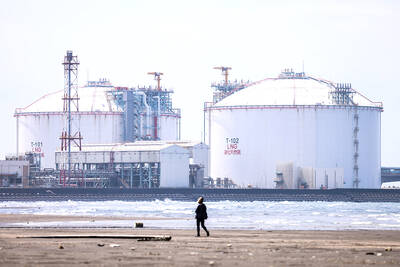
Taiwan is open to joining a global liquefied natural gas (LNG) program if one is created, but on the condition that countries provide delivery even in a scenario where there is a conflict with China, an energy department official said yesterday. While Taiwan’s priority is to have enough LNG at home, the nation is open to exploring potential strategic reserves in other countries such as Japan or South Korea, Energy Administration Deputy Director-General Chen Chung-hsien (陳崇憲) said. While the LNG market does not have a global reserve for emergencies like that of oil, the concept has been raised a few times —


 RSS
RSS