


Ride-hailing service Uber Technologies Inc yesterday said it would suspend its licensed service in Greece after the approval of local legislation that imposes stricter regulation on the sector.
Uber, which operates a licensed service in the Greek capital, has faced opposition from local taxi drivers who accuse it of taking their business.
“New local regulations were voted on recently with provisions that impact ride-sharing services,” Uber said in a blog post. “We have to assess if and how we can operate within this new framework and so will be suspending uberX in Athens from next Tuesday until we can find an appropriate solution.”

Photo: Reuters
Uber operates two services in Athens: UberX, which uses professional licensed drivers, and UberTAXI, which uses taxi drivers.
The new regulations require each trip to start and end in the fleet partner’s designated headquarters or parking area, something Uber does not do.
A digital registry of all ride-sharing platforms and their passengers is also to be created.
The company launched in Europe in 2011, angering some local authorities and taxi drivers who said it did not abide by the same rules on insurance, licensing and safety.
Following widespread protests, court battles and bans, Uber has taken a more emollient stance under its new chief executive Dara Khosrowshahi, suspending operations in various cities in order to comply with local regulations.
UberX launched in Athens in 2015 and more than 450,000 people have used its smartphone app to book a ride.
News of the new regulation last year angered some Athenians and tens of thousands signed a petition launched by Beat — a local ride-sharing service — in favor of ride-hailing services.
UberX drivers have to be employed by fleet partners such as car rental companies or tourist agencies and their cars cannot be more than seven years old.
The data registry and return-to-garage requirement will only apply to ride-hailing services like Uber and Beat, while taxi drivers will be able to use cars that are up to 22 years old.

Taichung reported the steepest fall in completed home prices among the six special municipalities in the first quarter of this year, data compiled by Taiwan Realty Co (台灣房屋) showed yesterday. From January through last month, the average transaction price for completed homes in Taichung fell 8 percent from a year earlier to NT$299,000 (US$9,483) per ping (3.3m²), said Taiwan Realty, which compiled the data based on the government’s price registration platform. The decline could be attributed to many home buyers choosing relatively affordable used homes to live in themselves, instead of newly built homes in the city’s prime property market, Taiwan Realty
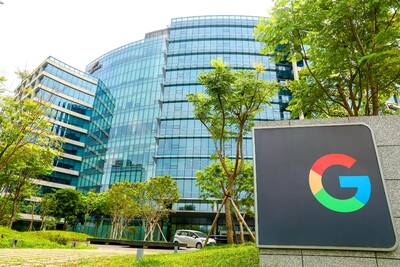
The government yesterday approved applications by Alphabet Inc’s Google to invest NT$27.08 billion (US$859.98 million) in Taiwan, the Ministry of Economic Affairs said in a statement. The Department of Investment Review approved two investments proposed by Google, with much of the funds to be used for data processing and electronic information supply services, as well as inventory procurement businesses in the semiconductor field, the ministry said. It marks the second consecutive year that Google has applied to increase its investment in Taiwan. Google plans to infuse NT$25.34 billion into Charter Investments Ltd (特許投資顧問) through its Singapore-based subsidiary Fructan Holdings Singapore Pte Ltd, and

JET JUICE: The war on Iran’s secondary effects have seen fuel prices skyrocket, knocking flight schedules down to earth in return as airlines struggle with costs Airline passengers should brace for more irritation in the next few months as carriers worldwide cancel flights and ground planes to cope with stratospheric increases in jet-fuel prices. Dutch flag carrier KLM is the latest company to cut its schedule, saying on Thursday that it would scrap 80 return flights at Amsterdam’s Schiphol Airport in the coming month. That puts it in the same league as United Airlines Holdings Inc, Deutsche Lufthansa AG and Cathay Pacific Airways Ltd, which have all pruned itineraries to mitigate costs. Global capacity for next month has been reduced by about 3 percentage points, with all

The US said it plans to help build a first-of-its-kind industrial hub in the Philippines to boost production of inputs crucial to US supply chains. The 4,000-acre hub is intended to be “a purpose-built platform for allied manufacturing” and “an investment acceleration hub where the specific industrial activities are shaped by market demand,” the US Department of State said on Thursday. The project — touted as an “economic security zone” — would be within the Luzon Economic Corridor, a flagship economic project backed by the US and Japan on the main Philippine island. The project was also described as “the first artificial intelligence


 RSS
RSS