


At a secret location in the middle of one of Iceland’s breathtaking lava fields stands a warehouse whose nondescript siding belies the fact it is ground zero in a digital gold rush for cryptocurrencies that is burning through more electricity than Icelanders’ homes.
Iceland’s combination of fire and ice not only makes it a stunning site to film parts of the medieval fantasy epic Game of Thrones, it also offers a unique combination of cheap renewable energy and free air-conditioning that is making it a promised land for those “mining” virtual currencies, including bitcoin, using powerful computers that are voracious users of electricity and throw off lots of heat.
And noise.
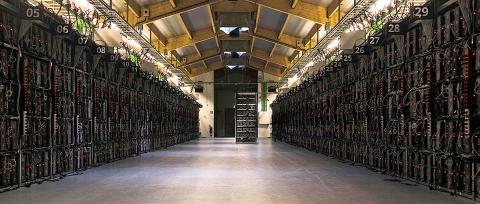
Photo: AFP
The din from shelves and shelves of computers whirring inside the 400m2 warehouse rivals a jet during takeoff.
Unlike the dollar and the euro, bitcoin is not issued by central banks.
Instead it is “mined” or created in computer “farms.” It uses computers souped up with six graphics cards tasked with the heavy lifting of thousands of thousands of calculations needed to solve complex algorithms to process bitcoin transactions and be rewarded with bitcoins in exchange.
“It’s possible for everyone to do it at home. There is no one stopping you [and] there are no technical limitations,” Genesis Mining Ltd head of operations Philip Salter said.
Last year saw a meteoric rise of hundreds of virtual currencies led by bitcoin, which was fetching almost US$20,000 per unit in December, as both amateur and professional miners jumped onto the cryptocurrency bandwagon.
Home miners often use an old computer, have no choice where they operate and are lucky if they get a fraction of a bitcoin every now and then.
Professionals like Genesis Mining need to invest serious amounts to build and equip a facility like this one with a surface area one-third of an Olympic swimming pool, but which has a much greater chance of catching part of the 12.5 bitcoins created every 10 minutes.
However, they can choose where to set up operations, and that choice can have a huge impact on their profit as the price of the electricity to power and cool the computers varies considerably from country to country.
Iceland is attractive for cryptocurrency mining because of its cheap electricity, which has the added advantage of being generated from clean geothermal energy.
At a 0.065 euros (US$0.08) per kilowatt-hour before tax, the cost of electricity in Iceland is nearly half the EU average.
This makes Iceland one of the most competitive nations in Europe after Serbia, Macedonia and Bosnia.
However, Iceland also has an advantage in that its average annual temperature is about 5°C, meaning mining farms can for most of the time just suck in cool air from the outside instead of running energy-hungry air-conditioners.
The power usage efficiency “is really good in Iceland because of the natural cooling,” said Johann Snorri Sigurbergsson, director of business development at Iceland’s power company HS Orka.
A growing number of firms like Genesis Mining, which was previously based in Bosnia, have chosen to set up shop in Iceland, which means demand for electricity has shot up.
“The demand has been increasing exponentially, especially the last three months,” Sigurbergsson said.
The increase has come as the price of bitcoin has plunged from its peak of nearly US$20,000 to less than US$9,000, with analysts saying that the price decline has made operating costs even more of a concern for miners.
Salter, who fears the growing competition in the sector, said bitcoin’s “price isn’t a very good indicator on how [the] bitcoin mining industry is doing.”
He might not have that much more competition from neighbors, as Sigurbergsson said HS Orka “will not be able to supply all the demand” from miners wanting to set up operations.
The utility is “in the great position of we can pick and choose who we can do business with,” he said.
HS Orka has estimated that Iceland’s three largest bitcoin farming companies this year will consume more electricity than the nation’s 350,000 inhabitants.
Miners also have another worry: Even a virtual gold rush attracts real thieves.
From December to January, equipment worth an estimated 1.6 million euros was stolen.
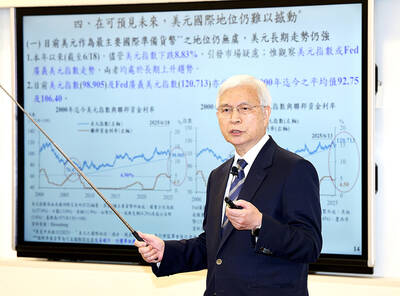
NOT JUSTIFIED: The bank’s governor said there would only be a rate cut if inflation falls below 1.5% and economic conditions deteriorate, which have not been detected The central bank yesterday kept its key interest rates unchanged for a fifth consecutive quarter, aligning with market expectations, while slightly lowering its inflation outlook amid signs of cooling price pressures. The move came after the US Federal Reserve held rates steady overnight, despite pressure from US President Donald Trump to cut borrowing costs. Central bank board members unanimously voted to maintain the discount rate at 2 percent, the secured loan rate at 2.375 percent and the overnight lending rate at 4.25 percent. “We consider the policy decision appropriate, although it suggests tightening leaning after factoring in slackening inflation and stable GDP growth,”
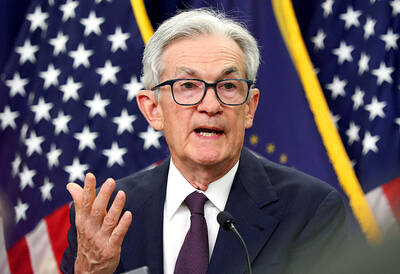
DIVIDED VIEWS: Although the Fed agreed on holding rates steady, some officials see no rate cuts for this year, while 10 policymakers foresee two or more cuts There are a lot of unknowns about the outlook for the economy and interest rates, but US Federal Reserve Chair Jerome Powell signaled at least one thing seems certain: Higher prices are coming. Fed policymakers voted unanimously to hold interest rates steady at a range of 4.25 percent to 4.50 percent for a fourth straight meeting on Wednesday, as they await clarity on whether tariffs would leave a one-time or more lasting mark on inflation. Powell said it is still unclear how much of the bill would fall on the shoulders of consumers, but he expects to learn more about tariffs
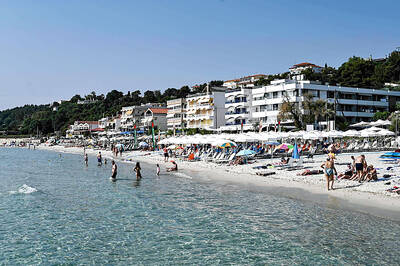
Greek tourism student Katerina quit within a month of starting work at a five-star hotel in Halkidiki, one of the country’s top destinations, because she said conditions were so dire. Beyond the bad pay, the 22-year-old said that her working and living conditions were “miserable and unacceptable.” Millions holiday in Greece every year, but its vital tourism industry is finding it harder and harder to recruit Greeks to look after them. “I was asked to work in any department of the hotel where there was a need, from service to cleaning,” said Katerina, a tourism and marketing student, who would
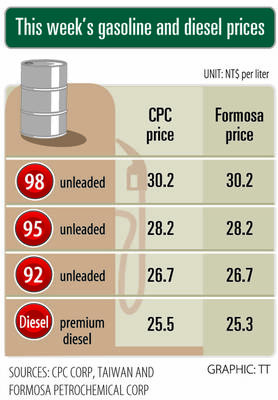
i Gasoline and diesel prices at fuel stations are this week to rise NT$0.1 per liter, as tensions in the Middle East pushed crude oil prices higher last week, CPC Corp, Taiwan (台灣中油) and Formosa Petrochemical Corp (台塑石化) said yesterday. International crude oil prices last week rose for the third consecutive week due to an escalating conflict between Israel and Iran, as the market is concerned that the situation in the Middle East might affect crude oil supply, CPC and Formosa said in separate statements. Front-month Brent crude oil futures — the international oil benchmark — rose 3.75 percent to settle at US$77.01


 RSS
RSS