


Google is making the biggest changes to the advertising rules on YouTube since the video site’s inception, another attempt to clean up its content and answer persistent complaints from advertisers.
YouTube is to impose stricter criteria for the types of videos that can earn money on the site and is to introduce a new vetting process for the top-shelf videos it offers advertisers, the company said on Tuesday in a statement.
In the past year, YouTube has dealt with a series of firestorms, starting in March last year when ads were found next to violent and racist videos, leading several advertisers to pull their business.
However, problems persisted.
Bloomberg last week reported that Alphabet Inc’s Google had discussed some of the new changes with partners last week following alarming revelations about YouTube videos featuring children.
Google does not publicly report YouTube revenue, but has said the world’s largest video site is one of its fastest-growing businesses.
In April last year, after an ad boycott began, YouTube raised the cap for splitting revenue with video creators, requiring these sites to have at least 10,000 views. Now, Google only opens advertising to YouTube channels with more than 1,000 subscribers and 4,000 viewing hours racked up over a year.
The restrictions are designed to filter out offensive videos, although YouTube’s latest controversies have involved some of its most popular creators, like PewDiePie and Logan Paul.
“While that threshold provided more information to determine whether a channel followed our community guidelines and policies, it’s been clear over the last few months that we need a higher standard,” YouTube chief business officer Robert Kyncl and product lead Neal Mohan said in a joint blog post.
As YouTube fielded complaints from advertisers, the company has defended itself by pointing to the number of creators that depend on the service for their livelihood. Some of those video creators reported as much as an 80 percent drop in sales following YouTube’s tighter restrictions.
In the blog post, the company said that 99 percent of the creators affected by the new changes earn less than US$100 a year from YouTube ads.
Aside from the new restrictions, YouTube is pledging that its staff of content moderators would screen every single video in Google Preferred, the company’s premium offering for marketers.
Google said that the manual review process would be set up by the middle of next month in the US and by the end of March in other countries.
After the initial boycott, YouTube gave advertisers a slew of new controls to ensure their ads do not run next to offensive content.
However, similar issues occurred again, flaring up in the fall around content aimed at children.

The domestic unit of the Chinese-owned, Dutch-headquartered chipmaker Nexperia BV will soon be able to produce semiconductors locally within China, according to two company sources. Nexperia is at the center of a global tug-of-war over critical semiconductor technology, with a Dutch court in February ordering a probe into alleged mismanagement at the company. The geopolitical tussle has disrupted supply chains, with some carmakers reportedly forced to cut production due to chip shortages. Local production would allow Nexperia’s domestic arm, Nexperia Semiconductors (China) Ltd (安世半導體中國), to bypass restrictions in place since October on the supply of silicon wafers — etched with tiny components to

Singapore-based ride-hailing and delivery giant Grab Holdings Ltd has applied for regulatory approval to acquire the Taiwan operations of Germany-based Delivery Hero SE's Foodpanda in a deal valued at about US$600 million. Grab submitted the filing to the Fair Trade Commission on Friday last week, with the transaction subject to regulatory review and approval, the company said in a statement yesterday. Its independent governance structure would help foster a healthy and competitive market in Taiwan if the deal is approved, Grab said. Grab, which is listed on the NASDAQ, said in the filing that US-based Uber Technologies Inc holds about 13 percent of
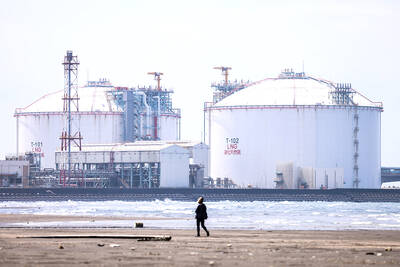
Taiwan is open to joining a global liquefied natural gas (LNG) program if one is created, but on the condition that countries provide delivery even in a scenario where there is a conflict with China, an energy department official said yesterday. While Taiwan’s priority is to have enough LNG at home, the nation is open to exploring potential strategic reserves in other countries such as Japan or South Korea, Energy Administration Deputy Director-General Chen Chung-hsien (陳崇憲) said. While the LNG market does not have a global reserve for emergencies like that of oil, the concept has been raised a few times —

Taiwan Semiconductor Manufacturing Co (TSMC, 台積電) yesterday received government approval to deploy its advanced 3-nanometer (3nm) process at its second fab currently under construction in Japan, the Ministry of Economic Affairs said in a news release. The ministry green-lit the plan for the facility in Kumamoto, which is scheduled to start installing equipment and come online in 2028 with a monthly production capacity of 15,000 12-inch wafers, the ministry said. The Department of Investment Review in June 2024 authorized a US$5.26 billion investment for the facility, slated to manufacture 6- to 12nm chips, significantly less advanced than 3nm process. At a meeting with


 RSS
RSS