


Pan German Universal Motors Ltd (汎德永業), which sells BMW AG’s cars in Taiwan, on Thursday said that imported vehicles might contribute nearly half of the nation’s new cars sales next year, given the strong local currency.
The appreciation of the New Taiwan dollar makes imported products more affordable for customers, Pan German Universal Group (汎德永業集團) chairman James Tang (唐榮椿) said.
“There is still uncertainty in the nation’s car market, but imported cars are likely to achieve a larger share next year,” he said after a news conference for the upcoming Taipei International Auto Show.
From January through last month, the nation’s imported car sales totaled 166,951 units, a 8.95 percent increase from 153,230 units during the period last year, outpacing the overall market’s 1.2 percent growth, industry statistics showed.
The imported car sector accounted for 41.5 percent of the nation’s new car sales in the first 11 months, up from 38.5 percent year-on-year, the data showed.
Apart from a narrowing price gap between imported cars and locally made vehicles, industry figures show that Taiwanese have become more aware of car safety, local media reported.
Asked about Pan German’s plans for the coming year, Tang said the company would debut on the main board in the second half of next year at the earliest.
The company in October started trading on the Taipei Exchange’s Emerging Stock Board. According to regulations, the stock must be listed on the emerging board for six months or longer before moving to the Taiwan Stock Exchange, he said.
The founding Tang family, which also runs a car distribution business in China, owns more than 80 percent of Pan German.
The auto show is scheduled to begin on Saturday and is to run until Jan. 7 at Taipei’s Nangang Exhibition Center.
The show, which is to feature more than 350 new car models from 41 foreign brands, is expected to attract 300,000 visitors over nine days, Taipei Automobile Distributors Association chairman Eric Yu (游浩乙) said.
Shares of contract chipmaker Taiwan Semiconductor Manufacturing Co (TSMC, 台積電) came under pressure yesterday after a report that Apple Inc is looking to shift some orders from the Taiwanese company to Intel Corp. TSMC shares fell NT$55, or 2.4 percent, to close at NT$2,235 on the local main board, Taiwan Stock Exchange data showed. Despite the losses, TSMC is expected to continue to benefit from sound fundamentals, as it maintains a lead over its peers in high-end process development, analysts said. “The selling was a knee-jerk reaction to an Intel-Apple report over the weekend,” Mega International Investment Services Corp (兆豐國際投顧) analyst Alex Huang
Taiwan Semiconductor Manufacturing Co (TSMC, 台積電) is expected to remain Apple Inc’s primary chip manufacturing partner despite reports that Apple could shift some orders to Intel Corp, industry experts said yesterday. The comments came after The Wall Street Journal reported on Friday that Apple and Intel had reached a preliminary agreement following more than a year of negotiations for Intel to manufacture some chips for Apple devices. Taiwan Institute of Economic Research (台灣經濟研究院) economist Arisa Liu (劉佩真) said TSMC’s advanced packaging technologies, including integrated fan-out and chip-on-wafer-on-substrate, remain critical to the performance of Apple’s A-series and M-series chips. She said Intel and Samsung
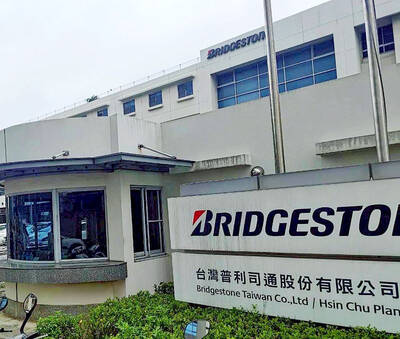
TRANSITION: With the closure, the company would reorganize its Taiwanese unit to a sales and service-focused model, Bridgestone said Bridgestone Corp yesterday announced it would cease manufacturing operations at its tire plant in Hsinchu County’s Hukou Township (湖口), affecting more than 500 workers. Bridgestone Taiwan Co (台灣普利司通) said in a statement that the decision was based on the Tokyo-based tire maker’s adjustments to its global operational strategy and long-term market development considerations. The Taiwanese unit would be reorganized as part of the closure, effective yesterday, and all related production activities would be concluded, the statement said. Under the plan, Bridgestone would continue to deepen its presence in the Taiwanese market, while transitioning to a sales and service-focused business model, it added. The Hsinchu
Taiwan Semiconductor Manufacturing Co (TSMC, 台積電) has approved a capital budget of US$31.28 billion for production expansion to meet long-term development needs during the artificial intelligence (AI) boom. The company’s board meeting yesterday approved the capital appropriation plan for purposes such as the installation of advanced technology capacity and fab construction, the world’s largest contract chipmaker said in a statement. At an earnings conference last month, TSMC forecast that its capital expenditure for this year would be at the higher end of the US$52 billion to US$56 billion range it forecast in January in response to robust demand for 5G, AI and


 RSS
RSS