


The Yilan County Government has fired the first shot by imposing land taxes of up to five times the norm on underutilized lots in the county’s industrial parks to support the Cabinet’s effort to ease the land shortage for industrial properties.
Acting Yilan County Commissioner Derek Chen (陳金德) on Thursday said he is taking an inventory of underutilized plots of land under his jurisdiction and will levy additional land taxes on vacant plots at rates two to five times the regular rates to promote land development.
Chen’s move came after the Cabinet made plans on Nov. 6 to free up to 1,422 hectares of underutilized land for industrial use in the next four years as part of an effort to encourage investment in Taiwan.
Business trade groups have said that shortages of land, water, electricity, unskilled workers and talented labor have hindered private investment and GDP growth as a whole.
There are many idle or underused plots of land in Yilan, Chen said, adding that he is first going to target Lize Industrial Park (利澤工業區) and Longte Industrial Park (龍德工業區).
Only 45.15 percent of Lize Industrial Park’s 329.05 hectares have been put to use since a redevelopment bid in 1996, whereas the 235 hectares of Longte Industrial Park have had a utilization rate of 97.4 percent since 1980, government data showed.
The Yilan County Government in 2015 granted the two parks a three-year grace period and asked owners to speed up development and construction or face stiff fines. The grace period is due to expire in March next year.
The two parks are now subjected to vacant land levies equivalent to five times their regular land tax rates until the owners make amends, Chen said, adding that Yilan is the first and only local government to take action to advance the Cabinet’s policy.
China Wire & Cable Co Ltd (中華電信電纜) owns most of the underused plots of land in the area after purchasing 19.24 hectares of land in 1997, but has resold most of it in recent years, the Chinese-language Liberty Times (the Taipei Times’ sister newspaper) reported yesterday.
The company has urged policymakers to put off levying vacant land taxes, saying that it has yet to develop the plots of land because big trucks are not allowed to go through the Hsuehshan Tunnel (雪山隧道), a predicament which has steeply increased estimates for loading and transportation costs.
China Wire & Cable said it is seeking a solution, but needs extra time, the newspaper reported.
The Executive Yuan last month threatened to auction off idle plots of land to demonstrate that it is serious about making Taiwan more business-friendly, and earlier this month the Legislative Yuan passed amendments to the Act for Industrial Innovation (產業創新條例), setting fines levied against owners of disused industrial park land at 10 percent of the assessed value.
However, the government said it would not target state-run Taiwan Sugar Corp (台糖), which owns up to 50,000 hectares, about half of which is designated as farmland.

Taiwanese firms have increased investment in the Philippines in recent years as Manila’s ties with Washington deepen and global supply chains continue to shift away from China, an expert at the Chung-Hua Institution for Economic Research (CIER, 中華經濟研究院) said yesterday. The Philippines had not been among Taiwanese investors’ top choices in Southeast Asia, CIER Taiwan ASEAN Studies Center director Kristy Hsu (徐遵慈) said at a seminar in Taipei. However, Taiwan’s investment in the country has grown significantly since the COVID-19 pandemic, reaching US $257 million last year, a high in recent years, she said. Although Taiwan’s total investment in the Philippines still lags
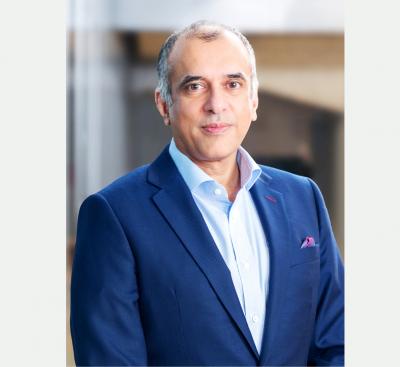
HSBC Holdings PLC is deepening its commitment to Taiwan as the economy emerges as one of the bank’s fastest-growing markets globally, driven by an artificial intelligence (AI) investment boom, expanding cross-border trade, and rising wealth creation. “The advantage that Taiwan has is a growth story linked to the semiconductor and broader AI industries, strong underlying corporate performance, and wealth creation,” said Surendra Rosha, HSBC’s co-chief executive for Asia and the Middle East, in an exclusive interview with the Taipei Times on June 2, during this year’s HSBC Taiwan Conference. That combination has helped HSBC cement its position as the most profitable international

Intel Corp regards Taiwan Semiconductor Manufacturing Co (TSMC, 台積電) as a longstanding partner, as the US chipmaker would continue outsourcing production of advanced chips to TSMC, Intel chief executive officer Lip-Bu Tan (陳立武) said yesterday. “I don’t look at people as competitors. I look at the collaboration... Nvidia is also, you know, a good friend,” Tan told a news conference following his keynote speech at the Computex trade show in Taipei. “It’s a very trusted partnership for us... We are a big, top customer for them, and we’re going to continue doing that,” he said, referring to TSMC, the world’s largest foundry

Hon Hai Precision Industry Co (鴻海精密) yesterday said it would work with US chipmaker Intel Corp to jointly develop and deploy next-generation artificial intelligence (AI) infrastructure and intelligent computing platforms in a move to capture booming demand for AI computing systems. Hon Hai, also known as Foxconn Technology Group (富士康), said in a statement that the partnership would combine its global manufacturing scale, system integration expertise and AI data center deployment capabilities with Intel’s strengths in processor architecture, silicon technologies and software ecosystem. The companies said they plan to work on equipment used in AI data centers, including server racks powered by


 RSS
RSS