


Europe’s contaminated egg scare has cost Dutch poultry farmers at least 33 million euros (US$39 million), according to a preliminary estimate by the Dutch government.
The scare, triggered by the presence of the insecticide fipronil in eggs, has spread to 18 European countries and even reached Taiwan and Hong Kong.
“Direct costs to the [Dutch] poultry sector where fipronil was used are estimated at 33 million euros,” Dutch Minister of Health, Welfare and Sport Edith Schippers and Deputy Minister of Economic Affairs Martijn van Dam said in a letter to parliament.
“Of this, 16 million euros is as a result of the subsequent ban, while 17 million euros derives from measures to rid farms of fipronil contamination,” the ministers said.
Poultry farms on average suffered initial damages of between 120,000 euros to 200,000 euros, the ministers said.
Their findings are based on an investigation by Wageningen University’s Economic Research Unit.
The estimate does not include non-farmers in the poultry sector, nor does it take into account further losses in production by farms.
Wednesday’s letter also said investigators from the Netherlands Food and Consumer Product Safety Authority found that Chickfriend, the company that allegedly cleaned chicken pens with fipronil, used a second toxic substance called amitraz.
The insecticide, a mildly toxic chemical used to kill flies, was found to have been used on a single cattle farm that also held chickens, but was not found in the farm’s poultry section, the letter said.
“The slaughter of calves at the farm has been suspended until the outcome of the amitraz investigation,” it added.
Two owners of Chickfriend briefly appeared in court in connection with the case last week and remain in custody. Lawmakers were due yesterday to debate the fallout from the crisis.
Earlier this month, a Dutch farming federation estimated total damages to be at least 150 million euros.
The Dutch Farmers and Gardeners’ Federation on Wednesday wrote a letter to Van Dam, saying farmers urgently needed assistance as they were facing financial ruin.
“The consequences for the affected businesses are huge,” federation chairman Eric Hubers said in a letter that was sent to reporters.
The businesses “are being hit by high costs and face bankruptcy if they get no financial support,” said Hubers, whose federation represents about 50,000 farmers across all sectors.
Commonly used to get rid of fleas, lice and ticks from animals, fipronil is banned by the EU from use in the food industry. The issue has sparked a row between Belgium, the Netherlands and Germany, the three countries at the center of the crisis, about how long officials knew about the problem.
Belgium became the first country to officially notify the EU Rapid Alert System for Food and Feed on July 20, followed by the Netherlands and Germany, but the news did not go public until Aug. 1.

Taiwanese firms have increased investment in the Philippines in recent years as Manila’s ties with Washington deepen and global supply chains continue to shift away from China, an expert at the Chung-Hua Institution for Economic Research (CIER, 中華經濟研究院) said yesterday. The Philippines had not been among Taiwanese investors’ top choices in Southeast Asia, CIER Taiwan ASEAN Studies Center director Kristy Hsu (徐遵慈) said at a seminar in Taipei. However, Taiwan’s investment in the country has grown significantly since the COVID-19 pandemic, reaching US $257 million last year, a high in recent years, she said. Although Taiwan’s total investment in the Philippines still lags
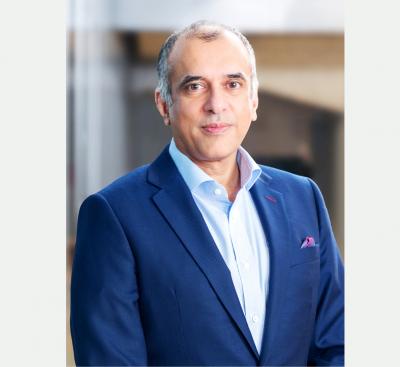
HSBC Holdings PLC is deepening its commitment to Taiwan as the economy emerges as one of the bank’s fastest-growing markets globally, driven by an artificial intelligence (AI) investment boom, expanding cross-border trade, and rising wealth creation. “The advantage that Taiwan has is a growth story linked to the semiconductor and broader AI industries, strong underlying corporate performance, and wealth creation,” said Surendra Rosha, HSBC’s co-chief executive for Asia and the Middle East, in an exclusive interview with the Taipei Times on June 2, during this year’s HSBC Taiwan Conference. That combination has helped HSBC cement its position as the most profitable international

Intel Corp regards Taiwan Semiconductor Manufacturing Co (TSMC, 台積電) as a longstanding partner, as the US chipmaker would continue outsourcing production of advanced chips to TSMC, Intel chief executive officer Lip-Bu Tan (陳立武) said yesterday. “I don’t look at people as competitors. I look at the collaboration... Nvidia is also, you know, a good friend,” Tan told a news conference following his keynote speech at the Computex trade show in Taipei. “It’s a very trusted partnership for us... We are a big, top customer for them, and we’re going to continue doing that,” he said, referring to TSMC, the world’s largest foundry

Hon Hai Precision Industry Co (鴻海精密) yesterday said it would work with US chipmaker Intel Corp to jointly develop and deploy next-generation artificial intelligence (AI) infrastructure and intelligent computing platforms in a move to capture booming demand for AI computing systems. Hon Hai, also known as Foxconn Technology Group (富士康), said in a statement that the partnership would combine its global manufacturing scale, system integration expertise and AI data center deployment capabilities with Intel’s strengths in processor architecture, silicon technologies and software ecosystem. The companies said they plan to work on equipment used in AI data centers, including server racks powered by


 RSS
RSS