


It has been 20 years since a financial meltdown spread through much of Asia, wrecking economies and bringing down governments.
They have long since recovered and are stronger for the experience, analysts say.
However, in Thailand — the epicenter of the crisis — the anniversary brings back painful memories for those who lived through it.
“It was like there was no way out for many of us,” Supop Pavanan said.
Today he makes a comfortable living selling Buddhist amulets at his Bangkok shop and over the Internet, but two decades ago he was among millions of victims of the great Asian crash.
Thailand’s boom of the mid-1990s, fueled by unrestrained borrowing and a corrupt, lax financial system, collapsed on July 2, 1997, when the government devalued the baht. The currency sank, ruining companies and individuals almost overnight, and starting a chain reaction that spread across borders.
Recessions struck from South Korea to Indonesia and millions were thrown out of work as investment and real-estate bubbles burst, roiling global markets.
Bangkok came to resemble a giant flea market. Wealthy Thais sold their luxury goods at knock-down prices in parking lots. Cars, jewelry, vintage wine — even personal aircraft — all had to go.
“The worst thing was not knowing what would happen to you,” said Supop, who had been an overseas tour guide, but was laid off.
He ended up selling fish balls from a street stall and his income fell from US$3,000 in a good month to US$200, if he was lucky.
He stuck at it for a year before beginning a slow climb back out of the economic depths.
“You couldn’t apply for a job, because no one would give you one,” he said. “You couldn’t sell goods because no one was buying. You couldn’t get a loan for an investment because no one was giving them.”
Anger grew as unemployment soared. The government fell. Thailand ended up taking a bailout from the IMF.
An exhibition at Bangkok’s Museum Siam recalls the grim days. Artifacts convey the pain of ordinary people: A Buddha statue that a businessman confided in because he could not face telling his family of his ruin. A telephone over which a woman learned that her bankrupt boss had killed himself.
“I experienced it, but wasn’t severely affected, because I was still in school,” curator Taweesak Woraritruengaurai said. “But when I got to see all these things that are full of stories, I could feel how real it was and how much it affected many aspects of life. It affected people very deeply.”
Today, Thailand’s banking and finance sector seems more secure.
Experts say crucial lessons were learned in 1997 and chances of a rerun are slim.
When the global crisis struck a decade later, Asia’s financial systems were relatively insulated, with less direct exposure to the toxic subprime mortgages that wreaked havoc on US and European markets.
“I don’t think there will be another financial crisis,” Thammasat University economics professor Apichart Satitniramai said.
“Firstly, there’s a high capital adequacy ratio, which can support more risk,” he said, referring to the reserves banks must keep to deal with possible crises. “Secondly, banks and financial institutions have changed their behavior drastically.”
Thailand and other Asian countries also have bulked up their foreign-currency reserves, a key buffer for a country facing economic turmoil, because they can be used to defend its currency, provide liquidity and generally shore up financial systems.
Not everyone has moved on.
In 1997, Sirivat Voravetvuthikun was a successful stock trader, so adept at picking the right stocks that other traders called him “the Phantom.”
After he went bust, he began selling sandwiches from a yellow foam box hanging from his neck. He became famous as a symbol of determination and hope.
Today, he is still doing it. His attempts to grow his food business have failed, but his will to pull through burns as bright as ever.
“I am telling myself and others in society, even though the Thai economy is not good, if we keep fighting, cut our costs, do whatever we can, work hard to earn as much as we can, we’ll survive and one day the economy will get better,” he said.
Shares of contract chipmaker Taiwan Semiconductor Manufacturing Co (TSMC, 台積電) came under pressure yesterday after a report that Apple Inc is looking to shift some orders from the Taiwanese company to Intel Corp. TSMC shares fell NT$55, or 2.4 percent, to close at NT$2,235 on the local main board, Taiwan Stock Exchange data showed. Despite the losses, TSMC is expected to continue to benefit from sound fundamentals, as it maintains a lead over its peers in high-end process development, analysts said. “The selling was a knee-jerk reaction to an Intel-Apple report over the weekend,” Mega International Investment Services Corp (兆豐國際投顧) analyst Alex Huang
Taiwan Semiconductor Manufacturing Co (TSMC, 台積電) is expected to remain Apple Inc’s primary chip manufacturing partner despite reports that Apple could shift some orders to Intel Corp, industry experts said yesterday. The comments came after The Wall Street Journal reported on Friday that Apple and Intel had reached a preliminary agreement following more than a year of negotiations for Intel to manufacture some chips for Apple devices. Taiwan Institute of Economic Research (台灣經濟研究院) economist Arisa Liu (劉佩真) said TSMC’s advanced packaging technologies, including integrated fan-out and chip-on-wafer-on-substrate, remain critical to the performance of Apple’s A-series and M-series chips. She said Intel and Samsung
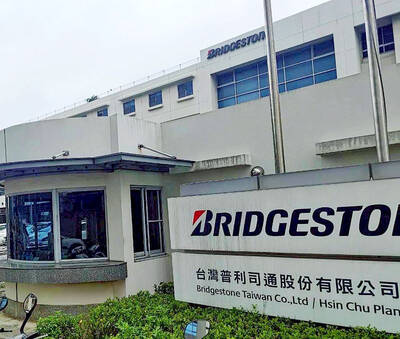
TRANSITION: With the closure, the company would reorganize its Taiwanese unit to a sales and service-focused model, Bridgestone said Bridgestone Corp yesterday announced it would cease manufacturing operations at its tire plant in Hsinchu County’s Hukou Township (湖口), affecting more than 500 workers. Bridgestone Taiwan Co (台灣普利司通) said in a statement that the decision was based on the Tokyo-based tire maker’s adjustments to its global operational strategy and long-term market development considerations. The Taiwanese unit would be reorganized as part of the closure, effective yesterday, and all related production activities would be concluded, the statement said. Under the plan, Bridgestone would continue to deepen its presence in the Taiwanese market, while transitioning to a sales and service-focused business model, it added. The Hsinchu
Taiwan Semiconductor Manufacturing Co (TSMC, 台積電) has approved a capital budget of US$31.28 billion for production expansion to meet long-term development needs during the artificial intelligence (AI) boom. The company’s board meeting yesterday approved the capital appropriation plan for purposes such as the installation of advanced technology capacity and fab construction, the world’s largest contract chipmaker said in a statement. At an earnings conference last month, TSMC forecast that its capital expenditure for this year would be at the higher end of the US$52 billion to US$56 billion range it forecast in January in response to robust demand for 5G, AI and


 RSS
RSS