


The US appears poised to heighten scrutiny of Chinese investment in Silicon Valley to better shield sensitive technologies seen as vital to national security, current and former US officials have told Reuters.
Of particular concern is China’s interest in fields such as artificial intelligence (AI) and machine learning, which have increasingly attracted Chinese capital. The worry is that cutting-edge technologies developed in the US could be used by China to bolster its military capabilities and perhaps even push it ahead in strategic industries.
An unreleased Pentagon report, viewed by Reuters, warns that China is skirting US oversight and gaining access to sensitive technology through transactions that currently do not trigger a Committee on Foreign Investment in the US (CFIUS) review. Such deals would include joint ventures, minority stakes and early-stage investments in start-ups.
PREDATORY PRACTICES
“We’re examining CFIUS to look at the long-term health and security of the US economy, given China’s predatory practices” in technology, said an official in US President Donald Trump’s administration, who was not authorized to speak publicly.
US Secretary of Defense James Mattis on Tuesday weighed into the debate, calling CFIUS “outdated” and telling a US Senate hearing: “It needs to be updated to deal with today’s situation.”
US Senator John Cornyn, the No. 2 Republican in the Senate, is now drafting legislation that would give CFIUS far more power to block some technology investments, a Cornyn aide said.
“Artificial intelligence is one of many leading-edge technologies that China seeks and that has potential military applications,” said the Cornyn aide, who declined to be identified.
“These technologies are so new that our export control system has not yet figured out how to cover them, which is part of the reason they are slipping through the gaps in the existing safeguards,” the aide said.
The legislation would require CFIUS to heighten scrutiny of buyers hailing from nations identified as potential threats to national security. CFIUS would maintain the list, the aide said, without specifying who would create it.
Cornyn’s legislation would not single out specific technologies that would be subject to CFIUS scrutiny, but it would provide a mechanism for the Pentagon to lead that identification effort, with input from the US technology sector, the US Department of Commerce and the US Department of Energy, the aide said.
James Lewis, an expert on military technology at the Center for Security and International Studies, said the US government is playing catch-up.
“The Chinese have found a way around our protections, our safeguards, on technology transfer in foreign investment and they’re using it to pull ahead of us, both economically and militarily,” Lewis said. “I think that’s a big deal.”
However, some industry experts warned that stronger US regulations might not succeed in halting technology transfer and might trigger retaliation by China, with economic repercussions for the US.
China made the US the top destination for its foreign direct investment last year, with US$45.6 billion in completed acquisitions and greenfield investments, according to Rhodium Group, a research firm.
Investment from January to last month totaled US$22 billion, which represented a 100 percent increase over the same period last year, it said.
PUSHBACK
“There will be a significant pushback from the technology industry” if legislation is overly aggressive, Rhodium Group economist Thilo Hanemann said.
Concerns about Chinese inroads into advanced technology come as the US military looks to incorporate elements of artificial intelligence and machine learning into its drone program.
Project Maven, as the effort is known, aims to provide some relief to military analysts who are part of the war against the Islamic State group.
The Pentagon is trying to develop algorithms that would sort through the material and alert analysts to important finds, US Air Force Lieutenant General John Shanahan said.
Shanahan said his team is trying to teach the system to recognize objects such as trucks and buildings, identify people and, eventually, detect changes in patterns of daily life that could signal significant developments.
A Pentagon official said the US government is requesting to spend about US$30 million on the effort next year.
Similar image recognition technology is being developed commercially by firms in Silicon Valley, which could be adapted by adversaries for military reasons.
Shanahan said he is not surprised that Chinese firms are making investments there.
“They know what they’re targeting,” he said.
ARTIFICIAL INTELLIGENCE
Research firm CB Insights says it has tracked 29 investors from China investing in US artificial intelligence companies since the start of 2012.
The risks extend beyond technology transfer.
“When the Chinese make an investment in an early-stage company developing advanced technology, there is an opportunity cost to the US since that company is potentially off-limits for purposes of working with [the US Department of Defense],” the report said.
The report cautioned that one of the factors hindering US government regulation is that many Chinese investments fall short of outright acquisitions that can trigger a CFIUS review. Export controls were not designed to govern early-stage technology.
It recommended that the Pentagon develop a critical technologies list and restrict Chinese investments on that list.
It also proposed enhancing counterintelligence efforts.
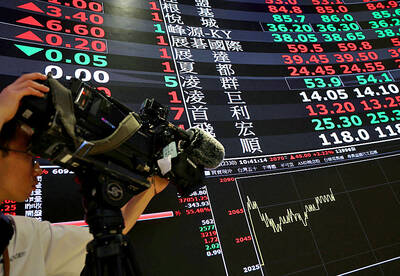
After several years flying high as Asia’s best Nvidia Corp proxy, Taiwan Semiconductor Manufacturing Co (TSMC, 台積電) is increasingly vying with other artificial intelligence (AI) stocks for investor attention. Stock traders are chasing a wider array of beneficiaries as mainstream usage of AI creates demand for hardware beyond the most-advanced chips TSMC makes for Nvidia. Subthemes from the deepening memory crunch to advances in robotics are also luring bids. At the same time, investment caps on single stocks are pushing funds to diversify, while retail investors long familiar with TSMC through its US depositary receipts are being offered a broader set of
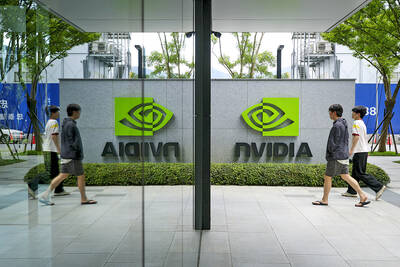
UNDER MICROSCOPE: Taiwan detained three people who allegedly conspired to buy servers in Taiwan and export them using fraudulent documentation, prosecutors said Nvidia Corp chief executive officer Jensen Huang (黃仁勳) on Saturday urged Super Micro Computer Inc to tighten up on compliance after Taiwan detained three people this week for allegedly making fraudulent declarations about artificial intelligence (AI) servers made by its US partner. The development marked the nation’s first crackdown on semiconductor smuggling, which grew after the US slapped restrictions on exports of high-end chips such as Nvidia AI accelerators to China. Nvidia is “rigorous” in explaining regulations to all of its partners, Huang told reporters after arriving in Taipei. “Ultimately Super Micro has to run their own company,” he said in response to
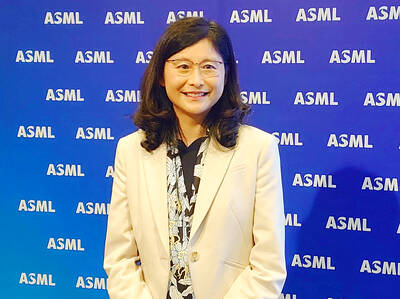
Netherlands-based semiconductor equipment supplier ASML Holding NV yesterday said that it is planning to hire an additional 1,000 people in Taiwan this year in response to growing demand from clients. ASML had previously planned to recruit 600 people this year, but that the plan has been adjusted upward, ASML vice president and ASML Taiwan general manager Grace Wang (汪佳慧) told reporters. ASML has a workforce of more than 4,500 in Taiwan, accounting for about 10 percent of its global total, Wang said. This year’s recruitment campaign would focus on adding people in the customer support, manufacturing and supply chain domains to assist ASML

TECH RELIANCE: Growth is increasingly reflecting an unequal K-shaped distribution, where technology sectors outperform and other industries struggle, an expert said Standard Chartered Bank has significantly raised its forecast for Taiwan’s economic growth to 9.5 percent this year, up from 7.6 percent previously, citing surging artificial intelligence (AI) demand driving exports, semiconductor production and investment. The upgrade reflects a sustained AI supercycle that continues to fuel demand for advanced chips and technology infrastructure, which form the backbone of Taiwan’s exports, the bank said in a report this week. “We raise our 2026 growth forecast to reflect a much stronger-than-expected first-quarter GDP figure,” Standard Chartered senior economist for greater China and Asia Tommy Wu (胡東安) said in the report. Driven largely by a 35.3 percent


 RSS
RSS