


Automotive lighting products maker TYC Brother Industrial Co (堤維西) yesterday said it expects its Chinese subsidiary’s revenue to grow by more than 5 percent this year, buoyed by robust demand in China’s car market.
“We expect revenue [from China] to grow, thanks to new model launches by Changan Ford Automobile Co Ltd (長安福特),” TYC Brother chief financial officer Alex Weng (翁一峰) told reporters after an investors’ conference in Taipei.
Tainan-based TYC Brother sells its original equipment manufacturing (OEM) car lights in China via Varroc TYC Auto Lamps Co (大茂偉瑞柯), which is a joint venture between the Taiwanese company and Varroc group from India.
Based in Changzhou, Jiangsu Province, Varroc TYC also makes car lights for FAW-Volkswagen Automotive Co Ltd (一汽大眾) and the Chinese unit of General Motors Co.
TYC Brother is also expanding into Southeast Asia, hoping to grab a bigger share of the region’s auto parts market, the company said.
TYC Brother subsidiary Juoku Technology Co (儒億科技), which provides car lamp parts OEM, has a new plant in Thailand, with plans to branch out into Indonesia and Malaysia, Weng said, without giving a timeframe.
As for the auto components aftermarket, the company also gave a positive outlook, saying global demand has been steady since the beginning of the year.
Company data showed that auto parts were the largest revenue contributor last year, accounting for nearly 90 percent of total sales.
The company commands nearly 50 percent of the US’ auto parts aftermarket, company data showed.
Despite a positive sales outlook, Weng voiced concern over currency fluctuations, saying the sharp appreciation of the New Taiwan dollar against the greenback could erode the company’s profitability this year, he said.
In the first two months of the year, TYC Brother’s sales edged up 0.11 percent year-on-year to NT$2.56 billion (US$83.7 million).
Revenue last year reached NT$15.96 billion, up 6.08 percent from the previous year. Net profit soared 30.04 percent to NT$987 million on an annual basis, with gross margin up from 21.94 percent to 23.05 percent.
Earnings per share reached a 13-year high of NT$3.17, compared with NT$2.43 a year earlier, company data showed.
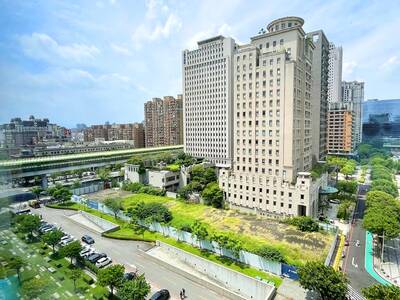
Taichung reported the steepest fall in completed home prices among the six special municipalities in the first quarter of this year, data compiled by Taiwan Realty Co (台灣房屋) showed yesterday. From January through last month, the average transaction price for completed homes in Taichung fell 8 percent from a year earlier to NT$299,000 (US$9,483) per ping (3.3m²), said Taiwan Realty, which compiled the data based on the government’s price registration platform. The decline could be attributed to many home buyers choosing relatively affordable used homes to live in themselves, instead of newly built homes in the city’s prime property market, Taiwan Realty
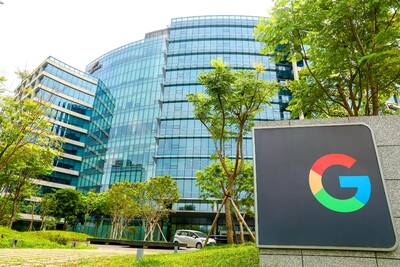
The government yesterday approved applications by Alphabet Inc’s Google to invest NT$27.08 billion (US$859.98 million) in Taiwan, the Ministry of Economic Affairs said in a statement. The Department of Investment Review approved two investments proposed by Google, with much of the funds to be used for data processing and electronic information supply services, as well as inventory procurement businesses in the semiconductor field, the ministry said. It marks the second consecutive year that Google has applied to increase its investment in Taiwan. Google plans to infuse NT$25.34 billion into Charter Investments Ltd (特許投資顧問) through its Singapore-based subsidiary Fructan Holdings Singapore Pte Ltd, and

Micron Technology Inc is a driving force pushing the US Congress to pass legislation that would put new export restrictions on equipment its Chinese competitors use to make their chips, according to people familiar with the matter. A US House of Representatives panel yesterday was to vote on the “MATCH Act,” a bill designed to close gaps in restrictions on chipmaking equipment. It would also pressure foreign companies that sell equipment to Chinese chipmaking facilities to align with export curbs on US companies like Lam Research Corp and Applied Materials Inc. The bill targets facilities operated by China’s ChangXin Memory Technologies Inc

Singapore-based ride-hailing and delivery giant Grab Holdings’ planned acquisition of Foodpanda’s Taiwan operations has yet to enter the formal review stage, as regulators await supplementary documents, the Fair Trade Commission (FTC) said yesterday. Acting FTC Chairman Chen Chih-min (陳志民) told the legislature’s Economics Committee that although Grab submitted its application on March 27, the case has not been officially accepted because required materials remain incomplete. Once the filing is finalized, the FTC would launch a formal probe into the deal, focusing on issues such as cross-shareholding and potential restrictions on market competition, Chen told lawmakers. Grab last month announced that it would acquire


 RSS
RSS