


Hanjin Shipping is to declare bankruptcy today, with the former titan of the global shipping industry and one of South Korea’s powerful family-run chaebol finally sinking under billions of US dollars of debt.
As it heads to a Seoul court to be delivered its last rites, the firm is bereft of assets and has just a few dozen employees — a far cry from its heady days as the country’s top sea transport company riding the waves of a booming economy.
Rocked by a slump in global trade — particularly in the past three years — and a growth slowdown in China, Hanjin filed for bankruptcy protection in August last year after creditors refused to further help it service US$5.37 billion of debt.
However, the seeds for its demise might have been sown when its owner’s widow took the helm in 2007, despite being a self-confessed housewife with no experience, and highlight dangers inherent in the chaebol that dominate South Korea.
Choi Eun-young became chief executive officer after the death of her husband, Cho Sun-ho, a son of the Hanjin Group founder Cho Choong-hoon, and soon embarked on an expansion drive while ramping up fees, buoyed by a booming shipping industry.
However, as the global financial crisis set in the company began to struggle, forcing Choi to stand down and her brother-in-law Cho Yang-ho take over in 2014.
During a parliamentary hearing in September last year into the company’s slump, Choi broke down saying: “I had no expertise as I had been stuck home as a housewife.”
However, by then the rot had begun to sink despite millions of US dollars being piled into the firm.
Its bankruptcy filing last year sent shock waves around the world, with most of its fleet of 141 ships banned from docking in the US, China and many other countries because of failure to pay ports for their services.
Chung Sun-sup, chief executive of Chaebol.com, a Web site that tracks corporate assets and practices, said the case highlights the flawed corporate governance of chaebol.
While credited with leading the country’s fast economic development over the past four decades, their father-to-son succession exposes them to growing risks in the increasingly competitive markets, Chung said.
“Chaebol members succeed on the basis of family ties rather than competence,” he said. “Choi failed to take actions before growing signs of distress that began to appear several years ago.”
“Other executives were unable to speak up” owing to the country’s rigid top-down corporate culture, Chung said.
A similar crisis of management is playing out at Samsung Electronics, South Korea’s biggest company that accounts for 17 percent of its GDP.
Its handling of last year’s Galaxy Note 7 saga, which saw it recall 2.5 million of the devices owing to exploding batteries, cost it billions of US dollars and tarnished its once-stellar reputation.
Analysts said the issue came as Samsung navigates a complex generational leadership transfer, with chairman and family patriarch Lee Kun-hee bedridden since 2014, leaving his son and heir apparent, Jay Y. Lee in charge during the disaster.
Economist Song Deok-jin said the problems have been made more stark as the founders’ grandchildren come to the fore.
Founders had the chance to educate their sons in the field, teaching them the virtue of diligence and the importance of close communications with their employees and others, but the third-generation owner-executives were often feather-bedded, being raised isolated from the ordinary world, Song said.

Cairo’s new monorail slices across the city skyline, running above the familiar chaos of blaring horns and aging buses’ exhaust fumes that mark rush hour below. The US$4.5 billion monorail, opened this month, is among Egypt’s most prominent new transport projects, part of a debt-funded infrastructure drive criticized for sapping state finances while bringing limited benefits to most of the country’s 109 million people. “It feels like you’re in a different country,” said Ramy Sayed, a restaurant manager, aboard a driverless Innovia 300 train. “No noise, no traffic, we’re not used to this.” The eastern line runs 56km from the bustling middle-class

Taiwanese firms have increased investment in the Philippines in recent years as Manila’s ties with Washington deepen and global supply chains continue to shift away from China, an expert at the Chung-Hua Institution for Economic Research (CIER, 中華經濟研究院) said yesterday. The Philippines had not been among Taiwanese investors’ top choices in Southeast Asia, CIER Taiwan ASEAN Studies Center director Kristy Hsu (徐遵慈) said at a seminar in Taipei. However, Taiwan’s investment in the country has grown significantly since the COVID-19 pandemic, reaching US $257 million last year, a high in recent years, she said. Although Taiwan’s total investment in the Philippines still lags
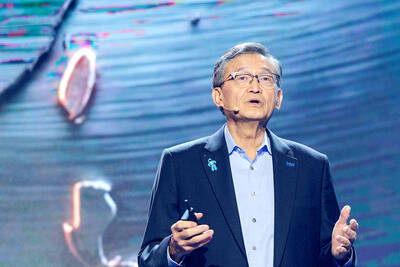
Intel Corp regards Taiwan Semiconductor Manufacturing Co (TSMC, 台積電) as a longstanding partner, as the US chipmaker would continue outsourcing production of advanced chips to TSMC, Intel chief executive officer Lip-Bu Tan (陳立武) said yesterday. “I don’t look at people as competitors. I look at the collaboration... Nvidia is also, you know, a good friend,” Tan told a news conference following his keynote speech at the Computex trade show in Taipei. “It’s a very trusted partnership for us... We are a big, top customer for them, and we’re going to continue doing that,” he said, referring to TSMC, the world’s largest foundry

Artificial intelligence (AI) agents would supplant smartphones as the center of people’s digital lives, fundamentally reshaping personal devices and driving a major computing upgrade cycle, Qualcomm Inc CEO Cristiano Amon said yesterday. In his keynote speech for this year’s Computex trade show in Taipei, Amon said that the rise of "agentic AI" — AI systems capable of reasoning, planning and carrying out tasks autonomously — would transform how people interact with technology across phones, PCs, vehicles and wearable devices. Describing the technology as the next major evolution in computing, Amon said that "2026 is the year of agents.” For decades, smartphones have sat


 RSS
RSS