


Chinese Internet giant Baidu Inc (百度) is out to make a splash with “Little Fish,” a family robot that is a voice-controlled virtual valet akin to Amazon Echo or Google Home.
Baidu showed off Little Fish, a translation of its Chinese name Xiaoyu Zaijia (小魚在家), on Thursday at the Consumer Electronics Show (CES) in Las Vegas ahead of its release in China later this year.
“I think 2017 will be the year of conversational computing,” Baidu chief scientist Andrew Ng (吳恩達) said while demonstrating Little Fish at the show. “We see a clear path of conversational computers changing everything.”
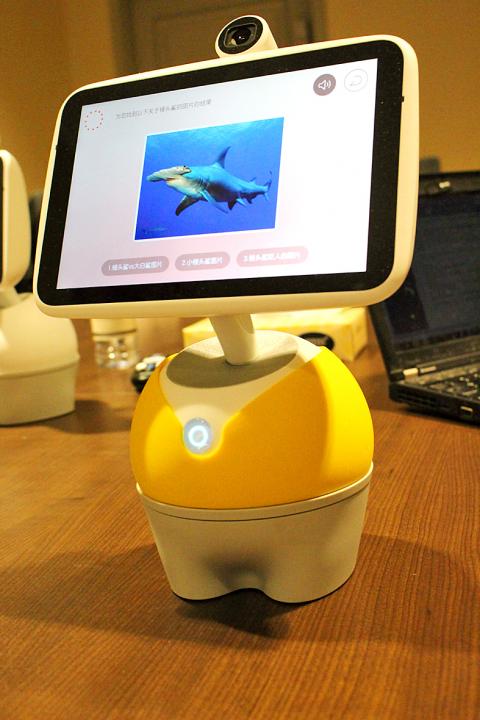
Photo: AFP
Using voice to interact with computers that are able to essentially learn from experience was among the hot trends at the show. Arrays of device makers have added digital aide capabilities with the help of Amazon.com Inc’s Alexa or Alphabet Inc’s Google Assistant technology.
Unlike “faceless” Amazon Alexa or Google Home devices that rely on people asking for information or controlling devices by speaking, Little Fish also features a touchscreen on top of its orb-shaped base.
A camera on top tracks faces and the screen swivels to keep facing a speaker.
“Speech is the fastest way for you to communicate with a computer, but a screen is a very fast way for a machine to communicate back to you,” Ng said.
For example, it would be quicker to glance at a requested list of top restaurants from Yelp than it would be to listen to the computer read all the names and descriptions, he said.
Little Fish uses Baidu’s operating system DuerOS, which is already employed in other devices in China, such as set-top TV boxes that can switch channels by voice command or figure out names of actors on screen when asked.
The bigger vision is to build DuerOS into a broad range of gadgets that tap into Baidu’s Internet capabilities for search, food delivery, online commerce and more.
“If this takes off, I am not worried about how we will make money,” Ng said when asked about revenue plans. “It will transform how you use devices in your home. There are plenty of business models.”
Little Fish, a second-generation device, is to be released in China at a price yet to be disclosed.
Artificial intelligence (AI) is getting a foothold in homes, with developers feverishly adding “skills” to Amazon Echo speakers infused with Alexa.
Meanwhile, Google is using its AI prowess in Android smartphones, messaging software and a vase-sized Home digital assistant.
The home hubs, sometimes referred to as smart speakers, fetch content or answers from the Internet and can act as remote controls for other devices in the home.
“We are moving technologies beyond the smartphone. Ultimately, vocal computing is replacing the [screen],” Consumer Technology Association chief economist Shawn DuBravac said. “In the smart home, voice is clearly important. We are seeing that play out at CES.”
He expected voice technology to quickly improve, within years perhaps even being able to recognize speakers so accurately it could be used for biometric security or simple parental override of Internet use.
“I know that in my home with my boys, I would like Alexa to recognize my voice as the ruler of the coop,” DuBravac said.
While digital assistant technology is being built into televisions, appliances and more, hub devices such as Alexa would be key to voice-controlled computing, DuBravac added.
NPD analyst Ben Arnold said that he is “bullish on everything voice and AI,” with the technologies eventually “pollinating” devices so thoroughly they essentially become home operating systems.

The domestic unit of the Chinese-owned, Dutch-headquartered chipmaker Nexperia BV will soon be able to produce semiconductors locally within China, according to two company sources. Nexperia is at the center of a global tug-of-war over critical semiconductor technology, with a Dutch court in February ordering a probe into alleged mismanagement at the company. The geopolitical tussle has disrupted supply chains, with some carmakers reportedly forced to cut production due to chip shortages. Local production would allow Nexperia’s domestic arm, Nexperia Semiconductors (China) Ltd (安世半導體中國), to bypass restrictions in place since October on the supply of silicon wafers — etched with tiny components to

Singapore-based ride-hailing and delivery giant Grab Holdings Ltd has applied for regulatory approval to acquire the Taiwan operations of Germany-based Delivery Hero SE's Foodpanda in a deal valued at about US$600 million. Grab submitted the filing to the Fair Trade Commission on Friday last week, with the transaction subject to regulatory review and approval, the company said in a statement yesterday. Its independent governance structure would help foster a healthy and competitive market in Taiwan if the deal is approved, Grab said. Grab, which is listed on the NASDAQ, said in the filing that US-based Uber Technologies Inc holds about 13 percent of

Taiwan Semiconductor Manufacturing Co (TSMC, 台積電) yesterday received government approval to deploy its advanced 3-nanometer (3nm) process at its second fab currently under construction in Japan, the Ministry of Economic Affairs said in a news release. The ministry green-lit the plan for the facility in Kumamoto, which is scheduled to start installing equipment and come online in 2028 with a monthly production capacity of 15,000 12-inch wafers, the ministry said. The Department of Investment Review in June 2024 authorized a US$5.26 billion investment for the facility, slated to manufacture 6- to 12nm chips, significantly less advanced than 3nm process. At a meeting with
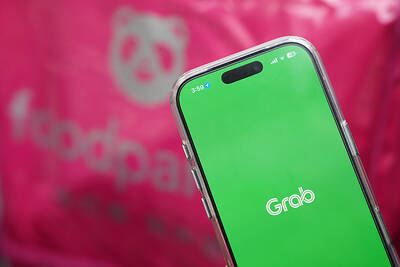
Taiwan’s food delivery market could undergo a major shift if Singapore-based Grab Holdings Ltd completes its planned acquisition of Delivery Hero SE’s Foodpanda business in Taiwan, industry experts said. Grab on Monday last week announced it would acquire Foodpanda’s Taiwan operations for US$600 million. The deal is expected to be finalized in the second half of this year, with Grab aiming to complete user migration to its platform by the first half of next year. A duopoly between Uber Eats and Foodpanda dominates Taiwan’s delivery market, a structure that has remained intact since the Fair Trade Commission (FTC) blocked Uber Technologies Inc’s


 RSS
RSS