


For evidence of the odds stacked against China’s battle to stop the flight of cash battering its currency and draining its reserves, look no further than the tiny Pacific island of Saipan, which has hit the jackpot with a flood of Chinese money at its new casino.
Thousands of kilometers from China, the US-administered island of 50,000 people is festooned with signs written in Chinese and stuffed with Chinese supermarkets, restaurants and karaoke parlors serving the 200,000 Chinese visitors who arrived this year.
Private jets bring big spenders so free with their cash — and US$100 million credit lines — that the modest Best Sunshine casino, owned by Hong-Kong listed Imperial Pacific International Holdings Ltd (博華太平洋), wildly outperforms the top casinos in Macau, the world’s biggest gambling hub.
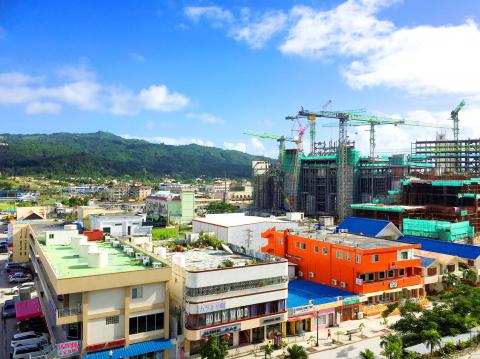
Photo: Reuters
Best Sunshine’s 16 VIP tables can turn over US$3.9 billion a month, while the world’s biggest, the Venetian Macao, manages about US$2.5 billion per month on 102 VIP tables and the MGM about US$2.9 billion on 161.
“Never have I dealt with so much money in 36 years in casinos,” said one executive working in the casino, who could not be named due to company policy.
In Beijing, policymakers are trying to keep that money in China.
Capital outflows, both legal and illegal, have dragged the yuan to eight-year lows this year, prompting China to eat through more than one-fifth of its foreign currency reserves since the middle of 2014, and impose a series of measures to stem the outflows.
Such measures, plus an anti-corruption crackdown that began in early 2014, has dealt a blow to Macau, the self-governing Chinese territory linked by a thread to Guangdong Province.
Macau’s gaming revenues have more than halved since then, as high rollers from China gave it a wide berth.
However, whacking the mole in Macau has made it pop up elsewhere, where China’s writ does not run; in Saipan, the Philippines, Cambodia and Australia.
Manila’s Solaire casino registered a 61 percent increase in VIP turnover in the third quarter, while the number of junket operators bringing in foreign high rollers has more than doubled. Half of its VIP gamblers come from China.
NagaCorp in Phnom Penh has seen a 13 percent increase in Chinese visitors in the first half of this year, with VIP turnover up 11 percent for the first nine months of the year.
China has fought to suppress the demand, detaining marketing employees from Australia’s Crown Resorts Ltd in October for “gambling offenses” and arresting South Korean casino managers last year for “enticing” Chinese to gamble overseas.
“We have always asked that Chinese citizens leaving the borders respect the laws and rules of relevant countries, and not get involved in gambling or gamble themselves,” Chinese Ministry of Foreign Affairs spokesman Lu Kang (陸慷) told a daily news briefing in Beijing.
However, the casinos are getting ready for more.
NagaCorp is building additional facilities and a luxury retail complex, while Solaire, where VIPs play in opulent ocean-front rooms, is also unrolling new amenities to lure VIPs.
Imperial is spending US$3 billion to build a 14-story resort in Saipan after winning a 40-year exclusive monopoly license.
Its towering bamboo scaffolding already dwarfs the low-rise local buildings.
The man behind Imperial’s push into Saipan, Ji Xiaobo (紀曉波), a one-time intermediary whose company brought players to Macau, is also in discussions with nearby Palau to set up a small resort, according to a source familiar with the deal.
Ji, who casino executives said brings VIP players to Saipan on his private jet and accommodates them on his yacht or in opulent villas, declined to comment.
The Saipanese government, desperate for revenues after the collapse of its garment industry and a decline in tourism, approved the casino in 2014, overturning long-standing opposition.
It makes it very attractive for the operator, with just 5 percent gaming tax compared with Macau’s 39 percent, Imperial chief executive Mark Brown said, who formerly worked for US casino tycoons including US president-elect Donald Trump, Steve Wynn and Sheldon Adelson.
Not everyone on the island thinks Saipan gets much benefit.
Casino revenues have surged, but the Saipanese government budget remains less than one-sixth of what the casino produces annually, said local resident Glen Hunter, who has fought against the development.
“You have created an entity out here with so much resources and power that I think we will no longer even have a proper functioning democracy,” Hunter said.
The influx of money is already changing the nature of the place.
Chinese investment in Saipan has skyrocketed since the casino opened last year, with almost every available property bought in the past six months, residents said.
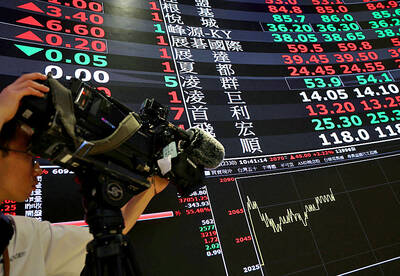
After several years flying high as Asia’s best Nvidia Corp proxy, Taiwan Semiconductor Manufacturing Co (TSMC, 台積電) is increasingly vying with other artificial intelligence (AI) stocks for investor attention. Stock traders are chasing a wider array of beneficiaries as mainstream usage of AI creates demand for hardware beyond the most-advanced chips TSMC makes for Nvidia. Subthemes from the deepening memory crunch to advances in robotics are also luring bids. At the same time, investment caps on single stocks are pushing funds to diversify, while retail investors long familiar with TSMC through its US depositary receipts are being offered a broader set of
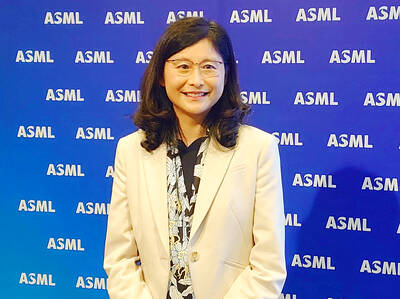
Netherlands-based semiconductor equipment supplier ASML Holding NV yesterday said that it is planning to hire an additional 1,000 people in Taiwan this year in response to growing demand from clients. ASML had previously planned to recruit 600 people this year, but that the plan has been adjusted upward, ASML vice president and ASML Taiwan general manager Grace Wang (汪佳慧) told reporters. ASML has a workforce of more than 4,500 in Taiwan, accounting for about 10 percent of its global total, Wang said. This year’s recruitment campaign would focus on adding people in the customer support, manufacturing and supply chain domains to assist ASML
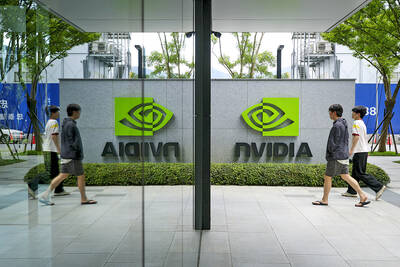
UNDER MICROSCOPE: Taiwan detained three people who allegedly conspired to buy servers in Taiwan and export them using fraudulent documentation, prosecutors said Nvidia Corp chief executive officer Jensen Huang (黃仁勳) on Saturday urged Super Micro Computer Inc to tighten up on compliance after Taiwan detained three people this week for allegedly making fraudulent declarations about artificial intelligence (AI) servers made by its US partner. The development marked the nation’s first crackdown on semiconductor smuggling, which grew after the US slapped restrictions on exports of high-end chips such as Nvidia AI accelerators to China. Nvidia is “rigorous” in explaining regulations to all of its partners, Huang told reporters after arriving in Taipei. “Ultimately Super Micro has to run their own company,” he said in response to

Nvidia Corp yesterday announced that CEO Jensen Huang (黃仁勳) would attend an employee meeting in Taipei tomorrow to celebrate the launch of the company’s Taiwan headquarters project. Huang would attend a gathering at the site of Nvidia’s planned headquarters in Beitou Shilin Technology Park (北投士林科技園區), the company said in a statement. After arriving in Taiwan on Saturday last week, Huang told reporters that he plans to meet with Quanta Computer Inc (廣達) chairman Barry Lam (林百里) and Taiwan Semiconductor Manufacturing Co (TSMC, 台積電) chairman C.C. Wei (魏哲家), and would attend the groundbreaking ceremony for Nvidia’s Taiwan headquarters tomorrow. Nvidia has not yet applied


 RSS
RSS