


TransAsia Airways Corp (復興航空) will distribute severance pay to its employees and guarantee its passengers’ rights through a NT$1.2 billion (US$37.56 million) mutual trust fund after the company’s dissolution, chief executive officer Liu Tung-ming (劉東明) said yesterday.
Liu announced the dissolution at a news conference earlier yesterday.
The company on Monday announced without prior notice that it had suspended all flights, affecting thousands of passengers.
The decision to quit the aviation business was reached at an extraordinary meeting of the airline’s board yesterday morning and will be referred to a shareholders’ meeting for discussion before coming into effect, Liu added.
He said that despite having taken various measures to improve the carrier’s finances, it had continued to suffer losses in the wake of two deadly crashes in July 2014 and February last year that tarnished the airline’s image and sent its passenger load factor below 70 percent.
Company employees face layoffs after the announcement of the firm’s dissolution.
As of the end of last month, the airline had 1,795 employees registered in the National Labor Insurance program, according to the Ministry of Labor.
However, according to regulations, employers are required to file an application with labor affairs authorities at least 60 days before carrying out any mass layoff.
Chen said that from the mutual trust fund, NT$600 million would be used for employee severance payments and the other NT$600 million would be used to compensate passengers.
The Taiwan Stock Exchange on Monday suspended the trading of the company’s shares at the request of the carrier. The suspension is to remain in place until the company applies for trading to resume.
The stock is to be delisted after the company is dissolved.


Taiwanese firms have increased investment in the Philippines in recent years as Manila’s ties with Washington deepen and global supply chains continue to shift away from China, an expert at the Chung-Hua Institution for Economic Research (CIER, 中華經濟研究院) said yesterday. The Philippines had not been among Taiwanese investors’ top choices in Southeast Asia, CIER Taiwan ASEAN Studies Center director Kristy Hsu (徐遵慈) said at a seminar in Taipei. However, Taiwan’s investment in the country has grown significantly since the COVID-19 pandemic, reaching US $257 million last year, a high in recent years, she said. Although Taiwan’s total investment in the Philippines still lags
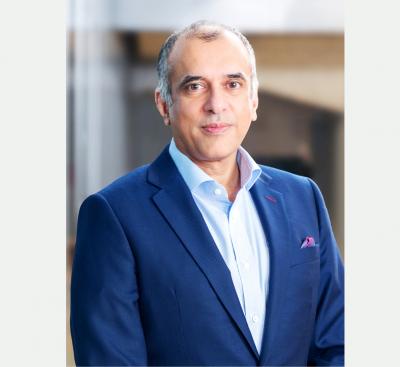
HSBC Holdings PLC is deepening its commitment to Taiwan as the economy emerges as one of the bank’s fastest-growing markets globally, driven by an artificial intelligence (AI) investment boom, expanding cross-border trade, and rising wealth creation. “The advantage that Taiwan has is a growth story linked to the semiconductor and broader AI industries, strong underlying corporate performance, and wealth creation,” said Surendra Rosha, HSBC’s co-chief executive for Asia and the Middle East, in an exclusive interview with the Taipei Times on June 2, during this year’s HSBC Taiwan Conference. That combination has helped HSBC cement its position as the most profitable international

Intel Corp regards Taiwan Semiconductor Manufacturing Co (TSMC, 台積電) as a longstanding partner, as the US chipmaker would continue outsourcing production of advanced chips to TSMC, Intel chief executive officer Lip-Bu Tan (陳立武) said yesterday. “I don’t look at people as competitors. I look at the collaboration... Nvidia is also, you know, a good friend,” Tan told a news conference following his keynote speech at the Computex trade show in Taipei. “It’s a very trusted partnership for us... We are a big, top customer for them, and we’re going to continue doing that,” he said, referring to TSMC, the world’s largest foundry

Hon Hai Precision Industry Co (鴻海精密) yesterday said it would work with US chipmaker Intel Corp to jointly develop and deploy next-generation artificial intelligence (AI) infrastructure and intelligent computing platforms in a move to capture booming demand for AI computing systems. Hon Hai, also known as Foxconn Technology Group (富士康), said in a statement that the partnership would combine its global manufacturing scale, system integration expertise and AI data center deployment capabilities with Intel’s strengths in processor architecture, silicon technologies and software ecosystem. The companies said they plan to work on equipment used in AI data centers, including server racks powered by


 RSS
RSS