


Liliana Carmona misses the lush pine forest on the hills overlooking her village in western Mexico. She now stares at vast avocado orchards that feed a massive foreign appetite for the green fruit.
Growers have been cutting down swaths of forest to make room for more fruit trees in the state of Michoacan, the world’s avocado capital.
Experts are concerned that chemicals used in the orchards could be behind illnesses afflicting the local population.
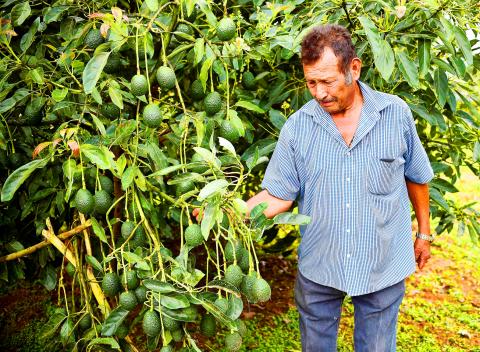
Photo: AFP
“The sneezing doesn’t stop when they are fumigating,” said Carmona, a stocky 36-year-old mother of two who works at a small grocery store in Jujucato, a village in the heart of avocado land.
In the 15 years that Salvador Sales has been teaching in Jujucato, he has seen his students come down with more and more breathing and stomach problems.
“We believe this is caused by the products used to spray the avocado orchards,” said Sales, who believes that the wind blows the chemical fumes into the homes of his students.
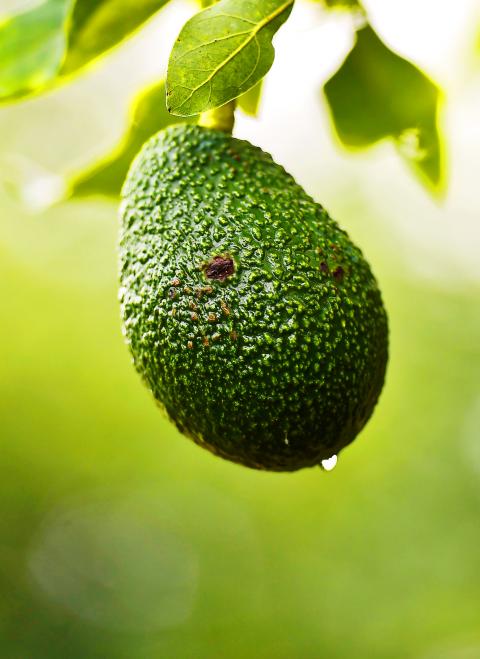
Photo: AFP
About 40 percent of the world’s avocados are grown in Mexico, and most of those come from the area around Jujucato and Lake Zirahuen.
Avocados occupy about 137,000 hectares of land in Michoacan, according to state government figures.
Half of those orchards were planted in forests after the land was bought through dubious legal means, according to Jaime Navia, head of a rural technology non-governmental organization, called GIRA.
Deforestation is growing at a pace of 2.5 percent per year, according to GIRA.
Temperate weather in the region allows for year-round cultivation of avocado, a fruit that originated in Mexico and is loaded with vitamins, proteins and healthy fats.
While there is a strong local demand, production has soared along with the avocado’s ever-growing international appeal and forests have paid the price.
Experts say that the chemicals used in mountain orchards might be spilling down into ground water, streams, rivers and lakes, and subsequently causing illnesses among the population.
Alberto Gomez Tagle, an expert on the environment in the Lake Zirahuen region, which includes Jujucato, said many communities that rely on the lake water might already be suffering from the effects of chemical runoff.
One lakeside village asked researchers for help when residents began to suffer from liver and kidney problems that did not exist until “the avocado orchards expanded and all types of pesticides were used,” Gomez Tagle said.
Officials and some producers are striving to halt the growth of orchards in forests.
Since August, authorities have recovered 100 hectares of land and detained dozens of people working in fields that had invaded forests.
A label is being created for avocados sold in stores so that consumers can identify those from orchards that do not harm the environment.
Avocados had their first “boom” in the 1970s, but production really took off in an uncontrolled way into the forests in 2000, Navia said .
Foreign demand for avocados have grown consistently in the past decade, especially from the US — Mexico’s biggest trade partner — and countries like Japan, according to federal government figures.
In 2003, avocado exports reached about US$60 million, a figure that shot up to US$1.5 billion by last year. Avocado sales to Japan went from US$40 million to US$106 million in the same time period.
Michoacan has been known in recent years for bloody clashes between rival drug gangs, which have also moved into the avocado trade, officials said.
Some of the avocado farmers that invaded the forest are “organized crime” members, a state government official said, adding that the authorities had recouped some of that land.
There are even avocados grown as high as 2,600m above sea level, “even though they aren’t that productive,” Navia said.
One hectare of avocados generates on average about US$5,400 per year.
Mexican avocado packers recently went on strike for a few days to protest the low pay they were getting this season, which ranges from between US$1.8 and US$2.6 per kilogram.
The brief strike resulted in a global avocado price hike.

NEW MARKET: The partnership opens up India to the Dutch company, which already has a strong hold in the semiconductor market of South Korea, Taiwan and China ASML Holding NV entered into a partnership agreement with Tata Electronics Pvt Ltd aimed at ramping up India’s goal to develop domestic chip-manufacturing capabilities. The Dutch company’s technology would help power Tata Electronics’ planned 300 millimeter (mm) semiconductor foundry in Gujarat, according to a joint statement from the two companies on Saturday. The signing of a memorandum of understanding coincides with a visit by Indian Prime Minister Narendra Modi to the Netherlands, which is looking to deepen bilateral relations with New Delhi. ASML, whose top customers include Taiwan Semiconductor Manufacturing Co (台積電) and Samsung Electronics Co, makes lithography machines that can print
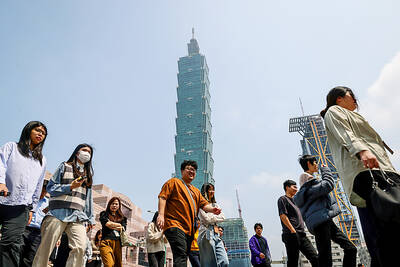
TECH RELIANCE: Growth is increasingly reflecting an unequal K-shaped distribution, where technology sectors outperform and other industries struggle, an expert said Standard Chartered Bank has significantly raised its forecast for Taiwan’s economic growth to 9.5 percent this year, up from 7.6 percent previously, citing surging artificial intelligence (AI) demand driving exports, semiconductor production and investment. The upgrade reflects a sustained AI supercycle that continues to fuel demand for advanced chips and technology infrastructure, which form the backbone of Taiwan’s exports, the bank said in a report this week. “We raise our 2026 growth forecast to reflect a much stronger-than-expected first-quarter GDP figure,” Standard Chartered senior economist for greater China and Asia Tommy Wu (胡東安) said in the report. Driven largely by a 35.3 percent

Two of Taiwan’s international carriers, Starlux Airlines Co (星宇航空) and EVA Airways Corp (長榮航空), have retained the five-star airline rating awarded by international airline review organization Skytrax. Starlux was awarded the distinction for a second consecutive year, while EVA Air received it for the 11th straight year, Skytrax said in statements released yesterday and on Thursday last week, respectively. The five-star rating is considered one of the airline industry's highest honors and is awarded following professional audits of airline product and frontline service standards, Skytrax said. The ratings are based on in-depth assessments using unified global quality standards rather than customer review scores

Tokyo Electron's Taiwan unit today said in a written response that it respects the judicial process, takes the court ruling seriously and would not appeal in the Taiwan Semiconductor Manufacturing Co (TSMC, 台積電) trade secrets case. Last month, a court fined the Taiwan unit of Japan's Tokyo Electron NT$150 million (US$4.74 million) in a case involving trade secrets related to TSMC's sensitive chip technology.


 RSS
RSS