


Amazon.com Inc is teaming up with VMware Inc to let customers combine VMware’s software for corporate networks with Amazon’s Internet-based cloud-computing services, a bid by Amazon to better compete with rival Microsoft Corp in hybrid cloud solutions.
VMware will deliver, sell and support a product that lets customers use their existing VMware software with access to Amazon’s cloud-based storage, database and analytic software, the companies said in a statement on Thursday.
Hybrid solutions allow customers to run applications on their own servers and through various remote cloud-based applications simultaneously.
Called VMware Cloud on AWS, the product is to be available in the middle of next year.
It will appeal to companies that want the flexibility and capacity of managing data via the cloud, the companies said.
Amazon is trying to maintain its lead in the cloud-computing market over rivals Microsoft, Alphabet Inc’s Google and IBM Corp as more companies transition from using their servers to renting computing power and data space hosted remotely, which they access via the Internet.
Movie-service Netflix Inc is a prominent example of a Web company powered by Amazon Web Services (AWS).
VMware is shifting its cloud strategy to focus on selling products that work with existing leaders, rather than trying to establish itself as an alternative to the Amazons of the world.
As more companies run applications on rented servers over the Internet, providing services that link the different technologies customers use is a growing opportunity for VMware.
The alliance is a “very powerful collaboration” that gives companies flexibility in deciding whether to transition their data to the public cloud while maintaining investments they’ve made in on-premise data centers, Morningstar Inc analyst Tim Feeney said.
“Essentially, the process of managing the hybrid cloud environment is significantly less of a hassle now,” Feeney said. “This is a very powerful move for Vmware, because IT managers are more likely to retain VMware’s services for longer.”
VMware chief executive officer Pat Gelsinger said he sees hybrid solutions providing business opportunities for decades into the future while the on-premise data business slows.
The Amazon partnership could be a blow to IBM, which has its own deal with Vmware.
IBM said in a statement that 1,000 clients are already using the IBM cloud with software from VMware and the partnership has created “significant momentum.”
Microsoft, responding to the Amazon-VMware agreement, said AWS is behind in offering hybrid cloud solutions.
“Microsoft Azure has always been hybrid by design, based on our decades of enterprise experience,” the company said in the statement. “True hybrid cloud isn’t just connectivity, it’s consistency across development, management and security.”
Shares of contract chipmaker Taiwan Semiconductor Manufacturing Co (TSMC, 台積電) came under pressure yesterday after a report that Apple Inc is looking to shift some orders from the Taiwanese company to Intel Corp. TSMC shares fell NT$55, or 2.4 percent, to close at NT$2,235 on the local main board, Taiwan Stock Exchange data showed. Despite the losses, TSMC is expected to continue to benefit from sound fundamentals, as it maintains a lead over its peers in high-end process development, analysts said. “The selling was a knee-jerk reaction to an Intel-Apple report over the weekend,” Mega International Investment Services Corp (兆豐國際投顧) analyst Alex Huang
Taiwan Semiconductor Manufacturing Co (TSMC, 台積電) is expected to remain Apple Inc’s primary chip manufacturing partner despite reports that Apple could shift some orders to Intel Corp, industry experts said yesterday. The comments came after The Wall Street Journal reported on Friday that Apple and Intel had reached a preliminary agreement following more than a year of negotiations for Intel to manufacture some chips for Apple devices. Taiwan Institute of Economic Research (台灣經濟研究院) economist Arisa Liu (劉佩真) said TSMC’s advanced packaging technologies, including integrated fan-out and chip-on-wafer-on-substrate, remain critical to the performance of Apple’s A-series and M-series chips. She said Intel and Samsung
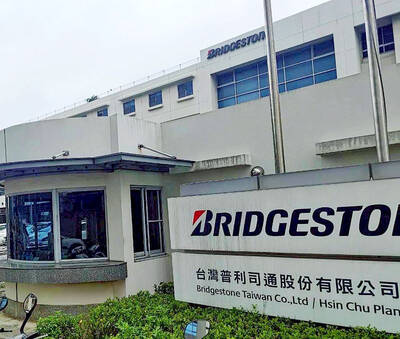
TRANSITION: With the closure, the company would reorganize its Taiwanese unit to a sales and service-focused model, Bridgestone said Bridgestone Corp yesterday announced it would cease manufacturing operations at its tire plant in Hsinchu County’s Hukou Township (湖口), affecting more than 500 workers. Bridgestone Taiwan Co (台灣普利司通) said in a statement that the decision was based on the Tokyo-based tire maker’s adjustments to its global operational strategy and long-term market development considerations. The Taiwanese unit would be reorganized as part of the closure, effective yesterday, and all related production activities would be concluded, the statement said. Under the plan, Bridgestone would continue to deepen its presence in the Taiwanese market, while transitioning to a sales and service-focused business model, it added. The Hsinchu
Taiwan Semiconductor Manufacturing Co (TSMC, 台積電) has approved a capital budget of US$31.28 billion for production expansion to meet long-term development needs during the artificial intelligence (AI) boom. The company’s board meeting yesterday approved the capital appropriation plan for purposes such as the installation of advanced technology capacity and fab construction, the world’s largest contract chipmaker said in a statement. At an earnings conference last month, TSMC forecast that its capital expenditure for this year would be at the higher end of the US$52 billion to US$56 billion range it forecast in January in response to robust demand for 5G, AI and


 RSS
RSS