


As prospects of Brexit firm up, a fresh weakening in the British pound is pushing the FTSE 100 Index of UK megacaps close to a record. Not that foreign investors, who own more than half the nation’s equities, are rejoicing.
While the British equity benchmark has surged 12 percent this year in local currency, it has declined more than 2 percent in US dollar terms, the biggest underperformance since the global financial crisis.
Exporters advanced on Monday as the pound tumbled after British Prime Minister Theresa May said she would start the process of withdrawing the UK from the EU by March next year.
FTSE 100 futures yesterday traded higher at 7:52am in London as the currency sank to its weakest since 1985.
Local investors have seen the value of their holdings increase as companies, including drugmaker AstraZeneca PLC and whiskey company Diageo PLC — which get most of their revenue outside the UK — rallied after June’s exit vote sent the pound tumbling. Remove the currency halo, and the FTSE 100 is still below the level it was at before the decision. That is bad news for overseas investors, if they have not hedged to account for the sterling effect.
‘MIXED BLESSING’
North America accounts for 46 percent of all foreign holdings, according to the latest British government report published in September last year.
“On one hand, for UK-based investors, it’s been quite the boon; on the other, if you are a US investor, it’s been more of a mixed blessing,” said Ken Odeluga, a London-based market analyst at brokerage City Index. “If you have your British holdings in dollars, you are actually going to get far, far less than you would have if we didn’t have this strong weakness in the pound.”
UK shares have become Europe’s highlight this year as firms from JPMorgan Chase & Co to HSBC Holdings PLC recommended buying the stocks, citing the weaker pound and increased stimulus from the Bank of England.
While analysts raised their estimates for profit growth in the aftermath of the vote and economic data have been better than expected, earnings for FTSE 100 companies are still projected to contract 3.2 percent this year.
BRIEF RESPITE
Although the inverse link between the pound and the FTSE 100 had begun to break down at the start of last month, the respite was brief.
May’s pledge to invoke the formal trigger for two years of Brexit talks raised doubts about what form the exit will take and the kind of subsequent trade deal struck. That, coupled with speculation that Britain will favor immigration control over safeguarding access to the single market, prompted fresh declines in the pound on Monday. The FTSE 100 closed within 1.7 percent of a record reached in April last year.
Foreign holdings of British equities have grown over time. They stood at 54 percent at the end of 2014, the latest year with data available from the British Office for National Statistics, versus just 31 percent in 1998.
Investors owning the country’s shares in greenbacks have suffered more than local ones in the past three years and the biggest US exchange-traded fund tracking the shares has seen outflows almost every month this year. Since the day of the referendum, the FTSE 100 has gained 10 percent in local currency, versus a slide of more than 4 percent in US dollar terms.
“Given the pound weakness right now, for US investors, it’s really only a win if you are a new investor and you’re bullish,” Odeluga said.
“If you already own FTSE 100 companies, you’ve seen your investments depreciate,” Odeluga said.

Taichung reported the steepest fall in completed home prices among the six special municipalities in the first quarter of this year, data compiled by Taiwan Realty Co (台灣房屋) showed yesterday. From January through last month, the average transaction price for completed homes in Taichung fell 8 percent from a year earlier to NT$299,000 (US$9,483) per ping (3.3m²), said Taiwan Realty, which compiled the data based on the government’s price registration platform. The decline could be attributed to many home buyers choosing relatively affordable used homes to live in themselves, instead of newly built homes in the city’s prime property market, Taiwan Realty
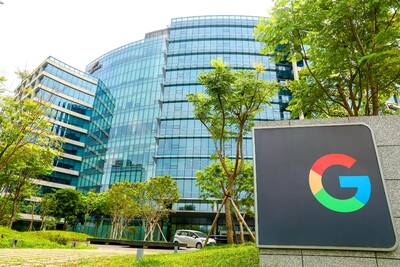
The government yesterday approved applications by Alphabet Inc’s Google to invest NT$27.08 billion (US$859.98 million) in Taiwan, the Ministry of Economic Affairs said in a statement. The Department of Investment Review approved two investments proposed by Google, with much of the funds to be used for data processing and electronic information supply services, as well as inventory procurement businesses in the semiconductor field, the ministry said. It marks the second consecutive year that Google has applied to increase its investment in Taiwan. Google plans to infuse NT$25.34 billion into Charter Investments Ltd (特許投資顧問) through its Singapore-based subsidiary Fructan Holdings Singapore Pte Ltd, and

JET JUICE: The war on Iran’s secondary effects have seen fuel prices skyrocket, knocking flight schedules down to earth in return as airlines struggle with costs Airline passengers should brace for more irritation in the next few months as carriers worldwide cancel flights and ground planes to cope with stratospheric increases in jet-fuel prices. Dutch flag carrier KLM is the latest company to cut its schedule, saying on Thursday that it would scrap 80 return flights at Amsterdam’s Schiphol Airport in the coming month. That puts it in the same league as United Airlines Holdings Inc, Deutsche Lufthansa AG and Cathay Pacific Airways Ltd, which have all pruned itineraries to mitigate costs. Global capacity for next month has been reduced by about 3 percentage points, with all

Micron Technology Inc is a driving force pushing the US Congress to pass legislation that would put new export restrictions on equipment its Chinese competitors use to make their chips, according to people familiar with the matter. A US House of Representatives panel yesterday was to vote on the “MATCH Act,” a bill designed to close gaps in restrictions on chipmaking equipment. It would also pressure foreign companies that sell equipment to Chinese chipmaking facilities to align with export curbs on US companies like Lam Research Corp and Applied Materials Inc. The bill targets facilities operated by China’s ChangXin Memory Technologies Inc


 RSS
RSS