


Airbus Group SE said the UK Serious Fraud Office has opened a criminal investigation into allegations of fraud, bribery and corruption relating to some of its third-party consultants.
The Toulouse, France-based planemaker said in a statement on Sunday that it is cooperating with investigators probing its civil aviation business. Airbus had flagged to UK regulators and the European Export Credit Agencies earlier this year “misstatements and omissions” involving the outside contractors in some export financing applications, which it found through an internal probe.
The credit agencies, including UK Export Finance, have suspended some of the backstop financing that Airbus uses to help sell commercial aircraft since the first revelations made four months ago. Airbus said in a July 27 statement that a process for re-establishing export credit “has been agreed and is ongoing.”
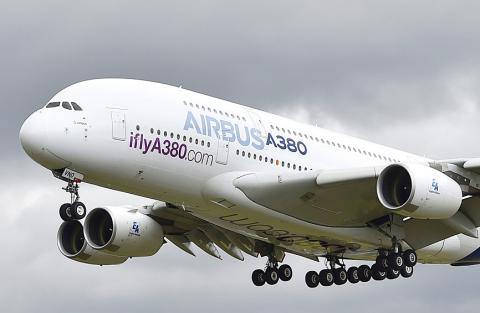
Photo: EPA
Until the financing is restored, Airbus and rival Boeing Co face the challenge of navigating an uncertain market with limited government assistance. Chicago-based Boeing has been unable to tap trade financing because a congressional impasse has left the US Export-Import bank with too few directors to approve deals.
Jefferies Equity Research estimates that export-credit agencies last year provided 7 percent of financing for Airbus plane deliveries, compared with 45 percent from leasing companies and 40 percent from airlines themselves.
The Airbus investigation adds to the scrutiny of the role played by cross-border intermediaries. Monaco-based Unaoil SAM, which served as a go-between for companies and officials in the Middle East, Africa and former Soviet countries, was searched by authorities earlier this year amid allegations of corruption.
“This will have some negative impact,” said Shukor Yusof, founder of aviation consulting firm Endau Analytics in Malaysia. “Third-party consultants or intermediaries have often caused worries. The business of aircraft sale is so intense and competitive that there are people trying many avenues.”
Airbus said in the July 27 filing that it is undertaking a sweeping review involving “legal, investigative, and forensic accounting” of consultants and other third parties used to support sales. The European planemaker said it is also using greater due diligence to screen potential contractors.
“The group cannot exclude that the comprehensive review and these enhancements of its controls and practices lead to additional commercial disputes or other consequences in the future,” the filing said.
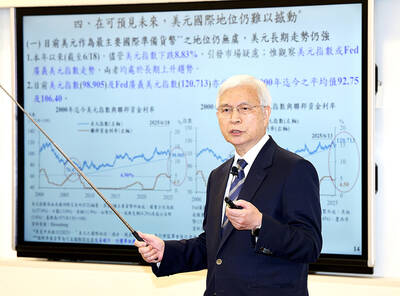
NOT JUSTIFIED: The bank’s governor said there would only be a rate cut if inflation falls below 1.5% and economic conditions deteriorate, which have not been detected The central bank yesterday kept its key interest rates unchanged for a fifth consecutive quarter, aligning with market expectations, while slightly lowering its inflation outlook amid signs of cooling price pressures. The move came after the US Federal Reserve held rates steady overnight, despite pressure from US President Donald Trump to cut borrowing costs. Central bank board members unanimously voted to maintain the discount rate at 2 percent, the secured loan rate at 2.375 percent and the overnight lending rate at 4.25 percent. “We consider the policy decision appropriate, although it suggests tightening leaning after factoring in slackening inflation and stable GDP growth,”
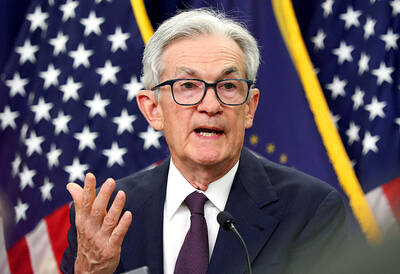
DIVIDED VIEWS: Although the Fed agreed on holding rates steady, some officials see no rate cuts for this year, while 10 policymakers foresee two or more cuts There are a lot of unknowns about the outlook for the economy and interest rates, but US Federal Reserve Chair Jerome Powell signaled at least one thing seems certain: Higher prices are coming. Fed policymakers voted unanimously to hold interest rates steady at a range of 4.25 percent to 4.50 percent for a fourth straight meeting on Wednesday, as they await clarity on whether tariffs would leave a one-time or more lasting mark on inflation. Powell said it is still unclear how much of the bill would fall on the shoulders of consumers, but he expects to learn more about tariffs
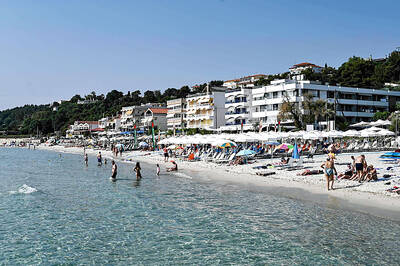
Greek tourism student Katerina quit within a month of starting work at a five-star hotel in Halkidiki, one of the country’s top destinations, because she said conditions were so dire. Beyond the bad pay, the 22-year-old said that her working and living conditions were “miserable and unacceptable.” Millions holiday in Greece every year, but its vital tourism industry is finding it harder and harder to recruit Greeks to look after them. “I was asked to work in any department of the hotel where there was a need, from service to cleaning,” said Katerina, a tourism and marketing student, who would
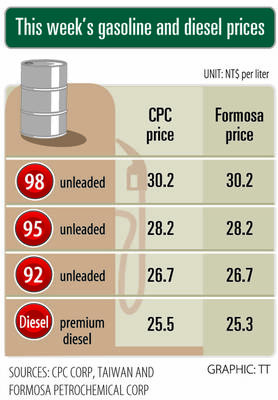
i Gasoline and diesel prices at fuel stations are this week to rise NT$0.1 per liter, as tensions in the Middle East pushed crude oil prices higher last week, CPC Corp, Taiwan (台灣中油) and Formosa Petrochemical Corp (台塑石化) said yesterday. International crude oil prices last week rose for the third consecutive week due to an escalating conflict between Israel and Iran, as the market is concerned that the situation in the Middle East might affect crude oil supply, CPC and Formosa said in separate statements. Front-month Brent crude oil futures — the international oil benchmark — rose 3.75 percent to settle at US$77.01


 RSS
RSS