


INSURANCE
Chaoyang auction postponed
An auction for Chaoyang Life Insurance Co (朝陽人壽) might be delayed until after September, pushing back earlier plans to find a buyer for the troubled company by next month, regulators said. Chaoyang Life was placed under government receivership in January after racking up massive losses and negative net worth. The semi-official Insurance Stabilization Fund, which has been appointed the official receiver for the company Life, said it needs more time to present and discuss recommendations by asset management companies with the Financial Supervisory Commission.
FINANCE
SinoPac profit falls 25%
SinoPac Financial Holdings Co (永豐金控) yesterday reported that net income in the first quarter fell 25 percent year-on-year to NT$2.72 billion (US$83.23 million). Earnings per share during the period were NT$0.27. The company attributed the decline to successive interest rate cuts, which pushed down its net interest margin to 1.09 percent. Bank SinoPac president and spokesperson Michael Chang (張晉源) said that a new branch would open its doors in Shanghai next week, adding that the company would continue expanding China, with plans to open one new branch each year. Chang maintained a downbeat outlook on Taiwan’s economic growth this year, saying that a marked recovery is not expected until next year. However, he does not expect the financial sector to bear the brunt of an expected capital flight, as money flows back to the US following the US Federal Reserve’s anticipated interest rate increase.
PHARMACEUTICALS
OBI Pharma shares soar
OBI Pharma Inc (台灣浩鼎) shares yesterday surged 9.98 percent to NT$562 as the company’s presentation on its new breast cancer vaccine, OBI-822, at the American Society of Clinical Oncology’s (ASCO) annual meeting in Chicago next month draws near. The company’s share price has rallied since ASCO published an abstract by the company showing that OBI’s new treatment is effective for certain patients, despite failing the primary endpoint of a phase III clinical trial. The biotech sub-index also gained 3.24 percent to 76.81 points yesterday, Taiwan Stock Exchange data showed.
TECHNOLOGY
Computex buyer numbers up
The number of registered buyers visiting this year’s Computex Taipei rose 3.8 percent to 15,541, organizers said yesterday. The trade show is to feature products by 1,602 companies from 30 nations, of which 23 percent are making their debut at Taiwan’s flagship technology event, the Taiwan External Trade Development Council (TAITRA) said. The event is gaining traction internationally, with the number of participating nations rising by 36 percent year-on-year to reach the highest number in the past five years, TAITRA said.
STEEL
Scrap prices stabilize
Feng Hsin Iron and Steel Co (豐興) yesterday said that international scrap steel prices had stopped their streak of declines. The company said it is observing whether prices will stabilize before readjusting its own prices. Scrap steel prices have seen six downward adjustments since the beginning of this month, with prices falling from US$200 to US$190 in the US market, while prices slid from US$235 to US$210 in Japan, Feng Hsin said. Overall steel prices opened flat yesterday, it said. Feng Hsin shares were also unchanged in Taipei trading yesterday at NT$42.
Shares of contract chipmaker Taiwan Semiconductor Manufacturing Co (TSMC, 台積電) came under pressure yesterday after a report that Apple Inc is looking to shift some orders from the Taiwanese company to Intel Corp. TSMC shares fell NT$55, or 2.4 percent, to close at NT$2,235 on the local main board, Taiwan Stock Exchange data showed. Despite the losses, TSMC is expected to continue to benefit from sound fundamentals, as it maintains a lead over its peers in high-end process development, analysts said. “The selling was a knee-jerk reaction to an Intel-Apple report over the weekend,” Mega International Investment Services Corp (兆豐國際投顧) analyst Alex Huang
Taiwan Semiconductor Manufacturing Co (TSMC, 台積電) is expected to remain Apple Inc’s primary chip manufacturing partner despite reports that Apple could shift some orders to Intel Corp, industry experts said yesterday. The comments came after The Wall Street Journal reported on Friday that Apple and Intel had reached a preliminary agreement following more than a year of negotiations for Intel to manufacture some chips for Apple devices. Taiwan Institute of Economic Research (台灣經濟研究院) economist Arisa Liu (劉佩真) said TSMC’s advanced packaging technologies, including integrated fan-out and chip-on-wafer-on-substrate, remain critical to the performance of Apple’s A-series and M-series chips. She said Intel and Samsung
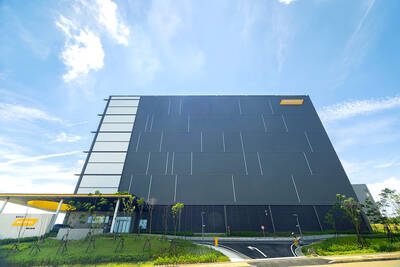
POWER BUILDUP: Powered by Nvidia’s B200 Blackwell chips, the data center would support MediaTek’s computing power demand and business growth, the company said Smartphone chip designer MediaTek Inc (聯發科) yesterday launched a new artificial intelligence (AI) data center with a maximum capacity of 45 megawatts to meet its rising demand for computing power required to develop new advanced chips for AI applications. The company has completed the first-phase computing power buildup at the data center in Miaoli County’s Tongluo Township (銅鑼), providing 15 megawatts of capacity to support its research and development (R&D) capabilities, despite an industrywide shortage of key components, MediaTek said. Supply constraints have plagued a wide range of key components, including memory chips, solid-state drives, power supply units and central
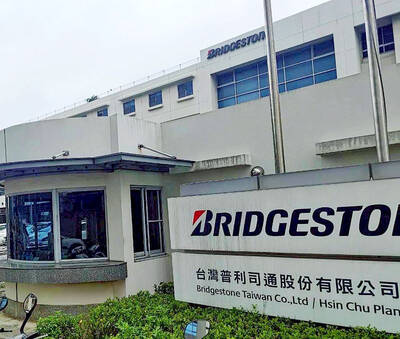
TRANSITION: With the closure, the company would reorganize its Taiwanese unit to a sales and service-focused model, Bridgestone said Bridgestone Corp yesterday announced it would cease manufacturing operations at its tire plant in Hsinchu County’s Hukou Township (湖口), affecting more than 500 workers. Bridgestone Taiwan Co (台灣普利司通) said in a statement that the decision was based on the Tokyo-based tire maker’s adjustments to its global operational strategy and long-term market development considerations. The Taiwanese unit would be reorganized as part of the closure, effective yesterday, and all related production activities would be concluded, the statement said. Under the plan, Bridgestone would continue to deepen its presence in the Taiwanese market, while transitioning to a sales and service-focused business model, it added. The Hsinchu


 RSS
RSS