


MediaTek Inc (聯發科) yesterday said that revenue this quarter would hit the middle to high end of its forecast of about NT$71 billion (US$2.17 billion), given robust customer demand.
The handset chip designer which counts Xiaomi Inc (小米) among its clients is sticking to its target of an annual increase in revenue of 10 percent this year, MediaTek co-chief operating officer Jeffrey Ju (朱尚祖) told a media briefing.
Last year, the company posted revenue of NT$213.25 billion.
The company said emerging markets such as India would be the main growth engines this year, as growth in China’s smartphone market is slowing down.
“Our business is expected to be quite good this year. The best-selling handset in China is the Oppo R9, which is equipped with our product,” Ju said.
However, gross margin would continue to be under pressure, he said.
The company expects gross margin to trend down to between 35 percent and 38 percent this quarter, after hitting a record-low of 38.1 percent in the first quarter.
MediaTek said the company supplies handset chips to more than 100 companies, including China’s Lenovo Group Ltd (聯想), Letv.com (樂視網) and Meizu Technology Corp (魅族), and Japan’s Sony Corp, which have adopted MediaTek’s Helio-series chips for high and medium-end smartphones.
Its client list includes about 20 global telecom operators, the company added.
Ju said business in “the second quarter has been better than we estimated,” with resilient demand for mid to high-end smartphones in China.
Looking ahead, “we are cautiously optimistic about the third quarter,” he said.
MediaTek last month forecast that revenue would grow between 24 percent and 32 percent sequentially to between NT$69.3 billion and NT$73.8 billion, from the first quarter’s NT$55.91 billion.
The company does not have any plans to revise its forecast for the current quarter, chief financial officer David Ku (顧大為) said.
Mobile phone chips contributed more than 55 percent to MediaTek’s overall revenues in the first quarter.
Separately, MediaTek’s Internet of Things (IoT) chief JC Hsu (徐敬全) said that chips used in IoT applications would double their revenue contribution to about 10 percent of MediaTek’s overall revenues in the next three to five years.
At present, chips used in GPS and machine-to-machine devices for distant surveillance in factories account for about 60 percent of its IoT chip shipments, Hsu said.
Gowing forward, IoT chips used in smarthomes, wearables and the automotive sectors will be the major revenue sources and China will be its major market, Hsu said.
Chips used in IoT devices offer gross margins of more than 50 percent — the highest among its products, Hsu said.

NOT JUSTIFIED: The bank’s governor said there would only be a rate cut if inflation falls below 1.5% and economic conditions deteriorate, which have not been detected The central bank yesterday kept its key interest rates unchanged for a fifth consecutive quarter, aligning with market expectations, while slightly lowering its inflation outlook amid signs of cooling price pressures. The move came after the US Federal Reserve held rates steady overnight, despite pressure from US President Donald Trump to cut borrowing costs. Central bank board members unanimously voted to maintain the discount rate at 2 percent, the secured loan rate at 2.375 percent and the overnight lending rate at 4.25 percent. “We consider the policy decision appropriate, although it suggests tightening leaning after factoring in slackening inflation and stable GDP growth,”

DIVIDED VIEWS: Although the Fed agreed on holding rates steady, some officials see no rate cuts for this year, while 10 policymakers foresee two or more cuts There are a lot of unknowns about the outlook for the economy and interest rates, but US Federal Reserve Chair Jerome Powell signaled at least one thing seems certain: Higher prices are coming. Fed policymakers voted unanimously to hold interest rates steady at a range of 4.25 percent to 4.50 percent for a fourth straight meeting on Wednesday, as they await clarity on whether tariffs would leave a one-time or more lasting mark on inflation. Powell said it is still unclear how much of the bill would fall on the shoulders of consumers, but he expects to learn more about tariffs
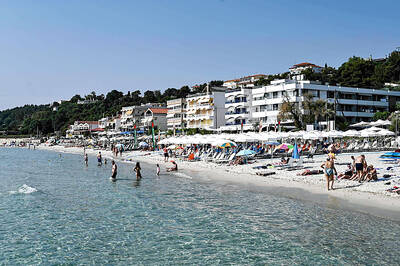
Greek tourism student Katerina quit within a month of starting work at a five-star hotel in Halkidiki, one of the country’s top destinations, because she said conditions were so dire. Beyond the bad pay, the 22-year-old said that her working and living conditions were “miserable and unacceptable.” Millions holiday in Greece every year, but its vital tourism industry is finding it harder and harder to recruit Greeks to look after them. “I was asked to work in any department of the hotel where there was a need, from service to cleaning,” said Katerina, a tourism and marketing student, who would
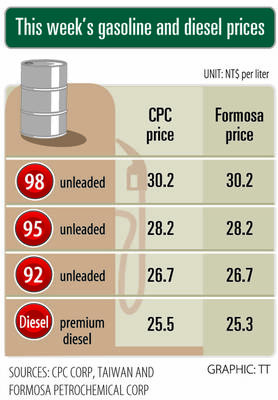
i Gasoline and diesel prices at fuel stations are this week to rise NT$0.1 per liter, as tensions in the Middle East pushed crude oil prices higher last week, CPC Corp, Taiwan (台灣中油) and Formosa Petrochemical Corp (台塑石化) said yesterday. International crude oil prices last week rose for the third consecutive week due to an escalating conflict between Israel and Iran, as the market is concerned that the situation in the Middle East might affect crude oil supply, CPC and Formosa said in separate statements. Front-month Brent crude oil futures — the international oil benchmark — rose 3.75 percent to settle at US$77.01


 RSS
RSS