


Organic, fair trade chocolate has proved popular in recent years, especially with ethically minded Western consumers keen to give cocoa farmers around the world a better deal.
In Togo a small cooperative has embraced the idea, but also stumbled upon a unique selling point in a tropical country where access to refrigerators is limited — heat-resistant chocolate.
“It doesn’t melt up to 35 degrees [Celsius],” said Komi Agbokou, who promotes the “Choco Togo” brand made from locally grown cocoa beans.
With bars containing between 60 and 100 percent cocoa, the rough texture makes it perfect for households without fridges and market stallholders wanting to sell it, he added.
Togo produces about 10,000 tonnes of cocoa beans every year, making it a relative lightweight compared with neighboring Ghana or Ivory Coast, which make up nearly 60 percent of world output.
“As we can’t compete with Ivory Coast and Ghana in terms of quantity, we can only bet on quality,” Kodjovi Mgbayom said, from Togo’s coffee and cocoa sector workers’ body.
Togolese cocoa has a “special aroma due to the soil and the fact that everything is done by hand. Drying is done in the sun. There aren’t any machine fumes here,” he added.
There is nothing to single out Togo’s cocoa from regional competitors or the more sought-after Latin American beans, said Michel Barrel, from French cocoa consultancy KawaCao.
However, Togo’s cocoa farmers have looked to organic farming and to obtaining fair-trade labels to give added value to their product, he said.
“Togo has been growing cocoa for more than 120 years, but we only export it. Cocoa farmers don’t even know the taste of chocolate,” Agbokou said.
Anyone wanting to actually eat chocolate had to go to a supermarket to buy an expensive, imported bar containing sometimes less than 30 percent cocoa, he added.
However, beans grown by 1,500 small farmers in the Akebou region in Togo’s southwest are now being shelled by about 40 local women, and then transformed into chocolate bars in the capital, Lome.
The 80g bars are sold for 1,000 CFA francs (US$1.70) in shops.
Agbokou is a trained psychologist and fell into chocolate by chance. His initial idea was to create opportunities in a labor market that was increasingly hard to access. Through his non-governmental organization, EU funding and the backing of an Italian cooperative, six unemployed young people were chosen in 2013 to go on a chocolate-making course.
On their return to Togo from Italy, they started producing 100 percent Togolese chocolate.
Now a dozen employees are paid by the hour to transform cocoa into chocolate at the cooperative’s premises in Lome, with a single, hand-cranked, locally made cocoa roaster.
One tonne of chocolate was made last year, but production has since accelerated, with more than 2 tonnes produced last quarter.
“Choco Togo” gets its supplies of cocoa solely from Akebou, where the cocoa is organic and certified by Ecocert and the Rainforest Alliance.
The international organizations ensure that production meets strict environmental and social standards.
As the cocoa is transformed on the spot, transport costs are kept to a minimum and the farmers are better paid, Mgbayom said.
Then, they see the chocolate bars produced with their beans, he added.
“Choco Togo” also uses the farmers’ wives to shell the beans, giving local families extra income.
The small chocolate bars, wrapped in kraft paper and available in natural, ginger, peanut or coconut flavors, have been shown in Milan and at the last chocolate trade fair in Brussels in February.
So far, it seems to have gone down well, head of production Nathalie Kpante said.
“We left for Brussels with 60g of chocolate and all the stock was gone on the first day,” she said.

The domestic unit of the Chinese-owned, Dutch-headquartered chipmaker Nexperia BV will soon be able to produce semiconductors locally within China, according to two company sources. Nexperia is at the center of a global tug-of-war over critical semiconductor technology, with a Dutch court in February ordering a probe into alleged mismanagement at the company. The geopolitical tussle has disrupted supply chains, with some carmakers reportedly forced to cut production due to chip shortages. Local production would allow Nexperia’s domestic arm, Nexperia Semiconductors (China) Ltd (安世半導體中國), to bypass restrictions in place since October on the supply of silicon wafers — etched with tiny components to

Singapore-based ride-hailing and delivery giant Grab Holdings Ltd has applied for regulatory approval to acquire the Taiwan operations of Germany-based Delivery Hero SE's Foodpanda in a deal valued at about US$600 million. Grab submitted the filing to the Fair Trade Commission on Friday last week, with the transaction subject to regulatory review and approval, the company said in a statement yesterday. Its independent governance structure would help foster a healthy and competitive market in Taiwan if the deal is approved, Grab said. Grab, which is listed on the NASDAQ, said in the filing that US-based Uber Technologies Inc holds about 13 percent of

Taiwan Semiconductor Manufacturing Co (TSMC, 台積電) yesterday received government approval to deploy its advanced 3-nanometer (3nm) process at its second fab currently under construction in Japan, the Ministry of Economic Affairs said in a news release. The ministry green-lit the plan for the facility in Kumamoto, which is scheduled to start installing equipment and come online in 2028 with a monthly production capacity of 15,000 12-inch wafers, the ministry said. The Department of Investment Review in June 2024 authorized a US$5.26 billion investment for the facility, slated to manufacture 6- to 12nm chips, significantly less advanced than 3nm process. At a meeting with
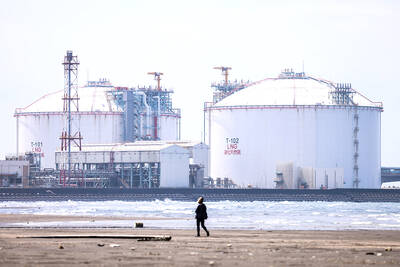
Taiwan is open to joining a global liquefied natural gas (LNG) program if one is created, but on the condition that countries provide delivery even in a scenario where there is a conflict with China, an energy department official said yesterday. While Taiwan’s priority is to have enough LNG at home, the nation is open to exploring potential strategic reserves in other countries such as Japan or South Korea, Energy Administration Deputy Director-General Chen Chung-hsien (陳崇憲) said. While the LNG market does not have a global reserve for emergencies like that of oil, the concept has been raised a few times —


 RSS
RSS