


ELECTRONICS
Retailer confirms closures
Electronics retailer Tsann Kuen Enterprise Co (燦坤實業) yesterday confirmed that the company closed down 20 inefficient stores in the first half this year and the operational adjustments would continue in the second half, including the opening of a new-format outlet near Kaoshiung’s Chengching Lake (澄清湖). The company, which operates 319 stores in Taiwan, reported NT$11.82 billion (US$376.3 million) in revenue during the first six months, up 1.33 percent from a year earlier. Tsann Kuen chairman Jerry Yen (閻俊傑) said revenue in the second half would be higher than the first half, without giving exact numbers. He made the remark after the company launched a two-year business partnership with Lenovo Group Ltd (聯想) to promote Lenovo’s notebook computers, tablets and other computer products in Taiwan.
CONTACT LENSES
Rules’ impact downplayed
The Taipei City Government’s announcement over the weekend that first-time users and those under the age of 18 will within six months need prescriptions to buy contact lens is not expected to have a major impact on the contact lens sector, JPMorgan Securities Ltd said in a note to clients on Monday. The brokerage said the city government’s move should have a limited effect, because the groups account for only a small portion of total contact lens users and enforcement is likely to be difficult, as no other cities or counties showed interest in following the move by Taipei, while the central government has been lukewarm over the issue. The nation’s two leading contact lens suppliers, Ginko International Co (金可國際) and St Shine Optical Co (精華光學), respectively generated only 8 and 19 percent of their sales from Taiwan last year, according to JPMorgan.
FOOTWEAR
Fulgent reports net loss
Fulgent Sun International Holding Co (鈺齊國際), which produces outdoor shoes, including those that feature waterproof and breathable fabric like Gore-Tex, on Monday unexpectedly reported a net loss of NT$109 million for last quarter, or a loss of NT$0.85 per share, as the company booked increased losses from its Cambodian operations. Shares plunged by 9.96 percent to NT$66.9 in Taipei trading yesterday. The company, which also supplies sports footwear, including a range of athletics shoes, might post continued net losses this quarter as efficiency in new production lines in Cambodia is unlikely to improve significantly in the short term, Yuanta Securities Investment Consulting Co (元大投顧) said yesterday. The brokerage downgraded the stock to “sell” and lowered its price target to NT$55.
CHIP DESIGNERS
Revenue boost tipped
Taiwanese chip designers led by handset chip designer MediaTek Inc (聯發科) are expected to expand their combined revenues by 4.8 percent annually this year to NT$540 billion, outpacing global rivals, local market researcher Topology Research Institute (拓墣產業研究所) said in a report yesterday. Global chip designers are expected to increase their revenues by 3.8 percent annually to US$91.3 billion this year, the Taipei-based researcher said. Among them, Chinese chip designers are forecast to increase their revenues at a much faster pace of 15 percent annually this year, Topology said. The researcher attributed the Chinese companies’ robust growth to their large home-market demand, as well as their technology upgrades and support from Chinese government policy, the report said.


Taiwanese firms have increased investment in the Philippines in recent years as Manila’s ties with Washington deepen and global supply chains continue to shift away from China, an expert at the Chung-Hua Institution for Economic Research (CIER, 中華經濟研究院) said yesterday. The Philippines had not been among Taiwanese investors’ top choices in Southeast Asia, CIER Taiwan ASEAN Studies Center director Kristy Hsu (徐遵慈) said at a seminar in Taipei. However, Taiwan’s investment in the country has grown significantly since the COVID-19 pandemic, reaching US $257 million last year, a high in recent years, she said. Although Taiwan’s total investment in the Philippines still lags
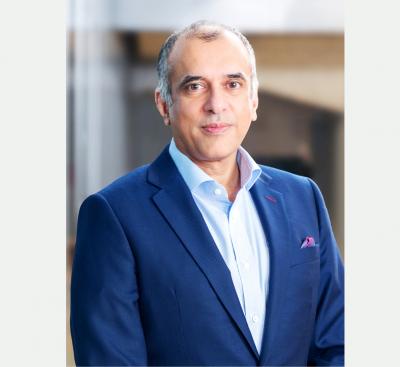
HSBC Holdings PLC is deepening its commitment to Taiwan as the economy emerges as one of the bank’s fastest-growing markets globally, driven by an artificial intelligence (AI) investment boom, expanding cross-border trade, and rising wealth creation. “The advantage that Taiwan has is a growth story linked to the semiconductor and broader AI industries, strong underlying corporate performance, and wealth creation,” said Surendra Rosha, HSBC’s co-chief executive for Asia and the Middle East, in an exclusive interview with the Taipei Times on June 2, during this year’s HSBC Taiwan Conference. That combination has helped HSBC cement its position as the most profitable international

Intel Corp regards Taiwan Semiconductor Manufacturing Co (TSMC, 台積電) as a longstanding partner, as the US chipmaker would continue outsourcing production of advanced chips to TSMC, Intel chief executive officer Lip-Bu Tan (陳立武) said yesterday. “I don’t look at people as competitors. I look at the collaboration... Nvidia is also, you know, a good friend,” Tan told a news conference following his keynote speech at the Computex trade show in Taipei. “It’s a very trusted partnership for us... We are a big, top customer for them, and we’re going to continue doing that,” he said, referring to TSMC, the world’s largest foundry

Hon Hai Precision Industry Co (鴻海精密) yesterday said it would work with US chipmaker Intel Corp to jointly develop and deploy next-generation artificial intelligence (AI) infrastructure and intelligent computing platforms in a move to capture booming demand for AI computing systems. Hon Hai, also known as Foxconn Technology Group (富士康), said in a statement that the partnership would combine its global manufacturing scale, system integration expertise and AI data center deployment capabilities with Intel’s strengths in processor architecture, silicon technologies and software ecosystem. The companies said they plan to work on equipment used in AI data centers, including server racks powered by


 RSS
RSS