


China’s largest chipmaker has a new plan to help it close a wide gap with rivals, and the company has found some unlikely partners to help.
Semiconductor Manufacturing International Corp (SMIC, 中芯國際) on Tuesday said that it would form a new company with a leading Belgian microelectronics research center and Qualcomm Inc, the US chip giant, to help it develop and produce new generations of advanced semiconductors that work as the brains of numerous electronics products, like smartphones and servers.
Four months ago, China imposed a US$975 million fine on Qualcomm, saying it violated anti-monopoly law, and forced it to sharply reduce the licensing fees it charges Chinese smartphone makers for its communications chips.
While Qualcomm previously helped the Chinese company develop chips, the new deal involves far more advanced technology. The move would help Qualcomm use more companies to produce the chips it designs that power many of the world’s most popular smartphones.
The plan is also probably a tactic to improve relations with the Chinese government, according to analysts.
“Qualcomm just had a huge settlement with the Chinese government, so from their perspective, they need to be able to sell in China,” said Willy Shih (史兆威), a professor of technology and operations management at Harvard Business School in Cambridge, Massachusetts.
“The logic is, if they help SMIC manufacture Qualcomm chips in China, that improves their ability to sell those chips there,” Shih said.
The new partnership, which also includes Huawei Technologies Co (華為), a Chinese maker of telecommunications equipment, is also the most recent example of multinational chipmakers cooperating more closely with Chinese companies.
Intel Corp, a rival of Qualcomm, last year agreed to invest US$1.5 billion in Tsinghua Unigroup Ltd (紫光集團), a state-controlled company that has emerged from relative obscurity to become a sort of chip national champion.
Also last year, IBM Corp agreed to license to a local Chinese company advanced chip technology that works in servers.
That is a break from the approach of the last decade, when leading semiconductor makers refrained from establishing their most advanced research labs and production centers in China — largely to protect intellectual property, which in the industry often costs billions of dollars per year to generate.
“This really is Qualcomm playing nice with the Chinese government,” said Mark Hung (洪岑維), a semiconductor analyst with Stamford, Connecticut-based Gartner Inc, a market research company.
Hung pointed to the earlier deal with SMIC to make chips, as well as the announcement last year of a US$150 million fund to invest in Chinese companies, as other ways the company was trying to get on the government’s good side, despite the antitrust troubles.
“Throughout the investigation they tried to be better citizens,” he said.
Qualcomm spokesman Jon Carvill declined to provide any financial details about the deal, but described it as a “SMIC-led” venture.
The manufacturing behind the new chip “is expected to have a long life cycle,” Carvill said.
The deal could put pressure on some of Qualcomm’s partners, like Taiwan Semiconductor Manufacturing Co (TSMC, 台積電), a major chipmaker that has long worked closely with Qualcomm to produce processors.
“TSMC may be a little leery of this,” Hung said.
Imec, the Belgian partner in the joint venture, is a well-known nonprofit research institute that has helped pioneer techniques that help produce some of the world’s smallest and most sophisticated chips.
In an interview with electronics industry publication EE Times that was published on Tuesday, Imec chief executive Luc Van den hove said that the company’s investment in the deal would be “very, very small” and that Imec would support SMIC’s production of the new generation of chips “very strictly following export controls.”
The first stated goal of the new company is to help SMIC produce, by 2020, the generation of chips that some rivals are already producing. SMIC is now two generations behind, so that timeline would effectively help the Chinese company catch up by one generation of technology on global leaders like Intel, according to analysts.
“Money only gets you so far, it’s really know-how,” Hung said. “In manufacturing, Imec can provide some, Qualcomm and Huawei cannot.”
SMIC is also to have the rights to license the intellectual property created by the new company, according to a statement released on Tuesday.

Shares of contract chipmaker Taiwan Semiconductor Manufacturing Co (TSMC, 台積電) came under pressure yesterday after a report that Apple Inc is looking to shift some orders from the Taiwanese company to Intel Corp. TSMC shares fell NT$55, or 2.4 percent, to close at NT$2,235 on the local main board, Taiwan Stock Exchange data showed. Despite the losses, TSMC is expected to continue to benefit from sound fundamentals, as it maintains a lead over its peers in high-end process development, analysts said. “The selling was a knee-jerk reaction to an Intel-Apple report over the weekend,” Mega International Investment Services Corp (兆豐國際投顧) analyst Alex Huang
Taiwan Semiconductor Manufacturing Co (TSMC, 台積電) is expected to remain Apple Inc’s primary chip manufacturing partner despite reports that Apple could shift some orders to Intel Corp, industry experts said yesterday. The comments came after The Wall Street Journal reported on Friday that Apple and Intel had reached a preliminary agreement following more than a year of negotiations for Intel to manufacture some chips for Apple devices. Taiwan Institute of Economic Research (台灣經濟研究院) economist Arisa Liu (劉佩真) said TSMC’s advanced packaging technologies, including integrated fan-out and chip-on-wafer-on-substrate, remain critical to the performance of Apple’s A-series and M-series chips. She said Intel and Samsung
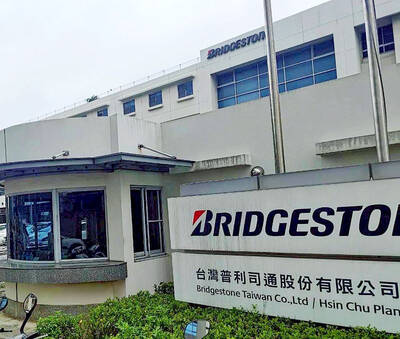
TRANSITION: With the closure, the company would reorganize its Taiwanese unit to a sales and service-focused model, Bridgestone said Bridgestone Corp yesterday announced it would cease manufacturing operations at its tire plant in Hsinchu County’s Hukou Township (湖口), affecting more than 500 workers. Bridgestone Taiwan Co (台灣普利司通) said in a statement that the decision was based on the Tokyo-based tire maker’s adjustments to its global operational strategy and long-term market development considerations. The Taiwanese unit would be reorganized as part of the closure, effective yesterday, and all related production activities would be concluded, the statement said. Under the plan, Bridgestone would continue to deepen its presence in the Taiwanese market, while transitioning to a sales and service-focused business model, it added. The Hsinchu
Taiwan Semiconductor Manufacturing Co (TSMC, 台積電) has approved a capital budget of US$31.28 billion for production expansion to meet long-term development needs during the artificial intelligence (AI) boom. The company’s board meeting yesterday approved the capital appropriation plan for purposes such as the installation of advanced technology capacity and fab construction, the world’s largest contract chipmaker said in a statement. At an earnings conference last month, TSMC forecast that its capital expenditure for this year would be at the higher end of the US$52 billion to US$56 billion range it forecast in January in response to robust demand for 5G, AI and


 RSS
RSS