


At its peak, Martha Stewart’s media empire, built around her carefully curated and fussily decorated lifestyle brand, was worth well over US$1 billion.
However, on Monday, the company agreed to sell itself for a fraction of that.
Martha Stewart Living Omnimedia said that it would sell itself to the Sequential Brands Group, a conglomerate whose brands include Jessica Simpson and the Franklin Mint, for just under US$200 million.

Photo: AFP
It is in some ways a reminder of how far the company has fallen from its heights, when Stewart’s particular vision of a perfectly decorated lifestyle commanded attention and investor dollars.
The company was dealt a blow in 2004 when Stewart — a former stockbroker and model who discovered a lucrative knack for decorating and catering — was convicted of obstructing justice and lying about a well-timed stock sale, spending several months in prison in Alderson, West Virginia.
Despite working under a temporary ban from holding an officer title at a publicly traded company, she eventually reclaimed the title of chairwoman of the company that bears her name.
However, Martha Stewart Living has been battered by the troubles that have afflicted many media companies, as readers shifted to other titles and television shows.
In the autumn of last year, the company struck a deal to license two of its main magazine titles to Meredith Corp, providing content for those publications.
Now, the company itself is to become a part of Sequential Brands, whose business revolves around buying brands and then licensing them out for a fee.
All told, Sequential Brands expects its portfolio to fetch nearly US$3.75 billion in annual sales with the addition of Martha Stewart Living.
“This merger is positioned to further the growth and expansion of the unique Martha home and lifestyle brand,” Stewart, 73, said in a statement. “We now have the opportunity to tap into Sequential’s expertise and resources to expand our merchandising business both domestically and abroad.”
Under the terms of the deal, Sequential Brands will pay US$6.15 a share, using a mix of cash and stock. That price represents a roughly 20 percent premium on Martha Stewart Living’s closing price on Wednesday last week, before the Wall Street Journal reported on the discussions.
However, investors seemed dismayed by the announcement, as Martha Stewart’s stock price fell 12 percent on Monday to US$6.12, below the offer price.
Martha Stewart Living was granted a 30-day “go-shop” period, in which it can solicit higher takeover offers.
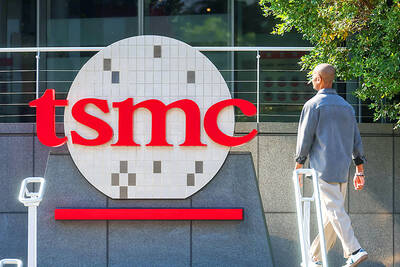
Shares of contract chipmaker Taiwan Semiconductor Manufacturing Co (TSMC, 台積電) came under pressure yesterday after a report that Apple Inc is looking to shift some orders from the Taiwanese company to Intel Corp. TSMC shares fell NT$55, or 2.4 percent, to close at NT$2,235 on the local main board, Taiwan Stock Exchange data showed. Despite the losses, TSMC is expected to continue to benefit from sound fundamentals, as it maintains a lead over its peers in high-end process development, analysts said. “The selling was a knee-jerk reaction to an Intel-Apple report over the weekend,” Mega International Investment Services Corp (兆豐國際投顧) analyst Alex Huang
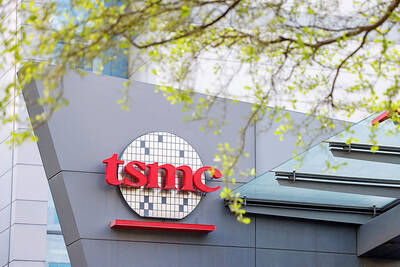
Taiwan Semiconductor Manufacturing Co (TSMC, 台積電) is expected to remain Apple Inc’s primary chip manufacturing partner despite reports that Apple could shift some orders to Intel Corp, industry experts said yesterday. The comments came after The Wall Street Journal reported on Friday that Apple and Intel had reached a preliminary agreement following more than a year of negotiations for Intel to manufacture some chips for Apple devices. Taiwan Institute of Economic Research (台灣經濟研究院) economist Arisa Liu (劉佩真) said TSMC’s advanced packaging technologies, including integrated fan-out and chip-on-wafer-on-substrate, remain critical to the performance of Apple’s A-series and M-series chips. She said Intel and Samsung
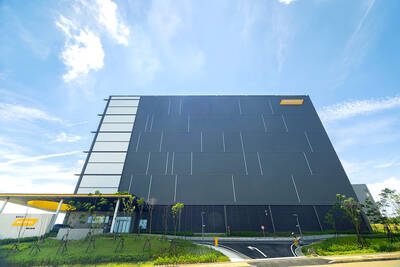
POWER BUILDUP: Powered by Nvidia’s B200 Blackwell chips, the data center would support MediaTek’s computing power demand and business growth, the company said Smartphone chip designer MediaTek Inc (聯發科) yesterday launched a new artificial intelligence (AI) data center with a maximum capacity of 45 megawatts to meet its rising demand for computing power required to develop new advanced chips for AI applications. The company has completed the first-phase computing power buildup at the data center in Miaoli County’s Tongluo Township (銅鑼), providing 15 megawatts of capacity to support its research and development (R&D) capabilities, despite an industrywide shortage of key components, MediaTek said. Supply constraints have plagued a wide range of key components, including memory chips, solid-state drives, power supply units and central
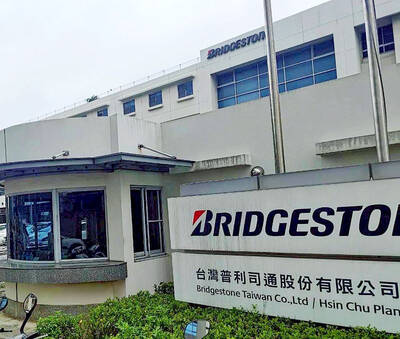
TRANSITION: With the closure, the company would reorganize its Taiwanese unit to a sales and service-focused model, Bridgestone said Bridgestone Corp yesterday announced it would cease manufacturing operations at its tire plant in Hsinchu County’s Hukou Township (湖口), affecting more than 500 workers. Bridgestone Taiwan Co (台灣普利司通) said in a statement that the decision was based on the Tokyo-based tire maker’s adjustments to its global operational strategy and long-term market development considerations. The Taiwanese unit would be reorganized as part of the closure, effective yesterday, and all related production activities would be concluded, the statement said. Under the plan, Bridgestone would continue to deepen its presence in the Taiwanese market, while transitioning to a sales and service-focused business model, it added. The Hsinchu


 RSS
RSS