


Cheetah Mobile Inc (獵豹移動), a Chinese mobile tools application developer, yesterday said it plans to set up a NT$100 million (US$3.13 million) program to fund Taiwanese startups in the mobile Internet business.
“Taiwan almost missed the Internet era, and it is now time for Taiwan to deploy and integrate more resources to catch the tail end of the mobile Internet era,” Cheetah Mobile chief executive Fu Sheng (傅盛) told a cross-strait Mobile Internet Conference in Taipei.
Fu said the program would welcome business ideas that might become a market trend in three to five years, adding that these startups would stand a better chance of forming strategic partnerships with Cheetah Mobile or even Xiaomi Corp (小米) compared with other companies.
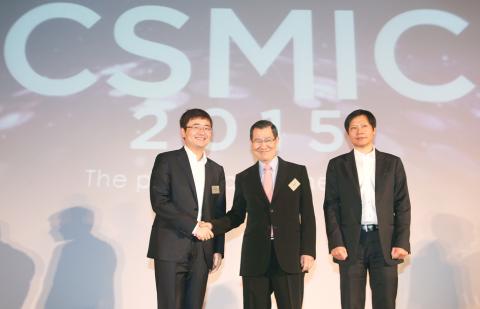
Photo: CNA
“We are eager to seek talent and new business opportunities. We hope the fund will break geographical barriers and create win-win opportunities for Taiwanese startups and us,” Fu said.
He said he expects the program to commence this quarter, adding that the company is considering hosting an open audition to screen business proposals.
Fu said the program aims to mentor rather than just provide money to help young Taiwanese establish their own businesses.
Providing funding does not mean Cheetah Mobile will control the companies, he said.
“It will be an investment, not a merger and acquisition,” Fu said, adding that he would personally help mentor Taiwanese startups.
Cheetah has no plans to set up similar programs in Southeast Asian countries, as Taiwan, given its language and cultural proximity, serves as an important gateway for Chinese enterprises to access the global market.
Xiaomi founder and chief executive officer Lei Jun (雷軍), who is also a cofounder of Cheetah Mobile, agreed, saying that Taiwanese who wish to establish their own businesses should focus on mobile Internet and smart home devices.
“Many of my Taiwanese friends have complained that they are constrained by Taiwan’s rather limited market, but if you launch a mobile application on Google Play or Apple Store, you have the global market,” Lei said.
When Cheetah Mobile was established a few years ago, there were only three to four people writing mobile apps, Lei said.
As of this month, the company’s Clean Master application has 340 million active users around the world, he said.
Lei said he foresees smart home devices that link to personal handheld devices via cloud computing will be the major market trend in the next five years, adding that Xiaomi is also working on this sector.
“To be honest, I have not seen many Taiwanese manufacturers working on this business opportunity,” Lei said.
In response to Fu’s remarks, the Investment Commission said Cheetah Mobile could fund its NT$100 million through a Taiwan-based venture capital company in accordance with Taiwanese regulations on Chinese investments.
“Plus, Cheetah Mobile can only control 49 percent at most of the venture capital’s operation,” Investment Commission Acting Executive Secretary Emile Chang (張銘斌) said by telephone.

Singapore-based ride-hailing and delivery giant Grab Holdings Ltd has applied for regulatory approval to acquire the Taiwan operations of Germany-based Delivery Hero SE's Foodpanda in a deal valued at about US$600 million. Grab submitted the filing to the Fair Trade Commission on Friday last week, with the transaction subject to regulatory review and approval, the company said in a statement yesterday. Its independent governance structure would help foster a healthy and competitive market in Taiwan if the deal is approved, Grab said. Grab, which is listed on the NASDAQ, said in the filing that US-based Uber Technologies Inc holds about 13 percent of

The domestic unit of the Chinese-owned, Dutch-headquartered chipmaker Nexperia BV will soon be able to produce semiconductors locally within China, according to two company sources. Nexperia is at the center of a global tug-of-war over critical semiconductor technology, with a Dutch court in February ordering a probe into alleged mismanagement at the company. The geopolitical tussle has disrupted supply chains, with some carmakers reportedly forced to cut production due to chip shortages. Local production would allow Nexperia’s domestic arm, Nexperia Semiconductors (China) Ltd (安世半導體中國), to bypass restrictions in place since October on the supply of silicon wafers — etched with tiny components to

Taiwan Semiconductor Manufacturing Co (TSMC, 台積電) yesterday received government approval to deploy its advanced 3-nanometer (3nm) process at its second fab currently under construction in Japan, the Ministry of Economic Affairs said in a news release. The ministry green-lit the plan for the facility in Kumamoto, which is scheduled to start installing equipment and come online in 2028 with a monthly production capacity of 15,000 12-inch wafers, the ministry said. The Department of Investment Review in June 2024 authorized a US$5.26 billion investment for the facility, slated to manufacture 6- to 12nm chips, significantly less advanced than 3nm process. At a meeting with

Taiwan’s food delivery market could undergo a major shift if Singapore-based Grab Holdings Ltd completes its planned acquisition of Delivery Hero SE’s Foodpanda business in Taiwan, industry experts said. Grab on Monday last week announced it would acquire Foodpanda’s Taiwan operations for US$600 million. The deal is expected to be finalized in the second half of this year, with Grab aiming to complete user migration to its platform by the first half of next year. A duopoly between Uber Eats and Foodpanda dominates Taiwan’s delivery market, a structure that has remained intact since the Fair Trade Commission (FTC) blocked Uber Technologies Inc’s


 RSS
RSS