


Fields of sunflowers burnt brown under blue skies are ready for harvest, but artillery and rockets are stopping farmers in east Ukraine’s frontline villages from gathering their crops.
Ukraine is the world’s biggest exporter of sunflower oil, with more than half the global market, but fighting between separatist and government forces has left fields strewn with metal shell casings and torn-up clumps of mud.
On the dirt road between Vilkhivka and Zuevka, about 50km east of the flashpoint city of Donetsk, an unexploded rocket sticks javelin-like in the earth as unharvested sunflower fields sway in the breeze.
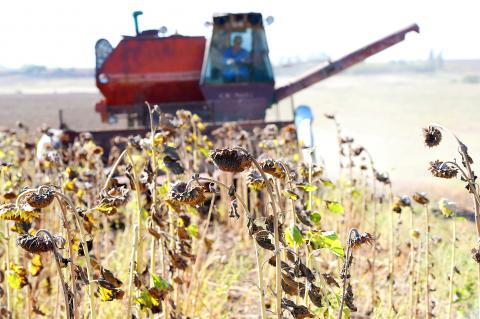
Photo: AFP
Rebels in the area accuse the Ukrainian army of indiscriminate fire, with villagers staying close to home, ready to hide from the shelling in their basements.
“We’re not stopping the local people from harvesting their crops, but they’re too scared to come out,” local rebel commander Vasiliy Petrovich said as he drove past the sunflower fields, without a farmer in sight.
The sunflower is Ukraine’s chief oilseed crop, generating export income of US$3.28 billion last year, government data show.
Analysts say overall yields in Ukraine will remain high despite the conflict, with the sunflower seed crop exceeding 10.2 million tonnes this year, compared with 11 million in the previous harvest.
The Donetsk and Lugansk regions of eastern Ukraine account for just 15 percent of the country’s total sunflower seed production, but those regions are facing a 20 to 30 percent crop loss, according to UkrAgroConsult analysts, although the majority of harvesting is going ahead.
However, it will be the smaller farmers who are too scared to harvest or have nowhere to sell their crops who suffer most.
“I think that small farms will go bankrupt this year and next year they will not plant crops,” said Yulia Garkavenko, head of oilseeds and vegoils at the consulting agency.
Beside the main road leading east toward the city of Shakhtarsk, a combine harvester scythes through a dry brown sunflower field, sending a cloud of dust towards the rebel checkpoint just a few hundred meters north.
The crop is as good as previous years, 51-year-old farmer Alexander Abashin said after stepping down from his tractor cab.
“But of course the situation is different from before. For a start we have no place to sell the harvest, so right now we’re storing it in the warehouse,” he said.
“It’s all because of the fighting. It’s brother against brother; it’s unreal. We need a ceasefire, we need to be able to work to earn money to feed our families,” Abashin added.
Despite the ceasefire agreed on Sept. 5, fighting has continued and at least one sunflower seed processing plant has been forced to close, underlining the precarious situation for foreign firms working in the east.
US-based agribusiness Cargill Inc halted operations at its Donetsk plant in early July, citing the heightened tensions in the area, with the factory then occupied by armed men.
Rebel fighters manning a checkpoint on the main road in front of the factory stopped reporters from driving closer, but black smoke could be seen spewing from the factory across the surrounding sunflower fields, reportedly the result of a fire burning there for more than a week.
The chest-high sunflowers — symbols of fertility and unity in Ukrainian folklore — have made an incongruous backdrop to five months of bloodshed in which more than 3,200 people have been killed.
Camouflaged gun-toting rebel fighters have been pictured manning positions among the flowers and after the downing of Malaysia Airlines Flight MH17 in July, rescuers combed the bright yellow fields around the village of Grabove for body parts.
Yet the flowers have also brought rare moments of joy: In Ilovaisk, a pro-Russian separatist working to clear unexploded mortars and rockets from the railway line stops and laughs out loud when he sees a wild sunflower growing beside the rail, giving it a thumbs up and exclaiming in English: “Super good, very good.”
Back on the road between the frontline villages, the bearded rebel commander shouts at the driver to stop as explosions a few hundred meters in front of the car send plumes of smoke mushrooming into the air.
“Grad,” he calls out, referring to the multi-rocket launching system frequently used in the conflict.
With the smoke still drifting, the fields become quiet, except for the rustle of brittle brown sunflowers hanging their heads.
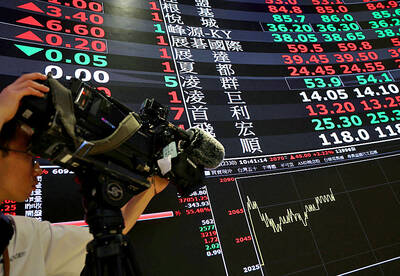
After several years flying high as Asia’s best Nvidia Corp proxy, Taiwan Semiconductor Manufacturing Co (TSMC, 台積電) is increasingly vying with other artificial intelligence (AI) stocks for investor attention. Stock traders are chasing a wider array of beneficiaries as mainstream usage of AI creates demand for hardware beyond the most-advanced chips TSMC makes for Nvidia. Subthemes from the deepening memory crunch to advances in robotics are also luring bids. At the same time, investment caps on single stocks are pushing funds to diversify, while retail investors long familiar with TSMC through its US depositary receipts are being offered a broader set of
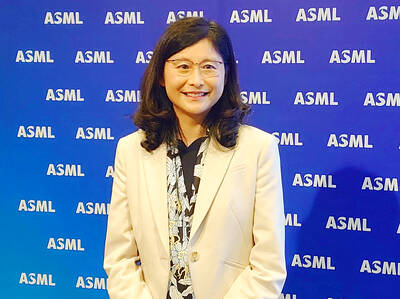
Netherlands-based semiconductor equipment supplier ASML Holding NV yesterday said that it is planning to hire an additional 1,000 people in Taiwan this year in response to growing demand from clients. ASML had previously planned to recruit 600 people this year, but that the plan has been adjusted upward, ASML vice president and ASML Taiwan general manager Grace Wang (汪佳慧) told reporters. ASML has a workforce of more than 4,500 in Taiwan, accounting for about 10 percent of its global total, Wang said. This year’s recruitment campaign would focus on adding people in the customer support, manufacturing and supply chain domains to assist ASML
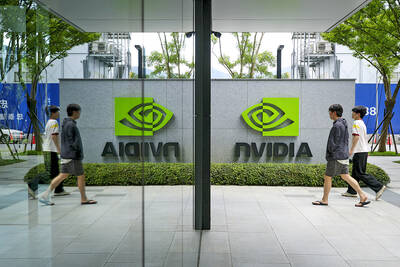
UNDER MICROSCOPE: Taiwan detained three people who allegedly conspired to buy servers in Taiwan and export them using fraudulent documentation, prosecutors said Nvidia Corp chief executive officer Jensen Huang (黃仁勳) on Saturday urged Super Micro Computer Inc to tighten up on compliance after Taiwan detained three people this week for allegedly making fraudulent declarations about artificial intelligence (AI) servers made by its US partner. The development marked the nation’s first crackdown on semiconductor smuggling, which grew after the US slapped restrictions on exports of high-end chips such as Nvidia AI accelerators to China. Nvidia is “rigorous” in explaining regulations to all of its partners, Huang told reporters after arriving in Taipei. “Ultimately Super Micro has to run their own company,” he said in response to
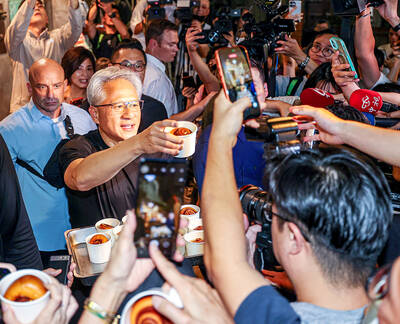
Nvidia Corp yesterday announced that CEO Jensen Huang (黃仁勳) would attend an employee meeting in Taipei tomorrow to celebrate the launch of the company’s Taiwan headquarters project. Huang would attend a gathering at the site of Nvidia’s planned headquarters in Beitou Shilin Technology Park (北投士林科技園區), the company said in a statement. After arriving in Taiwan on Saturday last week, Huang told reporters that he plans to meet with Quanta Computer Inc (廣達) chairman Barry Lam (林百里) and Taiwan Semiconductor Manufacturing Co (TSMC, 台積電) chairman C.C. Wei (魏哲家), and would attend the groundbreaking ceremony for Nvidia’s Taiwan headquarters tomorrow. Nvidia has not yet applied


 RSS
RSS