


Sheer fabrics, backless dresses, draped pants, slit skirts and pastel gowns were the dominant look as designers presented their spring 2015 collections in New York on Friday.
Taiwanese-Canadian designer Jason Wu (吳季剛), a favorite of US first lady Michelle Obama, featured navy blue solids mixed with greens in shimmery fabrics for a look that was all about beauty and women and sportswear at his downtown Manhattan show.
“This collection was about celebrating women and also the new age of American sportswear,” Wu said about the show, inspired by the “impeccable style” of British actress Charlotte Rampling, best known for her performance in the Nazi-themed 1974 film The Night Porter.
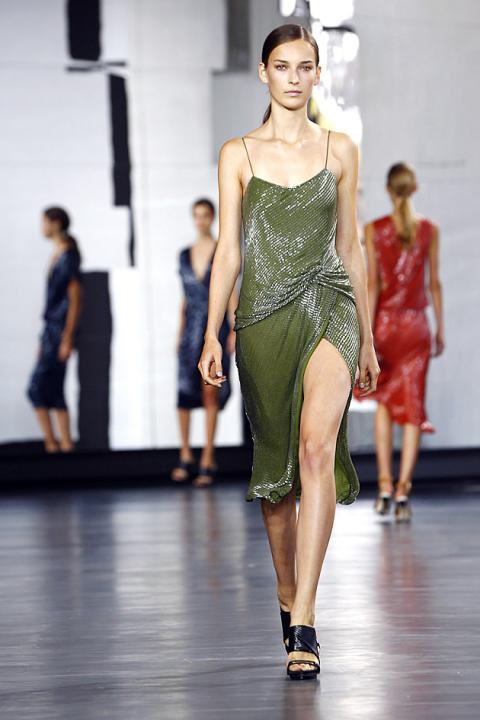
Photo: Reuters
Along with flowing evening dresses in blacks, whites and umber, Wu, 31, also introduced the calf-leather “Diane” shoulder bag, named for his friend and muse, actress and former model Diane Kruger.
“Accessories are a growing category for our business,” Wu said in an interview.
Wu’s business is also growing. Just hours before the show, attended by Anna Winter, Conde Nast’s artistic director and former editor-in-chief of Vogue magazine, Wu announced that he had sold a majority stake in his brand to InterLuxe, a new fashion platform chaired by his long-term friend Gary Wassner.
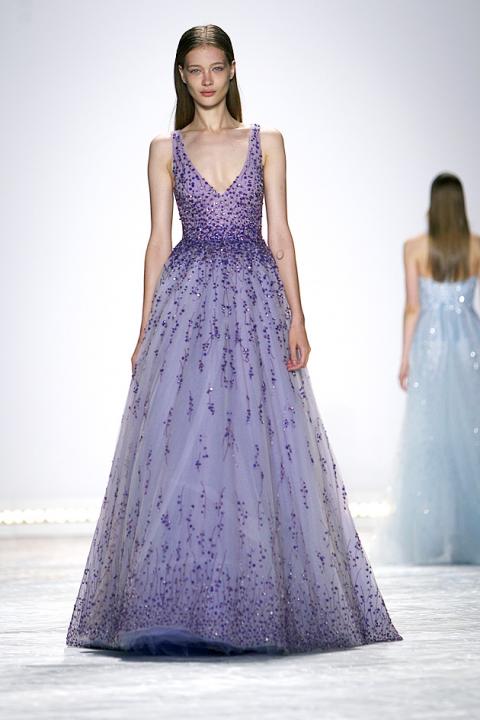
Photo: Reuters
Wu decided to do the deal because he felt “like I had the perfect group behind me to take things to the next level,” which will include an opportunity to expand in retail and to develop his collection.
InterLuxe is a collaborative venture between New York-based private equity firm Lee Equity Partners and fashion industry executives, including Wassner.
Terms of the deal were not disclosed.
LHUILLIER
Designer Monique Lhuillier played with different dress lengths and incorporated metallics, tulle, sequins, lace and silk crepe in her collection that was inspired by the sunrise.
Known for her bridal gowns, Lhuillier also included shorts, culottes, ankle-grazing trousers, balloon skirts, as well as feminine gowns in a range of pastel colors.
“Spring is all about lightness,” Lhuillier said.
“I wanted it to be bright, reflective, shimmering, luminous, that is what you are seeing here today,” she said in an interview backstage before the start of the show.
Nearly 100 designers will showcase their collections for spring at Manhattan’s Lincoln Center and other venues around the city during Mercedes-Benz Fashion Week.
The semi-annual event, which runs through Thursday, attracts thousands of buyers, fashion reporters, celebrities, fashionistas and wealthy customers.
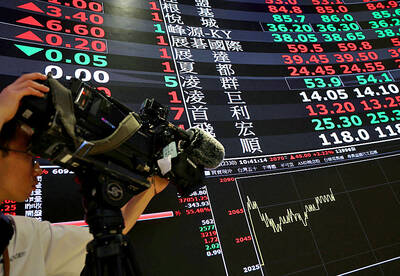
After several years flying high as Asia’s best Nvidia Corp proxy, Taiwan Semiconductor Manufacturing Co (TSMC, 台積電) is increasingly vying with other artificial intelligence (AI) stocks for investor attention. Stock traders are chasing a wider array of beneficiaries as mainstream usage of AI creates demand for hardware beyond the most-advanced chips TSMC makes for Nvidia. Subthemes from the deepening memory crunch to advances in robotics are also luring bids. At the same time, investment caps on single stocks are pushing funds to diversify, while retail investors long familiar with TSMC through its US depositary receipts are being offered a broader set of
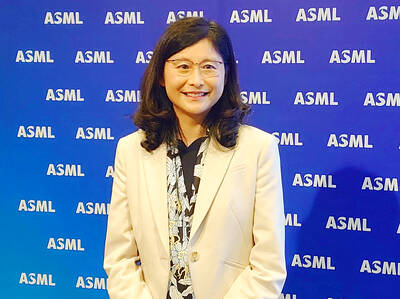
Netherlands-based semiconductor equipment supplier ASML Holding NV yesterday said that it is planning to hire an additional 1,000 people in Taiwan this year in response to growing demand from clients. ASML had previously planned to recruit 600 people this year, but that the plan has been adjusted upward, ASML vice president and ASML Taiwan general manager Grace Wang (汪佳慧) told reporters. ASML has a workforce of more than 4,500 in Taiwan, accounting for about 10 percent of its global total, Wang said. This year’s recruitment campaign would focus on adding people in the customer support, manufacturing and supply chain domains to assist ASML
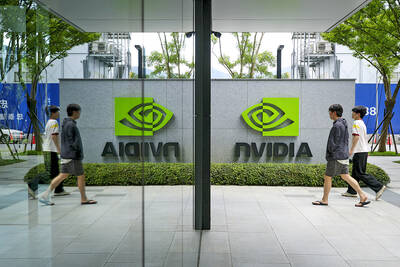
UNDER MICROSCOPE: Taiwan detained three people who allegedly conspired to buy servers in Taiwan and export them using fraudulent documentation, prosecutors said Nvidia Corp chief executive officer Jensen Huang (黃仁勳) on Saturday urged Super Micro Computer Inc to tighten up on compliance after Taiwan detained three people this week for allegedly making fraudulent declarations about artificial intelligence (AI) servers made by its US partner. The development marked the nation’s first crackdown on semiconductor smuggling, which grew after the US slapped restrictions on exports of high-end chips such as Nvidia AI accelerators to China. Nvidia is “rigorous” in explaining regulations to all of its partners, Huang told reporters after arriving in Taipei. “Ultimately Super Micro has to run their own company,” he said in response to
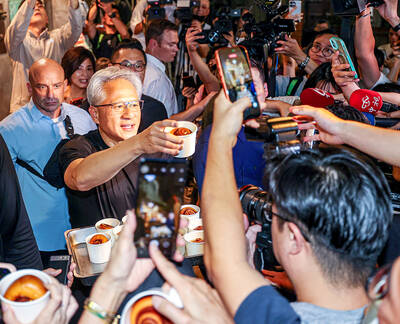
Nvidia Corp yesterday announced that CEO Jensen Huang (黃仁勳) would attend an employee meeting in Taipei tomorrow to celebrate the launch of the company’s Taiwan headquarters project. Huang would attend a gathering at the site of Nvidia’s planned headquarters in Beitou Shilin Technology Park (北投士林科技園區), the company said in a statement. After arriving in Taiwan on Saturday last week, Huang told reporters that he plans to meet with Quanta Computer Inc (廣達) chairman Barry Lam (林百里) and Taiwan Semiconductor Manufacturing Co (TSMC, 台積電) chairman C.C. Wei (魏哲家), and would attend the groundbreaking ceremony for Nvidia’s Taiwan headquarters tomorrow. Nvidia has not yet applied


 RSS
RSS