


The newly inked free-trade agreement with Singapore is expected to help the nation move closer to talks on joining the Regional Comprehensive Economic Partnership (RCEP), while reducing the risk of the nation’s growing trade ties with China, industry bodies said yesterday.
“Singapore, as a member of RCEP, will help secure a seat for Taiwan when the nation seeks to join the regional economy in Southeast Asia,” General Chamber of Commerce (全國商業總會) chairman Lawrence Chang (張平沼) said by telephone.
After three years of discussions and negotiations, the Agreement between Singapore and the Separate Customs Territory of Taiwan, Penghu, Kinmen and Matsu on Economic Partnership — abbreviated as ASTEP — was concluded yesterday in Singapore.
The agreement lowers tariffs for trade in goods, opens the two countries’ service markets and optimizes the environment for foreign investment on both sides.
“This [signing of the ASTEP] is a very positive outcome,” Chang said. “It’s better to think of ASTEP as a starting point for Taiwan to join RCEP, and with the pack inked, the possibility [for Taiwan to become a member of RCEP] seems higher than ever.”
Taipei-based Chinese National Federation of Industries (全國工業總會) secretary-general Tsai Lien-sheng (蔡練生) said Taiwan should speed up talks to join more regional economic blocs to avoid being marginalized.
While the cross-strait service trade agreement is still pending legislative approval, Tsai urged legislators to approve the ASTEP as quickly as they did the trade deal with New Zealand because “there is no time to waste.”
Echoing Chang’s view, Tsai said globalization has prompted many countries to accelerate their attempts to join either RCEP or the US-led Trans-Pacific Partnership (TPP), and he believes the signing of the ASTEP may be a step toward Taiwan joining the RCEP.
“Once Taiwan becomes a member of RCEP, its reliance on China will lessen,” Tsai said.
National Chengchi University professor Tung Chen-yuan (童振源) said the current cross-strait political situation remains the biggest issue to the nation’s trade and economic strategies.
“The ASTEP, after all, helps Taiwanese firms stand at a better position to compete with others in the global market, though the benefit is not material,” Tung said.
The signing of the ASTEP is an expected result of the approach of the administration of President Ma Ying-jeou (馬英九).
“ECFA first, before other trade pacts,” Tung said.
“It’s hard to draw a clear connection between the signing of the ECFA and the ASTEP, and if there is, it doesn’t mean anything,” Tung said. “Making the ECFA the government’s priority is a risky strategy.”
Hong Kong-based Credit Suisse economist Christiaan Tuntono said the progress Taiwan has made so far with Singapore and New Zealand will help it make a step toward joining the TPP, of which the US is also a member.
“This shall bring visible economic benefits to Taiwan,” Tuntono said in a note yesterday. “We believe the symbolic meaning of ASTEP is great, as it represents another significant step by Taiwan in lessening the looming threat of trade marginalisation that has been weighing on the economy structurally.”
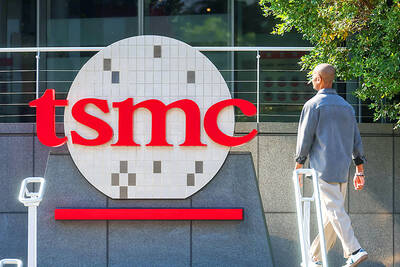
Shares of contract chipmaker Taiwan Semiconductor Manufacturing Co (TSMC, 台積電) came under pressure yesterday after a report that Apple Inc is looking to shift some orders from the Taiwanese company to Intel Corp. TSMC shares fell NT$55, or 2.4 percent, to close at NT$2,235 on the local main board, Taiwan Stock Exchange data showed. Despite the losses, TSMC is expected to continue to benefit from sound fundamentals, as it maintains a lead over its peers in high-end process development, analysts said. “The selling was a knee-jerk reaction to an Intel-Apple report over the weekend,” Mega International Investment Services Corp (兆豐國際投顧) analyst Alex Huang
Taiwan Semiconductor Manufacturing Co (TSMC, 台積電) is expected to remain Apple Inc’s primary chip manufacturing partner despite reports that Apple could shift some orders to Intel Corp, industry experts said yesterday. The comments came after The Wall Street Journal reported on Friday that Apple and Intel had reached a preliminary agreement following more than a year of negotiations for Intel to manufacture some chips for Apple devices. Taiwan Institute of Economic Research (台灣經濟研究院) economist Arisa Liu (劉佩真) said TSMC’s advanced packaging technologies, including integrated fan-out and chip-on-wafer-on-substrate, remain critical to the performance of Apple’s A-series and M-series chips. She said Intel and Samsung
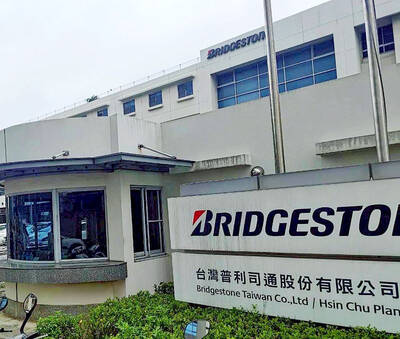
TRANSITION: With the closure, the company would reorganize its Taiwanese unit to a sales and service-focused model, Bridgestone said Bridgestone Corp yesterday announced it would cease manufacturing operations at its tire plant in Hsinchu County’s Hukou Township (湖口), affecting more than 500 workers. Bridgestone Taiwan Co (台灣普利司通) said in a statement that the decision was based on the Tokyo-based tire maker’s adjustments to its global operational strategy and long-term market development considerations. The Taiwanese unit would be reorganized as part of the closure, effective yesterday, and all related production activities would be concluded, the statement said. Under the plan, Bridgestone would continue to deepen its presence in the Taiwanese market, while transitioning to a sales and service-focused business model, it added. The Hsinchu
Taiwan Semiconductor Manufacturing Co (TSMC, 台積電) has approved a capital budget of US$31.28 billion for production expansion to meet long-term development needs during the artificial intelligence (AI) boom. The company’s board meeting yesterday approved the capital appropriation plan for purposes such as the installation of advanced technology capacity and fab construction, the world’s largest contract chipmaker said in a statement. At an earnings conference last month, TSMC forecast that its capital expenditure for this year would be at the higher end of the US$52 billion to US$56 billion range it forecast in January in response to robust demand for 5G, AI and


 RSS
RSS