


Societe Generale SA, France’s second-largest bank by market value, is considering selling its Asia private banking unit, four people with knowledge of the matter said.
The Paris-based bank has reached out to possible bidders to gauge their interest, the people said, asking not to be identified because the process is private. SocGen may send financial information on the unit to potential suitors as early as this month, one person said.
Wealth management firms expect more mergers and acquisitions in their industry amid pressure on margins, and increased regulatory and tax scrutiny, PricewaterhouseCoopers LLP said in June. Asia is the fastest-growing region for private banks, according to McKinsey & Co.
“There are players who would want to bulk up on their assets under management and client advisers to add scale to their business,” said Tjun Tang, head of Boston Consulting Group’s financial services practice in the Asia-Pacific region.
“For others, if you’ve got no pathway to growth and profitability, then maybe it makes sense strategically to exit,” he added.
Tang said potential acquirers include regional Asian banks or “mid to larger-sized” international private banks, which typically manage US$25 billion to US$75 billion of assets.
SocGen, led in Asia by Olivier Gougeon, has serviced private-banking clients in Asia through Singapore and Hong Kong since 1997, according to its Web site. Societe Generale’s private banking business is active in 16 countries with about 2,500 employees.
Societe Generale spokeswoman Nathalie Boschat in Paris declined to comment. JPMorgan Chase & Co is working with SocGen on the sale, two people said.
Millionaires in Asia outside Japan will create US$7 trillion in net new wealth by 2016, boosting the share of global riches from emerging markets, McKinsey said in June, based on a survey of private banks.
SocGen agreed in July to sell its Japanese private banking operations to Sumitomo Mitsui Financial Group Inc. Last year, it retreated from North America with the sale of a minority stake in Rockefeller Financial Services Inc and its shares in Canadian Wealth Management Group Inc.
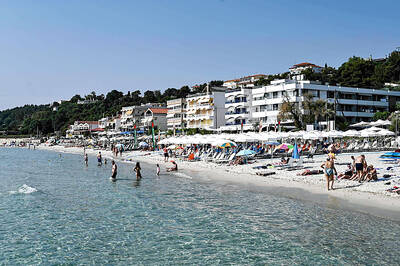
Greek tourism student Katerina quit within a month of starting work at a five-star hotel in Halkidiki, one of the country’s top destinations, because she said conditions were so dire. Beyond the bad pay, the 22-year-old said that her working and living conditions were “miserable and unacceptable.” Millions holiday in Greece every year, but its vital tourism industry is finding it harder and harder to recruit Greeks to look after them. “I was asked to work in any department of the hotel where there was a need, from service to cleaning,” said Katerina, a tourism and marketing student, who would
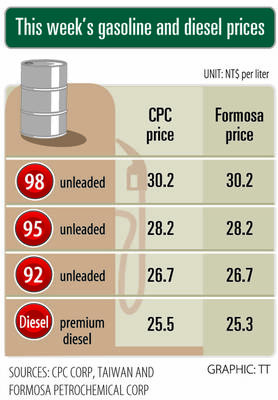
i Gasoline and diesel prices at fuel stations are this week to rise NT$0.1 per liter, as tensions in the Middle East pushed crude oil prices higher last week, CPC Corp, Taiwan (台灣中油) and Formosa Petrochemical Corp (台塑石化) said yesterday. International crude oil prices last week rose for the third consecutive week due to an escalating conflict between Israel and Iran, as the market is concerned that the situation in the Middle East might affect crude oil supply, CPC and Formosa said in separate statements. Front-month Brent crude oil futures — the international oil benchmark — rose 3.75 percent to settle at US$77.01

Merida Industry Co (美利達) has seen signs of recovery in the US and European markets this year, as customers are gradually depleting their inventories, the bicycle maker told shareholders yesterday. Given robust growth in new orders at its Taiwanese factory, coupled with its subsidiaries’ improving performance, Merida said it remains confident about the bicycle market’s prospects and expects steady growth in its core business this year. CAUTION ON CHINA However, the company must handle the Chinese market with great caution, as sales of road bikes there have declined significantly, affecting its revenue and profitability, Merida said in a statement, adding that it would
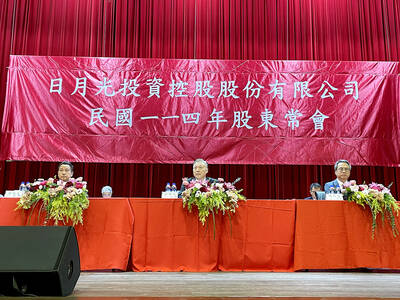
UNCERTAINTIES: The world’s biggest chip packager and tester is closely monitoring the US’ tariff policy before making any capacity adjustments, a company official said ASE Technology Holding Inc (日月光投控), the world’s biggest chip packager and tester, yesterday said it is cautiously evaluating new advanced packaging capacity expansion in the US in response to customers’ requests amid uncertainties about the US’ tariff policy. Compared with its semiconductor peers, ASE has been relatively prudent about building new capacity in the US. However, the company is adjusting its global manufacturing footprint expansion after US President Donald Trump announced “reciprocal” tariffs in April, and new import duties targeting semiconductors and other items that are vital to national security. ASE subsidiary Siliconware Precision Industries Co (SPIL, 矽品精密) is participating in Nvidia


 RSS
RSS