


In a post-PC era in which mobile devices appear to have become more popular than traditional computers, companies in the technology industry have worked hard to develop new strategies, but Acer Inc (宏碁) appears nostalgic, rather than decisive, analysts say.
In the company’s annual general meeting on Wednesday, Acer chairman and chief executive Wang Jeng-tang (王振堂) apologized to shareholders for failing to lift the company’s shares, saying that the company is confronting the aftermath of an “earthquake” or “tsunami” in the PC industry triggered by Apple Inc.
Even so, Acer, the world’s fourth-largest PC maker, still has faith in PCs, because consumers are still anticipating better desktops or laptops that can meet their needs, Wang told shareholders.
“Traditional PCs remain irreplaceable by any gadget yet because they can provide higher productivity. We plan not to retreat from the desktop and laptop markets, despite the rise of smartphones and tablets,” Wang said.
“Acer’s good days are coming,” said the 59-year-old Wang, who has been at the company for 32 years.
Wang’s remarks sounded a bit too optimistic about PC demand, despite the strong demand for smartphones and tablets.
Last month, the US-based research firm International Data Corp (IDC) said that global PC shipments are expected to drop 7.8 percent this year from last year, much higher than its original estimate of a 1.3 percent decline.
Wang also said the company remains confident in Microsoft Corp’s efforts to revitalize the PC market, citing the US software giant’s increasing attention on business partners’ and consumer reaction over Windows 8.
“While Microsoft is also trying hard to survive from shocks, Acer has no choice but to keep following in Microsoft’s footsteps and roll out more notebooks and desktops running on the Windows 8 operating system, which has been little help, as it turns out,” Fubon Securities Co (富邦證券) analyst Arthur Liao (廖顯毅) said.
“Acer needs to hire more software engineers for its research and development unit, and the firm’s priority should be writing code for Google Inc’s Android mobile operating system, which powers tablets and smartphones,” Liao said.
Investors echoed Liao’s views and sent Acer’s shares to a record low of NT$21.6 on Friday.
“It’s time for Acer to change its mindset,” Liao said.
Major players in the global tech industry have been looking for game-changing products after the launch of Apple’s iPhones and iPads. However, little progress has been made, except for Google Glass, which is still under development.
Against this backdrop, both Hewlett-Packard Co and Dell Inc, the world’s first and third-largest PC maker, have shifted focus to servers, rather than PCs, while Asustek Computer Inc (華碩), the world’s fifth-largest PC makers, has extended its business to not only tablets, but also smartphones.
Liao said PC companies must not ignore emerging markets’ strong sales growth potential and economies of scale in those markets, despite the continual fall in prices of smartphones and tablets.
“Even Lenovo Group Ltd (聯想), the world’s second-largest PC maker, is selling smartphones along with other Chinese smartphone vendors, such as Huawei Technologies Co Ltd (華為) and ZTE Corp (中興),” Liao said, adding that Acer has not moved fast enough on smartphones.
Acer’s recent launch of the 5.7-inch phablet, Liquid S1, stands out from other Android-based phablet products, but it should reconsider its partnership with Microsoft and work instead with Google to develop Android-based mobile devices or Chromebooks, he said.
“The elephant in the room is Microsoft,” Liao said. “If Acer insists on closely collaborating with Microsoft on Windows 8 product development, chances are that Acer might be stuck in the aftermath of this tsunami forever.”
However, First Capital Management Inc analyst (第一金證券投顧) Rick Yu (俞瑞華) said Acer’s decision to bet on Windows 8 is appropriate because Microsoft has said it will stop supporting the Windows XP platform next year, so Windows-based PC users will need to look for new desktops or laptops running Windows 8 next year, Yu said.
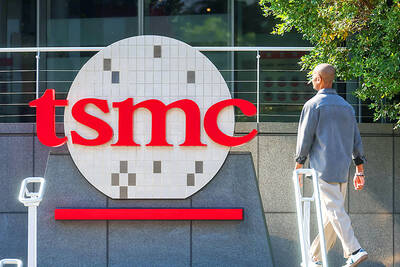
Shares of contract chipmaker Taiwan Semiconductor Manufacturing Co (TSMC, 台積電) came under pressure yesterday after a report that Apple Inc is looking to shift some orders from the Taiwanese company to Intel Corp. TSMC shares fell NT$55, or 2.4 percent, to close at NT$2,235 on the local main board, Taiwan Stock Exchange data showed. Despite the losses, TSMC is expected to continue to benefit from sound fundamentals, as it maintains a lead over its peers in high-end process development, analysts said. “The selling was a knee-jerk reaction to an Intel-Apple report over the weekend,” Mega International Investment Services Corp (兆豐國際投顧) analyst Alex Huang
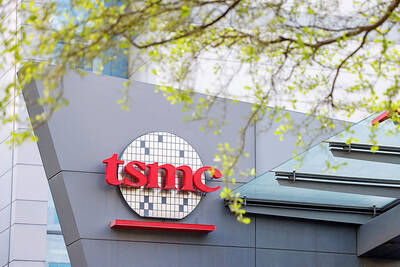
Taiwan Semiconductor Manufacturing Co (TSMC, 台積電) is expected to remain Apple Inc’s primary chip manufacturing partner despite reports that Apple could shift some orders to Intel Corp, industry experts said yesterday. The comments came after The Wall Street Journal reported on Friday that Apple and Intel had reached a preliminary agreement following more than a year of negotiations for Intel to manufacture some chips for Apple devices. Taiwan Institute of Economic Research (台灣經濟研究院) economist Arisa Liu (劉佩真) said TSMC’s advanced packaging technologies, including integrated fan-out and chip-on-wafer-on-substrate, remain critical to the performance of Apple’s A-series and M-series chips. She said Intel and Samsung
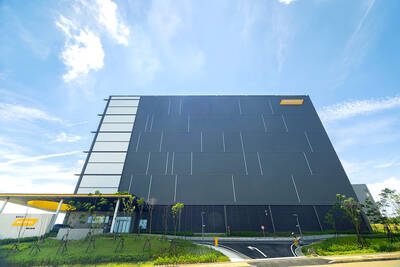
POWER BUILDUP: Powered by Nvidia’s B200 Blackwell chips, the data center would support MediaTek’s computing power demand and business growth, the company said Smartphone chip designer MediaTek Inc (聯發科) yesterday launched a new artificial intelligence (AI) data center with a maximum capacity of 45 megawatts to meet its rising demand for computing power required to develop new advanced chips for AI applications. The company has completed the first-phase computing power buildup at the data center in Miaoli County’s Tongluo Township (銅鑼), providing 15 megawatts of capacity to support its research and development (R&D) capabilities, despite an industrywide shortage of key components, MediaTek said. Supply constraints have plagued a wide range of key components, including memory chips, solid-state drives, power supply units and central
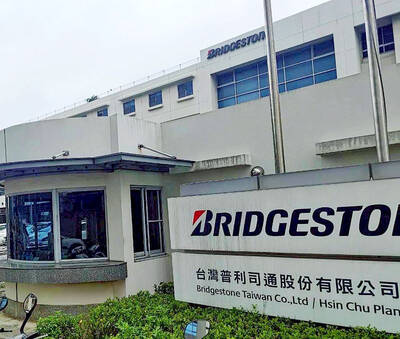
TRANSITION: With the closure, the company would reorganize its Taiwanese unit to a sales and service-focused model, Bridgestone said Bridgestone Corp yesterday announced it would cease manufacturing operations at its tire plant in Hsinchu County’s Hukou Township (湖口), affecting more than 500 workers. Bridgestone Taiwan Co (台灣普利司通) said in a statement that the decision was based on the Tokyo-based tire maker’s adjustments to its global operational strategy and long-term market development considerations. The Taiwanese unit would be reorganized as part of the closure, effective yesterday, and all related production activities would be concluded, the statement said. Under the plan, Bridgestone would continue to deepen its presence in the Taiwanese market, while transitioning to a sales and service-focused business model, it added. The Hsinchu


 RSS
RSS