


Capital expenditure at Kinsus Interconnect Technology Corp (景碩科技) is likely to reach a record NT$6 billion (US$200.2 million) next year as a result of customers’ technology migration, the silicon substrate maker said yesterday.
The proposed capital spending compares with between NT$4.5 billion and NT$5 billion the company has budgeted for this year, which will be used to build new operation lines in Hsinchu County and invest in advanced integrated circuit substrates, Kinsus said.
“The semiconductor industry as a whole is expected to move ahead at a steady pace this year,” local cable TV network UBN yesterday quoted Kinsus chairman Tung Tsu-hsien (童子賢) as saying. “As our customers migrate to more advanced process technologies, we need to follow suit.”
Tung was speaking on the sidelines of the company’s annual general meeting in Taoyuan County, where it told shareholders that spending for this year includes investments in advanced substrates supporting 20 nanometer and 16 nanometer process technologies.
Kinsus competes with Unimicron Technology Corp (欣興電子) and Nan Ya Printed Circuit Board Corp (南亞電路板) in Taiwan as well as Shinko Electric Industries Co, Ibiden Co and Semco Machine Corp of Japan.
The company’s substrate products are mainly applied in communications devices at a time when demand for application processor, baseband, radio frequency and wireless networking chips is being boosted by the increasing popularity of smartphones and tablets.
The company counts Mediatek Inc (聯發科) and Qualcomm Inc among its major customers and is expected to get orders from Apple Inc in the second half of the year.
Revenue is likely to grow more strongly in the second half of the year thanks to demand for low to mid-end smartphones and tablets in China, online news outlet MoneyDJ.com quoted company president Chang Chien-wei (張謙為) as saying.
Kinsus reported record revenue of NT$17.65 billion last year, up 4.63 percent from 2011. In the first five months of this year, its accumulated revenue increased 3.38 percent to NT$9.35 billion from the same period last year.
Shareholders approved the company’s plan to distribute a cash dividend of NT$3 per share, based on last year’s earnings of NT$2.797 billion, or NT$6.27 per share, according to a company filing to the Taiwan Stock Exchange yesterday.
In its latest research note issued on Friday, Barclays Capital Inc predicted Kinsus would see revenue grow at an annual composite growth rate of more than 10 percent from this year through 2015 because of steady orders from MediaTek and Apple, plus lower costs caused by falling gold prices.
The company is expected to make earnings per share of NT$8.06 this year, Barclays Capital analyst Andrew Lu (陸行之) forecast, who retained his “overweight” rating on Kinsus’ shares, but raised the target price to NT$150 from NT$106.
Kinsus shares rose by the daily limit to NT$116.5 yesterday. The shares have risen by 27.88 percent so far this year.

Cairo’s new monorail slices across the city skyline, running above the familiar chaos of blaring horns and aging buses’ exhaust fumes that mark rush hour below. The US$4.5 billion monorail, opened this month, is among Egypt’s most prominent new transport projects, part of a debt-funded infrastructure drive criticized for sapping state finances while bringing limited benefits to most of the country’s 109 million people. “It feels like you’re in a different country,” said Ramy Sayed, a restaurant manager, aboard a driverless Innovia 300 train. “No noise, no traffic, we’re not used to this.” The eastern line runs 56km from the bustling middle-class

Taiwanese firms have increased investment in the Philippines in recent years as Manila’s ties with Washington deepen and global supply chains continue to shift away from China, an expert at the Chung-Hua Institution for Economic Research (CIER, 中華經濟研究院) said yesterday. The Philippines had not been among Taiwanese investors’ top choices in Southeast Asia, CIER Taiwan ASEAN Studies Center director Kristy Hsu (徐遵慈) said at a seminar in Taipei. However, Taiwan’s investment in the country has grown significantly since the COVID-19 pandemic, reaching US $257 million last year, a high in recent years, she said. Although Taiwan’s total investment in the Philippines still lags
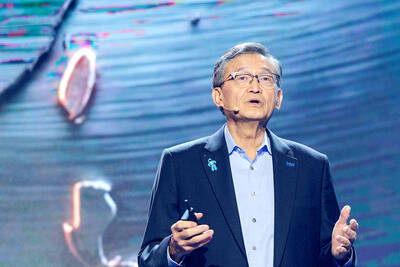
Intel Corp regards Taiwan Semiconductor Manufacturing Co (TSMC, 台積電) as a longstanding partner, as the US chipmaker would continue outsourcing production of advanced chips to TSMC, Intel chief executive officer Lip-Bu Tan (陳立武) said yesterday. “I don’t look at people as competitors. I look at the collaboration... Nvidia is also, you know, a good friend,” Tan told a news conference following his keynote speech at the Computex trade show in Taipei. “It’s a very trusted partnership for us... We are a big, top customer for them, and we’re going to continue doing that,” he said, referring to TSMC, the world’s largest foundry

Artificial intelligence (AI) agents would supplant smartphones as the center of people’s digital lives, fundamentally reshaping personal devices and driving a major computing upgrade cycle, Qualcomm Inc CEO Cristiano Amon said yesterday. In his keynote speech for this year’s Computex trade show in Taipei, Amon said that the rise of "agentic AI" — AI systems capable of reasoning, planning and carrying out tasks autonomously — would transform how people interact with technology across phones, PCs, vehicles and wearable devices. Describing the technology as the next major evolution in computing, Amon said that "2026 is the year of agents.” For decades, smartphones have sat


 RSS
RSS