


The Organisation for Economic Co-operation and Development (OECD) yesterday backed Japan’s bid to end years of deflation, but called on Tokyo to step up efforts to shrink its huge debt pile.
In an annual country report, the 34-member OECD described the new government’s bid to reverse falling prices with huge stimulus measures as “most encouraging.”
Deflation has dragged on growth in the world’s third-largest economy for at least 15 years with successive administrations unable to conquer the problem. However, critics say the policies of Japanese Prime Minister Shinzo Abe and his hand-picked Bank of Japan team could inflate the country’s massive public debt, which at more than twice the size of the economy is the worst in the industrialized world.
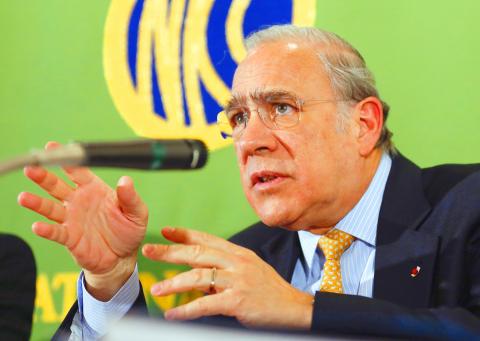
Photo: EPA
“Ending 15 years of deflation is a priority,” the report said, adding that “the new government’s resolve to revitalize the economy through a three-pronged strategy combining bold monetary policy, flexible fiscal policy and a growth strategy, is most encouraging.”
However, “stopping and reversing the rise in the debt-to-GDP ratio is crucial,” it added.
Abe’s big-spending, easy-money policies — dubbed “Abenomics” — have fueled optimism in an economy that has struggled for two decades. However, the yen’s rapid weakening in recent months has stoked criticism from abroad that Tokyo was engineering a currency devaluation to lift its economy at the expense of rival nations.
The OECD appeared to dismiss those fears yesterday, saying that the Bank of Japan’s “aggressive monetary easing will boost growth and inflation, in part through a weaker yen, although Japan is not targeting the exchange rate.”
The comments come days after G20 finance ministers, following a meeting in Washington, gave a cautious endorsement of Japan’s huge monetary stimulus program, agreeing it was necessary to boost the country’s stagnant economy.
Also yesterday, the OECD reiterated its calls on Japan to adopt deep reforms alongside its new economy-boosting efforts, including controlling social security costs as a rapidly aging population strains the public purse.
“Controlling expenditures, particularly for social security in the face of rapid population aging, is key,” the report said.
“Substantial tax increases will be needed as well, although this will also have a negative impact on growth,” it said.
The previous administration in Tokyo passed legislation to double Japan’s sales tax to 10 percent by 2015.
The OECD also said Japan must work on its labor force mix, including bringing more women into the workforce.
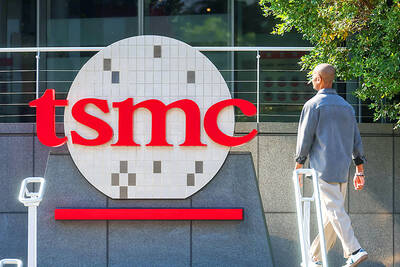
Shares of contract chipmaker Taiwan Semiconductor Manufacturing Co (TSMC, 台積電) came under pressure yesterday after a report that Apple Inc is looking to shift some orders from the Taiwanese company to Intel Corp. TSMC shares fell NT$55, or 2.4 percent, to close at NT$2,235 on the local main board, Taiwan Stock Exchange data showed. Despite the losses, TSMC is expected to continue to benefit from sound fundamentals, as it maintains a lead over its peers in high-end process development, analysts said. “The selling was a knee-jerk reaction to an Intel-Apple report over the weekend,” Mega International Investment Services Corp (兆豐國際投顧) analyst Alex Huang
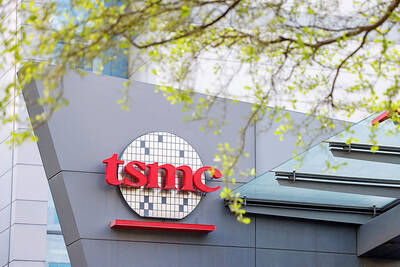
Taiwan Semiconductor Manufacturing Co (TSMC, 台積電) is expected to remain Apple Inc’s primary chip manufacturing partner despite reports that Apple could shift some orders to Intel Corp, industry experts said yesterday. The comments came after The Wall Street Journal reported on Friday that Apple and Intel had reached a preliminary agreement following more than a year of negotiations for Intel to manufacture some chips for Apple devices. Taiwan Institute of Economic Research (台灣經濟研究院) economist Arisa Liu (劉佩真) said TSMC’s advanced packaging technologies, including integrated fan-out and chip-on-wafer-on-substrate, remain critical to the performance of Apple’s A-series and M-series chips. She said Intel and Samsung
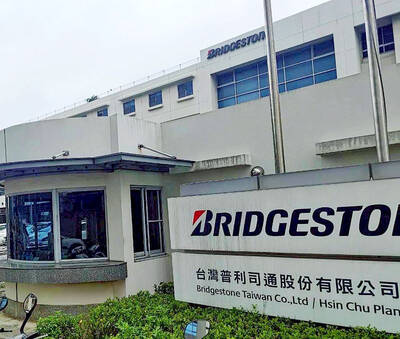
TRANSITION: With the closure, the company would reorganize its Taiwanese unit to a sales and service-focused model, Bridgestone said Bridgestone Corp yesterday announced it would cease manufacturing operations at its tire plant in Hsinchu County’s Hukou Township (湖口), affecting more than 500 workers. Bridgestone Taiwan Co (台灣普利司通) said in a statement that the decision was based on the Tokyo-based tire maker’s adjustments to its global operational strategy and long-term market development considerations. The Taiwanese unit would be reorganized as part of the closure, effective yesterday, and all related production activities would be concluded, the statement said. Under the plan, Bridgestone would continue to deepen its presence in the Taiwanese market, while transitioning to a sales and service-focused business model, it added. The Hsinchu
Taiwan Semiconductor Manufacturing Co (TSMC, 台積電) has approved a capital budget of US$31.28 billion for production expansion to meet long-term development needs during the artificial intelligence (AI) boom. The company’s board meeting yesterday approved the capital appropriation plan for purposes such as the installation of advanced technology capacity and fab construction, the world’s largest contract chipmaker said in a statement. At an earnings conference last month, TSMC forecast that its capital expenditure for this year would be at the higher end of the US$52 billion to US$56 billion range it forecast in January in response to robust demand for 5G, AI and


 RSS
RSS