


Taiwanese vaccine manufacturer Adimmune Corp (國光生技) yesterday signed a cooperation pact with China-based Shenzhen Techdow Pharmaceutical Co Ltd (天道醫藥) to produce enoxaparin sodium injections, which are used to prevent and treat blood clots.
The cooperation would unite Adimmune’s aseptic ampoule-filling technology with Techdow Pharmaceutical’s enoxaparin sodium manufacturing technology, allowing the firms to produce injections that can pass the high standards set in Europe and the US.
The patent for the original blood clot prevention drug has expired, but it would be difficult to develop a new drug that is as effective, Techdow Pharmaceutical general manager Jake Li (李建科) said yesterday.
Each year, 100 million units of enoxaparin sodium injections are sold in the US market and 360 million in Europe. Sales are estimated to be about US$2 billion per year in both regions, Li said.
Adimmune will manufacture the product in local factories starting next year and is expected to be certified by the European Medicines Agency as a manufacturer of the injections by next year, chief financial officer Vic Chang (張哲瑋) said.
The two companies plan to manufacture 10 million units a year at first, and increase production volume to 50 million units within three to five years, he said.
Adimmune reported consolidated losses of NT$603.68 million (US$20.24 million) last year, 28 percent more than the NT$471.32 million loss it posted a year ago, which the company attributed to lower profit margins for flu vaccines.
The Greater Taichung-based company expects a better outlook for this year once another of its partnerts, Dutch biotech firm Crucell NV, receives more approvals to distribute Adimmune’s flu vaccines in Europe.
The company’s flu vaccines were approved for sale in Germany, the UK and Italy last year, and received the green light in Switzerland last month. The vaccines are currently being reviewed by other European countries, as well as the Pan-American Health Organization, Adimmune said.
“We are striving to swing to the black this year,” Chang said.
Adimmune chairman Steve Chan (詹啟賢) said the company is capable of producing between 5 million and 10 million units of a preliminary vaccine for H7N9 — a subtype of the avian influenza virus — within two months if the strain spreads beyond control, citing its extensive experience producing the vaccine for avian flu subtype H1N1.
Preliminary vaccines are used when a vaccine cannot be developed or manufactured in time to stop a sudden outbreak, Chan said, adding that there is currently no specific vaccine for H7N9.
Adimmune’s shares rose 6.97 percent to NT$40.65 yesterday, outperforming the TAIEX, which was up 0.18 percent.

Shares of contract chipmaker Taiwan Semiconductor Manufacturing Co (TSMC, 台積電) came under pressure yesterday after a report that Apple Inc is looking to shift some orders from the Taiwanese company to Intel Corp. TSMC shares fell NT$55, or 2.4 percent, to close at NT$2,235 on the local main board, Taiwan Stock Exchange data showed. Despite the losses, TSMC is expected to continue to benefit from sound fundamentals, as it maintains a lead over its peers in high-end process development, analysts said. “The selling was a knee-jerk reaction to an Intel-Apple report over the weekend,” Mega International Investment Services Corp (兆豐國際投顧) analyst Alex Huang
Taiwan Semiconductor Manufacturing Co (TSMC, 台積電) is expected to remain Apple Inc’s primary chip manufacturing partner despite reports that Apple could shift some orders to Intel Corp, industry experts said yesterday. The comments came after The Wall Street Journal reported on Friday that Apple and Intel had reached a preliminary agreement following more than a year of negotiations for Intel to manufacture some chips for Apple devices. Taiwan Institute of Economic Research (台灣經濟研究院) economist Arisa Liu (劉佩真) said TSMC’s advanced packaging technologies, including integrated fan-out and chip-on-wafer-on-substrate, remain critical to the performance of Apple’s A-series and M-series chips. She said Intel and Samsung
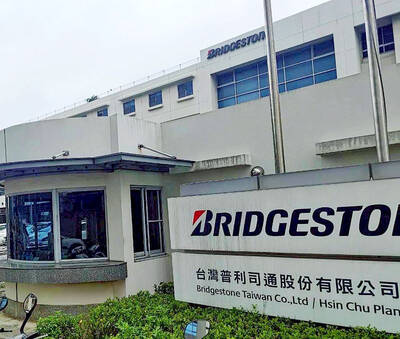
TRANSITION: With the closure, the company would reorganize its Taiwanese unit to a sales and service-focused model, Bridgestone said Bridgestone Corp yesterday announced it would cease manufacturing operations at its tire plant in Hsinchu County’s Hukou Township (湖口), affecting more than 500 workers. Bridgestone Taiwan Co (台灣普利司通) said in a statement that the decision was based on the Tokyo-based tire maker’s adjustments to its global operational strategy and long-term market development considerations. The Taiwanese unit would be reorganized as part of the closure, effective yesterday, and all related production activities would be concluded, the statement said. Under the plan, Bridgestone would continue to deepen its presence in the Taiwanese market, while transitioning to a sales and service-focused business model, it added. The Hsinchu

Taiwan Semiconductor Manufacturing Co (TSMC, 台積電) has approved a capital budget of US$31.28 billion for production expansion to meet long-term development needs during the artificial intelligence (AI) boom. The company’s board meeting yesterday approved the capital appropriation plan for purposes such as the installation of advanced technology capacity and fab construction, the world’s largest contract chipmaker said in a statement. At an earnings conference last month, TSMC forecast that its capital expenditure for this year would be at the higher end of the US$52 billion to US$56 billion range it forecast in January in response to robust demand for 5G, AI and


 RSS
RSS