


On the Arctic Circle, a chef is growing the kind of vegetables and herbs — potatoes, thyme, tomatoes, green peppers — more fitting for a suburban garden in a temperate zone than a land of Northern Lights, glaciers and musk oxen.
Some Inuit hunters are finding reindeer fatter than ever thanks to more grazing on the frozen tundra and for some, there is no longer a need to trek hours to find wild herbs. Welcome to climate change in Greenland, where locals say longer and warmer summers mean the country can grow the kind of crops unheard of years ago.
“Things are just growing quicker,” said Kim Ernst, the Danish chef of Roklubben restaurant, nestled by a frozen lake near a former Cold War-era US military base.
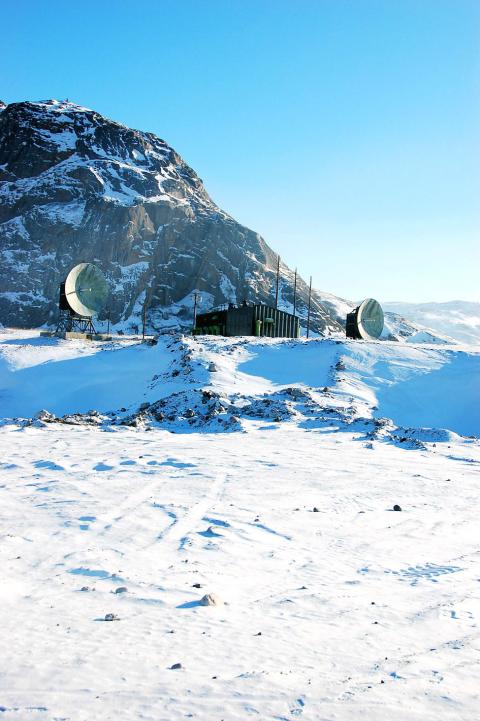
Photo: Reuters
“Every year we try new things,” said Ernst, who has even managed to grow a handful of strawberries that he served to some surprised Scandinavian royals. “I first came here in 1999 and no one would have dreamed of doing this, but now the summer days seem warmer and longer.”
It was minus-20°C this month, but the sun was out and the air was still, with an almost spring feel. Ernst keeps a greenhouse and an outdoor winter garden, which in a few months may sprout again, while far in the south, some farmers now produce hay and sheep farms have increased in size. Some supermarkets in the capital, Nuuk, sell locall ygrown vegetables during the summer.
Major commercial crop production is still in its infancy, but it is a sign of changes here that the Greenlandic government set up a commission this year to study how a changing climate may help farmers increase agricultural production and replace expensive imported foods.
Change is already underway. Potatoes grown commercially in southern Greenland reached more than 100 tonnes last year, double that of 2008, while vegetable production in the region may double this year compared with last year, government data show.
Some politicians hope that global warming will allow a country that is one-quarter the size of the US to reduce its dependency on former colonial master Denmark for much of its food as political parties push for full independence.
Greenland, which is self-governing aside from defense and security, depends on an annual grant from Denmark of about US$600 million, or half the island’s annual budget. However, the thawing of its enormous ice sheets have seen a boost in mining and oil exploration, as well as an interest in agriculture.
“I expect a lot of development in farming sheep and agriculture due to global warming,” said Greenlandic Prime Minister Kuupik Kleist, whose government set up the commission.
The scale of this new agriculture is small: There are just a few dozen sheep farms in southern Greenland, where most of the impact of climate change can be seen. Cows may number less than 100, but with 57,000 mostly Inuit human inhabitants, the numbers to feed are also small.
“You need to put this into perspective. We used to be high Arctic and now we are more sub-Arctic, but we are still Arctic,” said Kenneth Hoegh, an agronomist and former senior government adviser.
However, the symbolism is enormous, highlighting a changing global climate that has seen temperatures in the Arctic increase by about twice the global average: about 0.8°C since pre-industrial times.
“There are now huge areas in southern Greenland where you can grow things,” Greenland Institute of Natural Resources scientist Josephine Nymand said.
Sten Erik Langstrup Pedersen, who runs an organic farm in a fjord near Nuuk, first grew potatoes in 1976. Now he can plant crops two weeks earlier in May and harvest three weeks later in October, compared with more than 10 years ago.
He grows 23 kinds of vegetables, compared with 15 a decade ago, including beans, peas, herbs and strawberries. He says he has sold some strawberries to top restaurants in Copenhagen.
Yet Pedersen is skeptical about how much it will catch on.
“Greenlanders are impatient. They see a seal and they immediately just want to hunt it. They can never wait for vegetables to grow,” he said.
There is still potential. Hoegh estimates Greenland could provide half its food needs from home-grown produce, which would be competitive with more expensive Danish imports.
However, climate change is not just beneficial. While summers are warmer, there is less rain. Some experts say Greenland could soon need irrigation — ironic for a country of ice and lakes.
“We have had dry summers for the last few years.” said Aqqalooraq Frederiksen, a senior agricultural consultant in south Greenland, who said that a late spring last year had hurt potato crops.
On the Arctic Circle, a flash flood last summer from suspected glacier meltwater — which some blamed on warm weather — swept away the only bridge connecting Ernst’s restaurant to the airport. It came right in the middle of the tourist season and lost the restaurant thousands of dollars.
It was an ominous reminder that global warming brings its problems. Still, for Pedersen, the future looks good.
“The hotter, the better,” Pedersen said. “For me.”

Shares of contract chipmaker Taiwan Semiconductor Manufacturing Co (TSMC, 台積電) came under pressure yesterday after a report that Apple Inc is looking to shift some orders from the Taiwanese company to Intel Corp. TSMC shares fell NT$55, or 2.4 percent, to close at NT$2,235 on the local main board, Taiwan Stock Exchange data showed. Despite the losses, TSMC is expected to continue to benefit from sound fundamentals, as it maintains a lead over its peers in high-end process development, analysts said. “The selling was a knee-jerk reaction to an Intel-Apple report over the weekend,” Mega International Investment Services Corp (兆豐國際投顧) analyst Alex Huang
Taiwan Semiconductor Manufacturing Co (TSMC, 台積電) is expected to remain Apple Inc’s primary chip manufacturing partner despite reports that Apple could shift some orders to Intel Corp, industry experts said yesterday. The comments came after The Wall Street Journal reported on Friday that Apple and Intel had reached a preliminary agreement following more than a year of negotiations for Intel to manufacture some chips for Apple devices. Taiwan Institute of Economic Research (台灣經濟研究院) economist Arisa Liu (劉佩真) said TSMC’s advanced packaging technologies, including integrated fan-out and chip-on-wafer-on-substrate, remain critical to the performance of Apple’s A-series and M-series chips. She said Intel and Samsung
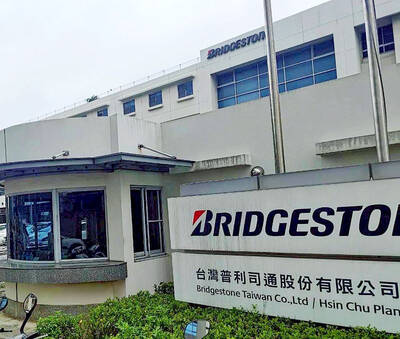
TRANSITION: With the closure, the company would reorganize its Taiwanese unit to a sales and service-focused model, Bridgestone said Bridgestone Corp yesterday announced it would cease manufacturing operations at its tire plant in Hsinchu County’s Hukou Township (湖口), affecting more than 500 workers. Bridgestone Taiwan Co (台灣普利司通) said in a statement that the decision was based on the Tokyo-based tire maker’s adjustments to its global operational strategy and long-term market development considerations. The Taiwanese unit would be reorganized as part of the closure, effective yesterday, and all related production activities would be concluded, the statement said. Under the plan, Bridgestone would continue to deepen its presence in the Taiwanese market, while transitioning to a sales and service-focused business model, it added. The Hsinchu

Taiwan Semiconductor Manufacturing Co (TSMC, 台積電) has approved a capital budget of US$31.28 billion for production expansion to meet long-term development needs during the artificial intelligence (AI) boom. The company’s board meeting yesterday approved the capital appropriation plan for purposes such as the installation of advanced technology capacity and fab construction, the world’s largest contract chipmaker said in a statement. At an earnings conference last month, TSMC forecast that its capital expenditure for this year would be at the higher end of the US$52 billion to US$56 billion range it forecast in January in response to robust demand for 5G, AI and


 RSS
RSS