


Times are tough, but everyone still needs a little sparkle in their lives.
That is the message from beverage industry data that indicate champagne sales are going flat, while more affordable upstarts like prosecco continue to fizz thanks to a trend toward everyday indulgence.
For rap stars and Premier League soccer players, it still has to be premium Cristal. However, for many ordinary consumers, even in France, cava will do just as well to get the party started.
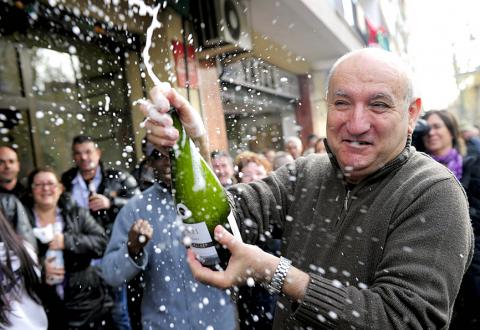
Photo: AFP
“Champagne was dominant 10 to 15 years ago, but the world has changed,” said Jean-Philippe Perrouty, director of drinks analyst Wine Intelligence.
“In a nutshell, Champagne now has at least two very strong competitors,” he said.
Although exports of champagne, which can only be produced in the region of the same name in northern France, grew slightly by 3.4 percent in value terms last year, the number of bottles sent overseas fell 2.8 percent.
That performance is in marked contrast to the much stronger upward trend in demand for sparkling wine as a whole, illustrated by a 34 percent surge in the value of exports of prosecco and other premium Italian sparklers in the first nine months of last year.
Champagne is also lagging behind the strong export growth of still wines from Bordeaux and Burgundy and upmarket French spirits Armagnac and Cognac.
Even on home turf, the king of sparkling wine is looking ready to abdicate its crown, with sales value down 5 percent in a market in which foreign competitors are making inroads.
France, Spain and Italy supply 80 percent of the world’s sparkling wine, but demand has been buffeted by economic headwinds in the traditional European and US markets.
“The prolonged economic downturn in these economies has played havoc with demand for sparkling wines, channeling consumers downmarket,” food and agribusiness analysts at Rabobank said in their quarterly wine report, published this month.
Searching for lower-priced bubbly, consumers have turned to prosecco, mostly made in the foothills of the Alps in northern Italy, and to cava, the bulk of which is produced in Catalonia.
Cavas generally retail for under 8 euros (US$10.75) a bottle in most European markets, while prosecco ranges from 5 euros to 15 euros, with only its top wines coming close to the price of entry-level champagne.
“Prosecco and cava are seen as affordable luxuries. They have turned sparkling wine into informal, more frequent consumption, but they are also able to compete with Champagne at the fringes of the Champagne market,” Perrouty said.
Freixenet produces 200 million bottles a year — not far off the 309 million bottles shipped by the entire Champagne region last year, and 80 percent is sold on export.
It is a market leader in the UK and in France, and is the joint third-biggest selling brand of non-champagne sparkling, which accounts for 70 percent of the market.
“It’s in our DNA to push into new markets,” said Philippe Laqueche, general manager of the cava producer’s French subsidiary Yvon Mau. “We’re recruiting new consumers and making the market grow.”
This same trend has taken root in the US with prosecco’s relatively low alcohol level helping fuel more “everyday” consumption of sparkling wines.
The thirst for bubbly has encouraged vintners to search out new terroirs, from Moet Hennessy’s new Chandon wineries in China and India to smaller start-ups in the south of England.
“The market for English domestic sparkling wine is growing 10 percent a year,” Perrouty said.
The only glitch is the weather — both 2011 and last year had disastrous growing seasons, leading one producer, Nyetimber, to decide against releasing a 2012 vintage. However, consumers are loyal and thirsty: In 2011, English sparkling topped 1.5 million bottles.
“We sell out of everything we make,” said Christian Seely, co-owner of Hampshire-based Coates & Seely, with an annual production of 30,000 bottles and a vineyard with soil that mirrors Champagne.
Already selling to Britain, Canada and Scandinavia (at champagne prices), Seely plans to triple production in a few years.
While the big champagne brands may have lost their lustre in traditional markets last year, it is now all bad news for the French heavyweights, Rabobank said.
Young, wealthy consumers in emerging markets like Brazil, Russia, Nigeria, Mexico and China are thirsty for the luxury brands bottled in the Champagne capital, Reims, although China has only begun to take off.
“Consumption of sparkling wine in China is still quite low compared with other BRIC countries like Brazil [seven times bigger than China] or Russia [60 times bigger],” said Gil Serra, area manager for Freixenet in China.
“We think the real potential for sparkling wine consumers is with the young professionals, which [sic] perceive sparkling as celebration, prestige, sophistication, relaxed atmosphere and friendly gathering,” he said.
With the Chinese palate preferring sweeter styles like Italian Asti, Australian moscato and cava semi seco, corks are mostly popping in nightclubs and karaoke bars.
“Cava is showing some positive signs in certain type of night clubs and trendy bars. Keep in mind that champagne’s main sales channel is high-end night clubs; hence, it would make sense for cava to follow this trend,” said Don St Pierre JR, executive chairman of ASC Fine Wines in China.

The domestic unit of the Chinese-owned, Dutch-headquartered chipmaker Nexperia BV will soon be able to produce semiconductors locally within China, according to two company sources. Nexperia is at the center of a global tug-of-war over critical semiconductor technology, with a Dutch court in February ordering a probe into alleged mismanagement at the company. The geopolitical tussle has disrupted supply chains, with some carmakers reportedly forced to cut production due to chip shortages. Local production would allow Nexperia’s domestic arm, Nexperia Semiconductors (China) Ltd (安世半導體中國), to bypass restrictions in place since October on the supply of silicon wafers — etched with tiny components to

Singapore-based ride-hailing and delivery giant Grab Holdings Ltd has applied for regulatory approval to acquire the Taiwan operations of Germany-based Delivery Hero SE's Foodpanda in a deal valued at about US$600 million. Grab submitted the filing to the Fair Trade Commission on Friday last week, with the transaction subject to regulatory review and approval, the company said in a statement yesterday. Its independent governance structure would help foster a healthy and competitive market in Taiwan if the deal is approved, Grab said. Grab, which is listed on the NASDAQ, said in the filing that US-based Uber Technologies Inc holds about 13 percent of
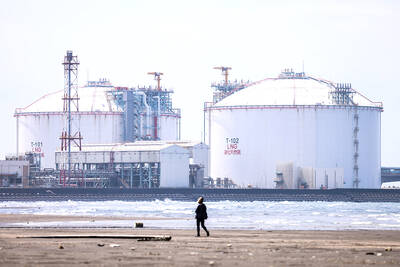
Taiwan is open to joining a global liquefied natural gas (LNG) program if one is created, but on the condition that countries provide delivery even in a scenario where there is a conflict with China, an energy department official said yesterday. While Taiwan’s priority is to have enough LNG at home, the nation is open to exploring potential strategic reserves in other countries such as Japan or South Korea, Energy Administration Deputy Director-General Chen Chung-hsien (陳崇憲) said. While the LNG market does not have a global reserve for emergencies like that of oil, the concept has been raised a few times —

Taiwan Semiconductor Manufacturing Co (TSMC, 台積電) yesterday received government approval to deploy its advanced 3-nanometer (3nm) process at its second fab currently under construction in Japan, the Ministry of Economic Affairs said in a news release. The ministry green-lit the plan for the facility in Kumamoto, which is scheduled to start installing equipment and come online in 2028 with a monthly production capacity of 15,000 12-inch wafers, the ministry said. The Department of Investment Review in June 2024 authorized a US$5.26 billion investment for the facility, slated to manufacture 6- to 12nm chips, significantly less advanced than 3nm process. At a meeting with


 RSS
RSS