


Apple Inc won dismissal of Proview Electronics Co’s (唯冠電子) California lawsuit seeking to block it from using the iPad name, according to a copy of the court order obtained by Bloomberg News.
Proview, based in Taiwan, has sought to block shipments of Apple’s iPad tablet computer in and out of China.
In the case, filed in state court in San Jose, California, Proview claimed a December 2009 agreement to sell iPad trademarks to an Apple unit called IP Application Development Ltd should be canceled.
The Apple unit made “false” statements to Proview in correspondence before the agreement, according to the filing.
HONG KONG
Apple successfully argued that the case should be dismissed because the agreement required that the dispute be resolved in Hong Kong.
Apple “provides evidence that plaintiff specifically requested the Hong Kong forum and is litigating there currently,” Judge Mark Pierce said in his decision on Friday last week.
Proview “does not, in opposition, present evidence that demonstrates that enforcement of the forum selection clause is unreasonable or unfair,” Pierce said.
Jill Kopeikin, a lawyer representing Proview, did not immediately return a call and e-mail seeking comment on the ruling.
WORLDWIDE RIGHTS
Apple acquired Proview’s worldwide rights to the iPad trademark in 10 countries, including China, the Cupertino, California-based company said on Feb. 14.
Proview claimed Graham Robinson, an agent for IP Application, used the name Jonathan Hargreaves in correspondence with Proview before the Dec. 23, 2009, agreement to acquire all of Proview’s iPad-related trademarks for £35,000 (US$56,540), according to court filings.

Cairo’s new monorail slices across the city skyline, running above the familiar chaos of blaring horns and aging buses’ exhaust fumes that mark rush hour below. The US$4.5 billion monorail, opened this month, is among Egypt’s most prominent new transport projects, part of a debt-funded infrastructure drive criticized for sapping state finances while bringing limited benefits to most of the country’s 109 million people. “It feels like you’re in a different country,” said Ramy Sayed, a restaurant manager, aboard a driverless Innovia 300 train. “No noise, no traffic, we’re not used to this.” The eastern line runs 56km from the bustling middle-class

Taiwanese firms have increased investment in the Philippines in recent years as Manila’s ties with Washington deepen and global supply chains continue to shift away from China, an expert at the Chung-Hua Institution for Economic Research (CIER, 中華經濟研究院) said yesterday. The Philippines had not been among Taiwanese investors’ top choices in Southeast Asia, CIER Taiwan ASEAN Studies Center director Kristy Hsu (徐遵慈) said at a seminar in Taipei. However, Taiwan’s investment in the country has grown significantly since the COVID-19 pandemic, reaching US $257 million last year, a high in recent years, she said. Although Taiwan’s total investment in the Philippines still lags
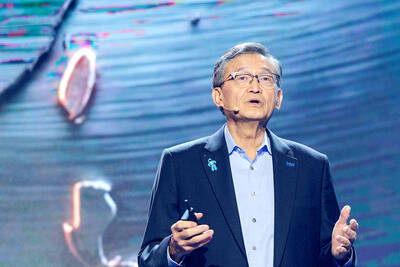
Intel Corp regards Taiwan Semiconductor Manufacturing Co (TSMC, 台積電) as a longstanding partner, as the US chipmaker would continue outsourcing production of advanced chips to TSMC, Intel chief executive officer Lip-Bu Tan (陳立武) said yesterday. “I don’t look at people as competitors. I look at the collaboration... Nvidia is also, you know, a good friend,” Tan told a news conference following his keynote speech at the Computex trade show in Taipei. “It’s a very trusted partnership for us... We are a big, top customer for them, and we’re going to continue doing that,” he said, referring to TSMC, the world’s largest foundry

Artificial intelligence (AI) agents would supplant smartphones as the center of people’s digital lives, fundamentally reshaping personal devices and driving a major computing upgrade cycle, Qualcomm Inc CEO Cristiano Amon said yesterday. In his keynote speech for this year’s Computex trade show in Taipei, Amon said that the rise of "agentic AI" — AI systems capable of reasoning, planning and carrying out tasks autonomously — would transform how people interact with technology across phones, PCs, vehicles and wearable devices. Describing the technology as the next major evolution in computing, Amon said that "2026 is the year of agents.” For decades, smartphones have sat


 RSS
RSS