


AU Optronics Corp’s (AUO, 友達光電) bottom line this year would not be seriously affected by a US anti-trust ruling against the LCD panel maker because it has allocated sufficient provisions for a potential fine of up to US$300 million, Credit Suisse said in a report yesterday.
Shares of AU Optronics slipped 0.98 percent to NT$15.20 yesterday, regaining some momentum after tumbling 3.15 percent on Tuesday on concern that an initial US ruling against the company in a price-fixing case could result in massive fines and add pressure on the finances of the money-losing LCD panel manufacturer.
The shares of its bigger local rival, Chimei Innolux Corp (奇美電子), plummeted 1.63 percent to NT$15.05.
CONSPIRACY
AU Optronics and two of its executives — vice chairman Chen Hsuan-bin (陳炫彬) and board member Hsiung Hui (熊暉) — were found guilty of participating in a conspiracy to fix prices for LCD panels used in computers during the 2001-2006 period. AU Optronics said it would appeal the verdict and any fine to be decided in the next few months.
“We believe that this judgement will have a limited impact on AU Optronics’ 2012 earnings per share as we estimate that the company has already set aside a provision of US$600 million since the fourth quarter of 2009,” Credit Suisse analyst Jerry Su (蘇厚合) said in the report.
That provision would be two to three times higher than the US$200 million to US$300 million fine estimated by Su.
ILLEGAL GAINS
Su’s estimate represents about 30 percent of a maximum total fine of US$1 billion, based on an estimated US$500 million in illegal gains allegedly made by members of the cartel and given AU Optronics’ US market share of about 20 percent during the five-year period, the report said.
According to the Sherman’s Act, the maximum penalty for conviction in antitrust suit is 10 years in prison and a fine of US$1 million for individuals and US$100 million for corporations, the report said. The maximum fine may be increased to twice the gain from or loss involved in the antitrust activity.
Su estimated that AU Optronics’ loss this year would narrow to about NT$10.6 billion (US$358 million), or NT$1.2 per share, compared with a loss of NT$61.28 billion, or NT$6.94 a share, last year.
BETTER PRICING
Better pricing for its 40-inch and 42-inch LCD TV panels, falling costs and the ramp-up of higher value-added products such as 3D TV panels, high-resolution AMOLED panels and niche-sized panels, would help AUO reduce its losses, Su said.
Su reiterated his “outperform” rating on AU Optronics on the back of improving fundamentals. He kept his target price of NT$19 unchanged.
AU Optronics ranked No. 5 among foreign investors’ top 10 favorite stocks yesterday, with net buying of the stock reaching 7.86 million shares.

The domestic unit of the Chinese-owned, Dutch-headquartered chipmaker Nexperia BV will soon be able to produce semiconductors locally within China, according to two company sources. Nexperia is at the center of a global tug-of-war over critical semiconductor technology, with a Dutch court in February ordering a probe into alleged mismanagement at the company. The geopolitical tussle has disrupted supply chains, with some carmakers reportedly forced to cut production due to chip shortages. Local production would allow Nexperia’s domestic arm, Nexperia Semiconductors (China) Ltd (安世半導體中國), to bypass restrictions in place since October on the supply of silicon wafers — etched with tiny components to

Singapore-based ride-hailing and delivery giant Grab Holdings Ltd has applied for regulatory approval to acquire the Taiwan operations of Germany-based Delivery Hero SE's Foodpanda in a deal valued at about US$600 million. Grab submitted the filing to the Fair Trade Commission on Friday last week, with the transaction subject to regulatory review and approval, the company said in a statement yesterday. Its independent governance structure would help foster a healthy and competitive market in Taiwan if the deal is approved, Grab said. Grab, which is listed on the NASDAQ, said in the filing that US-based Uber Technologies Inc holds about 13 percent of

Taiwan Semiconductor Manufacturing Co (TSMC, 台積電) yesterday received government approval to deploy its advanced 3-nanometer (3nm) process at its second fab currently under construction in Japan, the Ministry of Economic Affairs said in a news release. The ministry green-lit the plan for the facility in Kumamoto, which is scheduled to start installing equipment and come online in 2028 with a monthly production capacity of 15,000 12-inch wafers, the ministry said. The Department of Investment Review in June 2024 authorized a US$5.26 billion investment for the facility, slated to manufacture 6- to 12nm chips, significantly less advanced than 3nm process. At a meeting with
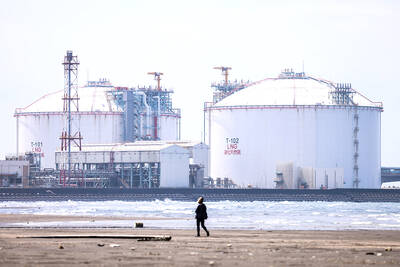
Taiwan is open to joining a global liquefied natural gas (LNG) program if one is created, but on the condition that countries provide delivery even in a scenario where there is a conflict with China, an energy department official said yesterday. While Taiwan’s priority is to have enough LNG at home, the nation is open to exploring potential strategic reserves in other countries such as Japan or South Korea, Energy Administration Deputy Director-General Chen Chung-hsien (陳崇憲) said. While the LNG market does not have a global reserve for emergencies like that of oil, the concept has been raised a few times —


 RSS
RSS