


The world’s cheapest tablet computer has clocked 1.4 million bookings since it was put up for sale online two weeks ago in India, a spokeswoman said on Tuesday.
Bookings for the long-awaited Aakash, pegged at 2,500 rupees (US$41), began on Dec. 14, two months after it was unveiled as the “computer for the masses” in India, where millions struggle to fund their education.
Datawind, the British company contracted by the Indian government to manufacture Aakash, said it had been taken by surprise by the response in India, where Apple’s iPad computers costs a minimum of US$600.
STRONG RESPONSE
“The current response is overwhelming,” a spokeswoman at the company’s New Delhi PR agency said in an e-mail that detailed the number of bookings made so far.
Datawind is now taking orders for an upgraded version, called Ubislate 7, for March, and it will establish three new factories this year to cope with the rush of orders.
“We plan to produce 75,000 units per factory per month from around April,” the spokeswoman said.
The Economic Times in its online edition said the manufacturers had run out of stock of Aakash, which has a 7 inch touchscreen, Wi-Fi Internet function, a multimedia player and 180 minutes of battery power.
SETTING A NEW BAR
The business daily said with about 400,000 pre-sales bookings for the Aakash, sales of the device were more than sales for the entire Indian tablet market last year, which numbered about 250,000 to 300,000 units.
The stylish, locally made Aakash uses an Android 2.2 operating system and has an external 2 gigabyte (GB) storage card and two USB ports.
Critics had warned the device might struggle to live up to expectations with its limited 256MB random access memory.
The price of what has been dubbed “the world’s cheapest computer” should fall to US$35 and could even be hammered down as low as US$10, Datawind has said.

NOT JUSTIFIED: The bank’s governor said there would only be a rate cut if inflation falls below 1.5% and economic conditions deteriorate, which have not been detected The central bank yesterday kept its key interest rates unchanged for a fifth consecutive quarter, aligning with market expectations, while slightly lowering its inflation outlook amid signs of cooling price pressures. The move came after the US Federal Reserve held rates steady overnight, despite pressure from US President Donald Trump to cut borrowing costs. Central bank board members unanimously voted to maintain the discount rate at 2 percent, the secured loan rate at 2.375 percent and the overnight lending rate at 4.25 percent. “We consider the policy decision appropriate, although it suggests tightening leaning after factoring in slackening inflation and stable GDP growth,”

DIVIDED VIEWS: Although the Fed agreed on holding rates steady, some officials see no rate cuts for this year, while 10 policymakers foresee two or more cuts There are a lot of unknowns about the outlook for the economy and interest rates, but US Federal Reserve Chair Jerome Powell signaled at least one thing seems certain: Higher prices are coming. Fed policymakers voted unanimously to hold interest rates steady at a range of 4.25 percent to 4.50 percent for a fourth straight meeting on Wednesday, as they await clarity on whether tariffs would leave a one-time or more lasting mark on inflation. Powell said it is still unclear how much of the bill would fall on the shoulders of consumers, but he expects to learn more about tariffs
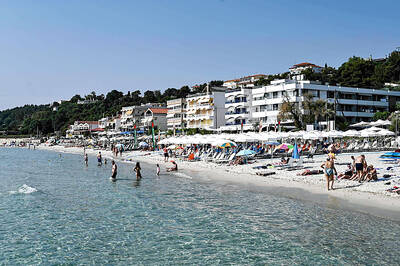
Greek tourism student Katerina quit within a month of starting work at a five-star hotel in Halkidiki, one of the country’s top destinations, because she said conditions were so dire. Beyond the bad pay, the 22-year-old said that her working and living conditions were “miserable and unacceptable.” Millions holiday in Greece every year, but its vital tourism industry is finding it harder and harder to recruit Greeks to look after them. “I was asked to work in any department of the hotel where there was a need, from service to cleaning,” said Katerina, a tourism and marketing student, who would
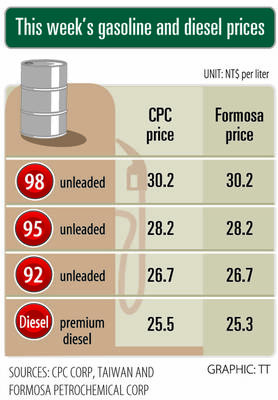
i Gasoline and diesel prices at fuel stations are this week to rise NT$0.1 per liter, as tensions in the Middle East pushed crude oil prices higher last week, CPC Corp, Taiwan (台灣中油) and Formosa Petrochemical Corp (台塑石化) said yesterday. International crude oil prices last week rose for the third consecutive week due to an escalating conflict between Israel and Iran, as the market is concerned that the situation in the Middle East might affect crude oil supply, CPC and Formosa said in separate statements. Front-month Brent crude oil futures — the international oil benchmark — rose 3.75 percent to settle at US$77.01


 RSS
RSS