


South Korea’s LG Electronics yesterday unveiled a refrigerator that suggests recipes as it forecast a bright future in the potentially lucrative market for “smart” household appliances.
LG will roll out smart fridges, washers and other appliances in South Korea and North America before the end of this year to compete against rivals, including Samsung Electronics and Whirlpool, Lee Young-ha, president of the home appliance unit, told reporters.
LG, South Korea’s second-largest consumer electronics maker after Samsung, showcased its first smart product — a refrigerator connected to a home Wi-Fi network and which can be controlled by a smartphone.

Photo: AFP
CONVENIENCE
“By the end of the year, when our full range is introduced, consumers will be able to stay in contact with their appliances at any time, enjoying greater convenience and seeing real-life, real-time improvements in energy consumption and time savings,” Lee said.
The smart fridge offers three energy-saving options, as well as a “food management system,” which tells users what is in their fridge, where it is and when its sell-by date expires.
The information is available via smartphones or tablets and can be accessed from a grocery store or restaurant. LG boasts the machine can even suggest healthy recipes based on what foods are currently available.
The product costs about 3.6 million won (US$3,296) and is expected to account for about 20 to 30 percent of LG’s refrigerator sales in South Korea this year, Lee said, without giving a global sales target.
Other items including ovens and camera-embedded vacuum cleaners remotely controlled by smartphones or tablet computers will be introduced later this year, he added.
LUCRATIVE MARKET
Market research firm Pike Research predicts the global market for smart home appliances will take off in earnest in 2013 and reach US$26.1 billion in sales by 2019.
In 2000, LG introduced a refrigerator connected to the Internet that met with a lukewarm response.
“Now things are different, with Wi-Fi networks everywhere, smartphones so common and prices far more affordable,” said Kim Young-soo, vice president of LG’s home appliance unit.

Taichung reported the steepest fall in completed home prices among the six special municipalities in the first quarter of this year, data compiled by Taiwan Realty Co (台灣房屋) showed yesterday. From January through last month, the average transaction price for completed homes in Taichung fell 8 percent from a year earlier to NT$299,000 (US$9,483) per ping (3.3m²), said Taiwan Realty, which compiled the data based on the government’s price registration platform. The decline could be attributed to many home buyers choosing relatively affordable used homes to live in themselves, instead of newly built homes in the city’s prime property market, Taiwan Realty
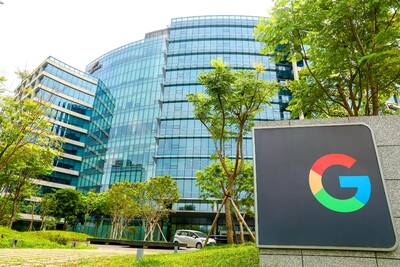
The government yesterday approved applications by Alphabet Inc’s Google to invest NT$27.08 billion (US$859.98 million) in Taiwan, the Ministry of Economic Affairs said in a statement. The Department of Investment Review approved two investments proposed by Google, with much of the funds to be used for data processing and electronic information supply services, as well as inventory procurement businesses in the semiconductor field, the ministry said. It marks the second consecutive year that Google has applied to increase its investment in Taiwan. Google plans to infuse NT$25.34 billion into Charter Investments Ltd (特許投資顧問) through its Singapore-based subsidiary Fructan Holdings Singapore Pte Ltd, and

JET JUICE: The war on Iran’s secondary effects have seen fuel prices skyrocket, knocking flight schedules down to earth in return as airlines struggle with costs Airline passengers should brace for more irritation in the next few months as carriers worldwide cancel flights and ground planes to cope with stratospheric increases in jet-fuel prices. Dutch flag carrier KLM is the latest company to cut its schedule, saying on Thursday that it would scrap 80 return flights at Amsterdam’s Schiphol Airport in the coming month. That puts it in the same league as United Airlines Holdings Inc, Deutsche Lufthansa AG and Cathay Pacific Airways Ltd, which have all pruned itineraries to mitigate costs. Global capacity for next month has been reduced by about 3 percentage points, with all

The US said it plans to help build a first-of-its-kind industrial hub in the Philippines to boost production of inputs crucial to US supply chains. The 4,000-acre hub is intended to be “a purpose-built platform for allied manufacturing” and “an investment acceleration hub where the specific industrial activities are shaped by market demand,” the US Department of State said on Thursday. The project — touted as an “economic security zone” — would be within the Luzon Economic Corridor, a flagship economic project backed by the US and Japan on the main Philippine island. The project was also described as “the first artificial intelligence


 RSS
RSS